
San Diego Wave W Edges North Carolina Courage W in NWSL Showdown
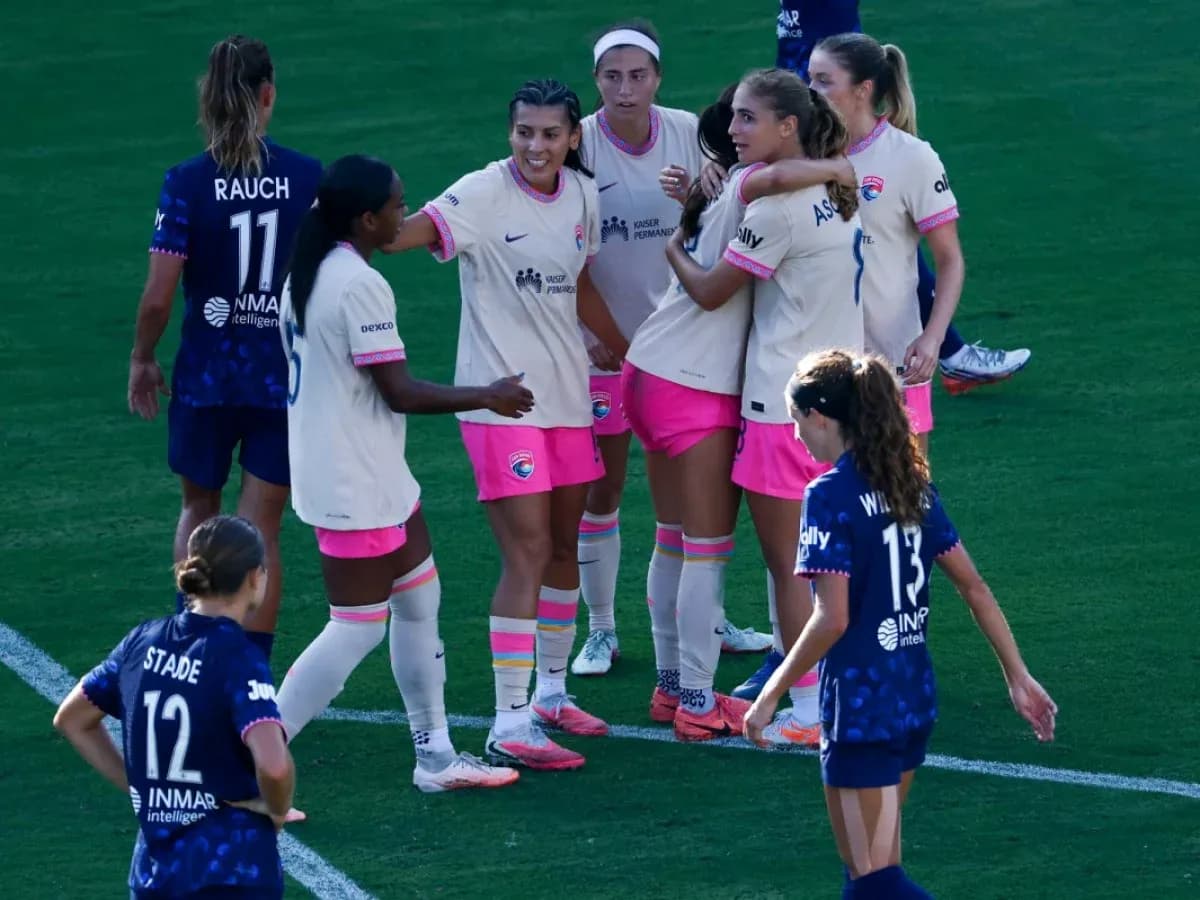
Under the lights at Snapdragon Stadium, San Diego Wave W and North Carolina Courage W met as two sides shaped by the same ambition but very different footballing identities. The Group Stage tie in the NWSL Women ended 2–1 to the hosts, a result that not only confirmed San Diego’s growing steel at home but also underlined the Courage’s enduring attacking threat, even in defeat.
I. The Big Picture – Two contenders, two blueprints
Heading into this game, the table already framed the narrative. San Diego sat 4th on 42 points with a goal difference of 7, built on 34 goals scored and 27 conceded overall. The Courage were just behind in 5th on 39 points, but with a more explosive profile: 47 goals scored and 35 conceded overall for a goal difference of 12.
San Diego’s seasonal DNA is balance and marginal control. Overall they average 1.4 goals scored and 1.1 conceded per match, with a home profile of 1.5 scored and 1.2 allowed. Their form line – a long, jagged string of wins and setbacks – speaks of a side that can put together winning streaks but lives on fine margins. They have kept 5 clean sheets overall, yet have failed to score 8 times, evidence of a team that can be either incisive or strangely blunt.
North Carolina, by contrast, are chaos merchants in the best sense. Overall they average 2.0 goals for and 1.5 against, with 2.1 scored at home and 1.8 on their travels. They have 7 clean sheets overall but have only failed to score 4 times; their matches tilt towards high-event football, underlined by biggest wins of 5–0 at home and 0–6 away. They arrive as an attacking wave that rarely recedes quietly.
II. Tactical Voids and Discipline – Edges and risks
Neither side’s absentees list is available, so the story is told by who did step onto the pitch. San Diego lined up in their favoured 4-3-3, a structure that has been used 12 times this season and has become their tactical signature. Jonas Eidevall’s choice of Sandra Paños in goal, with a back four of B. Courtnall, K. Wesley, K. McNabb and P. Morroni, signalled a desire to build from a stable base. In front, the midfield trio of K. Dali, K. Ascanio and G. Corley offered passing range and vertical running, while the front three of M. Barcenas, T. Byars and Luisa Agudelo promised mobility and interchange.
Morroni’s presence is always a double-edged sword. Across the season she has collected 6 yellow cards, one of the league’s highest tallies, and her duel-heavy style (209 duels, 109 won) hints at a defender who lives on the border of risk and reward. Add in A. D. Van Zanten’s record – 1 red card this campaign – and San Diego’s back line carries an undercurrent of volatility, even if Van Zanten was not in this particular starting XI.
The Courage countered with a 4-2-3-1, a shape they have used 8 times this season and which best showcases their playmaking core. The double pivot of E. Parkinson and V. Bøe Risa sat beneath a creative line of Chioma Okafor, S. Koyama and A. Sanchez, with E. Ijeh leading the line. It is a structure built to free Sanchez, the league’s standout attacking midfielder: 15 goals and 4 assists overall, supported by 26 key passes and 63 dribble attempts.
Disciplinary trends added another layer. San Diego’s yellow cards cluster most in the 61–75 minute window (20.83%), with further spikes between 16–30 minutes and late on from 76–90 and 91–105 (each 16.67%). They also have a single red card shown between 0–15 minutes, a reminder that their aggression can flare early. North Carolina, meanwhile, are most combustible late: 33.33% of their yellows arrive between 76–90 minutes, and their only red card of the season has also come in that same late window. In a tight match, the final quarter-hour was always likely to tilt on discipline as much as tactics.
III. Key Matchups – Hunter vs Shield, Engine vs Enforcer
The headline duel was always going to be A. Sanchez against San Diego’s defensive structure. Sanchez operates nominally from the left of the attacking midfield trio but roams into central pockets, where her 372 completed passes and 26 key passes allow her to dictate tempo. Against a Wave side that concedes 1.2 goals at home on average, her movement between the lines tested the communication of Wesley and McNabb, and the positional discipline of Dali and Ascanio.
The “Hunter vs Shield” narrative extended to the front line as well. E. Ijeh, with 8 goals and 3 assists overall, is a striker who thrives on quick service and attacking transitions. San Diego’s overall defensive record – 27 conceded in 24 matches – suggests a unit that bends but does not break, and Paños’ shot-stopping underpins that resilience. Containing Ijeh’s runs beyond the last line was essential to preventing the Courage from turning midfield turnovers into immediate chances.
For San Diego, the attacking threat was more distributed. T. Byars, with 9 goals and 2 assists overall, is a classic impact forward whose 21 shots and 16 on target speak of efficiency rather than volume. Her role between the Courage centre-backs N. Staude and U. Shiragaki was to constantly threaten depth, creating space for Corley and Dali to arrive from midfield. Corley herself is a quiet conductor: 394 passes, 24 key passes and 4 assists overall, plus 47 dribble attempts, make her a key figure in breaking pressure and linking the thirds.
In the “Engine Room”, V. Bøe Risa and Parkinson were tasked with smothering Dali’s influence. Dali’s 1,028 completed passes, 43 key passes and 2 assists overall show how much San Diego’s progression flows through her. If the Courage double pivot failed to close her angles, the Wave’s 4-3-3 could tilt into a 2-3-5 in possession, pinning North Carolina’s full-backs and isolating their centre-backs.
Out wide, Morroni versus R. Williams was a clash of high-output full-backs. Williams, with 709 completed passes, 20 key passes, 42 tackles and 10 blocked shots overall, is both outlet and shield on the right. Morroni, with 54 tackles and 24 interceptions overall, mirrors that intensity on San Diego’s left. Their duel shaped which flank could consistently progress the ball.
IV. Statistical Prognosis – Margins, penalties, and the late-game storm
Beneath the scoreline lay two telling statistical undercurrents: penalties and late-game temperament. San Diego’s record from the spot this season is a glaring weakness: 2 penalties awarded, none converted, with both missed for a 0% success rate and 100.00% of their penalties missed. Luisa Agudelo, despite her 5 goals and 3 assists overall, has also missed a penalty herself. In a match where the Courage are a constant threat in the box, any penalty for the hosts carried as much anxiety as opportunity.
North Carolina, by contrast, are perfect from the spot: 5 penalties taken, all 5 scored, a 100.00% conversion rate with no misses. In a game defined by small margins between two playoff-calibre sides, that ruthlessness from twelve yards is a decisive edge.
The disciplinary and temporal trends intersected in the final act. San Diego’s yellow-card spikes from 61–75 and beyond met a Courage side whose own cards surge from 76–90. As the match tightened at 2–1, the probability of late fouls, stoppages and emotional swings increased. For a Courage team averaging 1.8 goals on their travels, the closing stages were always going to be their window to salvage something; for San Diego, whose home record stands at 7 wins, 1 draw and 5 losses from 13, it was a test of whether they could finally turn a precarious lead into a statement result.
Following this result, the narrative is clear. San Diego have shown they can edge a high-level opponent by leaning into their structured 4-3-3, trusting Dali and Corley to knit the game, and allowing Byars and Agudelo to decide it in the final third. The Courage, even in defeat, reaffirmed their identity as the league’s great entertainers, driven by the genius of Sanchez and the vertical menace of Ijeh.
If xG had been available, it would likely have reflected a tight contest shaded by San Diego’s control versus North Carolina’s volume of chances. Instead, the hard numbers we do have – goals per game, penalty records, and late-card surges – suggest that over a longer horizon, the Courage’s attacking firepower and perfect penalty record will keep them dangerous. Yet on this night in San Diego, the Wave’s blend of structure, individual quality and just enough discipline proved the more sustainable path to three points.
Related News
Orlando Pride W vs Portland Thorns W Stats: Head-to-Head Record

San Diego Wave W vs Kansas City W Stats: Head-to-head Record
Kansas City and Orlando Pride Share Points in Thrilling 2–2 Draw

San Diego Wave W Clinches 2-1 Victory Against North Carolina Courage W

Portland Thorns W vs Chicago Red Stars W: Predicted Lineups and Match Preview

Portland Thorns W vs Chicago Red Stars W: NWSL Women Group Stage Clash