
San Diego Wave vs Kansas City W: NWSL Group Stage Clash
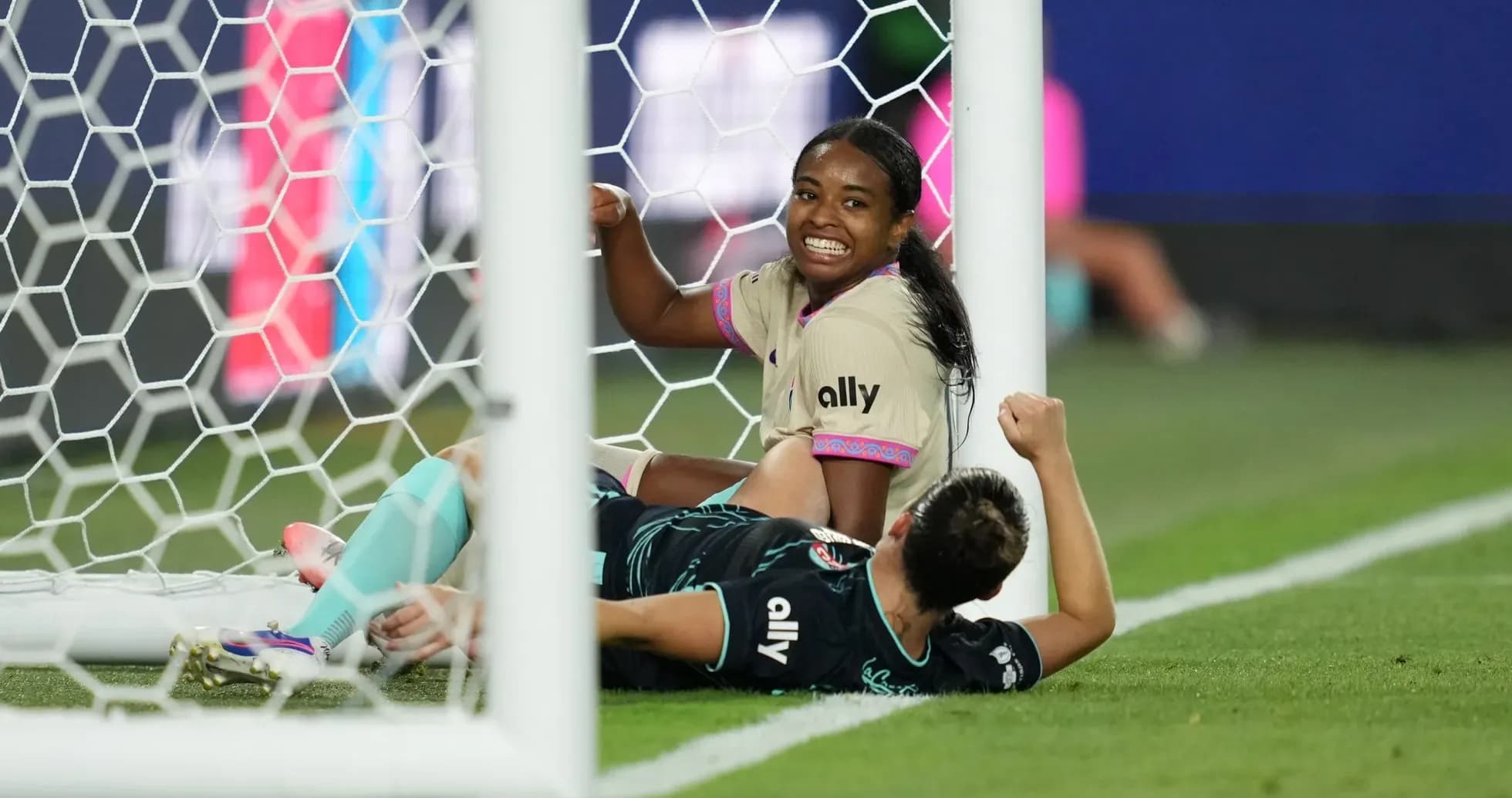
Under the lights of Snapdragon Stadium, this Group Stage meeting in the NWSL Women brought together two sides whose seasons have been defined by very different kinds of volatility. San Diego Wave W, sitting 2nd with 45 points and a goal difference of 9, have built a campaign on controlled aggression and tactical flexibility. Kansas City W, 7th with 38 points and a goal difference of 3, arrive as one of the league’s most dangerous but inconsistent outfits: devastating at home, fragile on their travels.
The 2-0 full-time scoreline in San Diego’s favour underlines how sharply those identities clashed.
I. The Big Picture – Structures and Seasonal DNA
San Diego lined up in a 4-1-4-1, a shape that fits neatly with their season-long evolution. Across the campaign they have split their minutes between 4-3-3 and 4-2-3-1, but this single-pivot version offers a natural bridge between those systems: one holding midfielder, a band of four creative and industrious players, and a lone striker to stretch the last line.
At home this season, San Diego have been solid if not spectacular: 14 home matches played, with 8 wins, 1 draw and 5 losses. They score 1.5 goals per game at Snapdragon and concede 1.1, the kind of profile that suggests a side willing to open up games rather than sit on narrow leads. Overall, they have 36 goals for and 27 against in 25 league matches, matching that 9-goal positive difference in the standings.
Kansas City arrived in their familiar 4-2-3-1, a shape that has underpinned 19 of their league lineups. Their season is starkly split by venue. At home, they are unbeaten: 12 matches played, 8 wins and 4 draws, scoring 2.3 goals per game and conceding just 1. On their travels, though, the picture flips: 13 away matches, only 3 wins, 1 draw and 9 defeats, with just 0.8 goals scored per game and 1.8 conceded. The same team that has 28 goals at home has only 11 away.
II. Tactical Voids – Discipline and Hidden Risks
San Diego’s season-long disciplinary profile reveals a team that tends to get dragged into the contest as it wears on. Their yellow-card peak comes in the 76-90 minute window, where 23.08% of their cautions are shown, and a further 15.38% arrive between 91-105 minutes. They have also seen a red card in the opening 0-15 minutes, a reminder that their front-foot approach can spill into overzealousness early.
Kansas City’s yellow cards are more evenly distributed, but there is a clear pattern of tension either side of half-time and into the closing stretch: 23.81% of their yellows fall between 31-45 minutes, another 23.81% from 61-75, and 23.81% again from 76-90. Crucially, they have already taken a red card in the 76-90 window this season. That late-game volatility is a real tactical void when chasing matches away from home.
On the penalty front, San Diego carry a psychological scar. They have earned two penalties in total this campaign and failed to convert either, missing both for a 0% conversion rate and 100.00% of their spot-kicks squandered. Kansas City are not immune either: they have taken three penalties, scoring just one and missing two, a 33.33% success rate. In a tight knockout-style encounter, neither side can lean on penalties as a reliable weapon.
III. Key Matchups – Hunter vs Shield, Engine Room vs Engine Room
The headline duel is clear: Temwa Chawinga versus the San Diego back line. Chawinga, starting from the left side of the Kansas City three behind the striker, is the league’s fourth-ranked attacking performer, with 10 goals and 2 assists in 14 appearances. She has taken 25 shots, 16 on target, and is a constant vertical threat with 32 dribble attempts and 13 successful. Her presence on the left directly tests A. D. Van Zanten and K. Wesley on San Diego’s right, plus Sandra Paños behind them.
Van Zanten is one of San Diego’s defensive pillars: 24 appearances, all as a starter, with 63 tackles, 6 successful blocks and 34 interceptions. She has also contributed 1 goal and 1 assist. Her task is to step aggressively into Chawinga’s receiving zones without exposing the channel behind. Any hesitation and Chawinga’s directness can tilt the match.
On the opposite flank, Perle Morroni brings both bite and risk. She has 60 tackles, 4 blocked shots and 25 interceptions, but also 6 yellow cards and a place among the league’s leading card collectors. Her duels total of 217, with 117 won, speaks to a defender constantly engaging her winger. Against a Kansas City side that likes to overload with Michelle Cooper drifting from central areas, Morroni’s timing in the challenge is critical.
In midfield, the engine-room battle is richly layered. For San Diego, Luisa Agudelo and Kenza Dali form the technical core. Agudelo has 5 goals and 3 assists from midfield, with 597 completed passes at 81% accuracy and 30 key passes. Dali adds 1 goal and 3 assists, but more importantly 1051 passes at 85% accuracy and 43 key passes. Together, they are the metronome and the progressive passer, shaping San Diego’s possession phases.
Kansas City counter with a creative axis of Croix Bethune and Cooper. Bethune leads the league in assists with 10, adding 4 goals, 630 passes at 70% accuracy and 31 key passes. She is also a defensive presence, with 42 tackles and 25 interceptions, and thrives on carrying the ball: 85 dribble attempts with 46 successful. Cooper, with 5 goals and 4 assists, 24 tackles and 3 blocked shots, is the two-way midfielder who can both press Dali and arrive late in the box.
Then there is the duel between the two primary finishers: T. Byars for San Diego and Chawinga for Kansas City. Byars has 9 goals and 2 assists from 20 appearances, with 22 shots and 16 on target. Her role as the lone striker in the 4-1-4-1 means constant movement across the Kansas City back four, looking to isolate either E. Ball or K. Sharples in wide channels. If San Diego’s wide midfielders G. Corley and Melanie Barcenas can pin the Kansas City full-backs, Byars will find central pockets to attack crosses and cutbacks.
IV. Statistical Prognosis – Where the Game Tilts
Heading into this game, the numbers pointed toward a San Diego side more comfortable in tight margins and a Kansas City team whose away fragility could be exposed. San Diego’s overall scoring rate of 1.4 goals per match, combined with 1.1 conceded, suggests a team that keeps games within a narrow xG band and trusts its structure. Kansas City’s split – 2.3 goals for at home versus 0.8 away, and 1.0 conceded at home versus 1.8 away – indicates that their attacking xG and defensive solidity both collapse on their travels.
Layer on top their disciplinary patterns – Kansas City’s red card in the 76-90 window, San Diego’s late yellow-card surge – and the closing quarter of the match was always likely to be decisive. A San Diego side still energetic in the final 15 minutes, backed by a home record of 8 wins from 14, against a Kansas City team that has already lost 9 times away and often concedes late under pressure, is a matchup that leans heavily toward the hosts.
In that context, a 2-0 home win feels like the tactical script playing out: San Diego’s controlled midfield, disciplined back four and more balanced home profile gradually suffocating a Kansas City side whose brilliance at home has yet to travel.
Related News

Kansas City W vs Denver Summit W: NWSL Women Showdown
Portland Thorns W vs Houston Dash W Prediction: Key Stats and Tips
Washington Spirit W vs Angel City W Prediction: Key Stats and Betting Tips
Kansas City W vs Denver Summit W Prediction: Key Stats and Betting Tips
Racing Louisville W vs San Diego Wave W: NWSL Clash Preview
Racing Louisville W vs San Diego Wave W Prediction: Key Stats and Betting Tips