
Scotland’s No 1 and Daniel Nevin’s Big Moment in Boston
The Scotland squad are tucked away in a Boston hotel, plotting their next World Cup move. For one young fan, the action started long before kick-off.
Thirteen-year-old Daniel Nevin, a Scotland obsessive who turns out for St Cadoc’s Youth Club in Glasgow, found himself within walking distance of his heroes this morning. He did what any sharp-eyed teenager would do: he went looking for them.
He found the country’s first-choice goalkeeper.
Angus Gunn stopped, posed for a photo and turned an ordinary hotel lobby into the kind of memory that lodges for life. Daniel’s father, Tommy, 55, watched on as his son met Scotland’s No 1 and later said the youngster was “delighted” with the encounter. Daniel now heads into tonight’s game against Morocco with a personal stake in the clean sheet he’s desperate to see.
A quiet handshake in Boston. A loud hope for later.
Co-hosts flex their muscles
While Scotland fans count down to tonight, the other co-hosts have already made their presence felt.
Canada, searching for a statement after a flat start to the tournament, found it in brutal fashion. They tore through Qatar 6-0, a first World Cup win this year and the kind of scoreline that shifts a nation’s mood in a single night. Goals kept coming, confidence surged, and a side that often talks about belief finally had a scoreline to match the rhetoric.
Mexico took a different route to the same destination: control. A 1-0 win over South Korea preserved their perfect record and underlined their status as one of the sharpest outfits in the competition so far. No chaos, no drama, just a job done and a 100 per cent start intact.
Elsewhere, Switzerland brushed aside Bosnia-Herzegovina 4-1, a commanding result that hinted at deeper reserves in their squad. The Czech Republic and South Africa shared a 1-1 draw, a tighter contest that leaves both teams hovering in that uneasy middle ground between hope and anxiety.
Day eight scattered stories across the tournament. Canada’s big win, Mexico’s efficiency, Switzerland’s authority, South Africa’s resilience. The World Cup is starting to take shape.
A final with two homes
Even as this edition finds its rhythm, a political tug-of-war is already brewing over the next one.
The 2030 World Cup, spread across Spain, Portugal and Morocco, is still four years away, yet the battle lines are clear. Spain want the final. Morocco want the final. One showpiece game, two determined bidders.
According to The Times’ chief sports reporter Martyn Ziegler, the decision currently sits on a knife-edge — 50-50 between the two nations. On one side, the tradition and infrastructure of Spain. On the other, the symbolism of Morocco hosting the biggest match on earth on African soil again.
It is a fight about prestige, legacy and who gets to frame the defining image of a global tournament.
Pochettino’s scars and a different USA
Mauricio Pochettino knows what a World Cup can take out of you.
He went to one as a player, with Argentina in 2002 under Marcelo Bielsa. That squad arrived in Japan and South Korea as contenders and left as a cautionary tale, knocked out in the group stage after a joyless, locked-down campaign. The experience left marks.
Those memories now shape his work with the United States.
Where Bielsa sealed his Argentina squad off, Pochettino has opened this USA group up. The Argentine coach has leaned into connection, not confinement, trying to build a side that plays with clarity but lives with a little more freedom. The scars of 2002 sit behind him; the chance to do it differently sits in front of him.
So far, the players have responded.
Australia strike early in their campaign
Australia have made a habit of reaching World Cups. This is their sixth in a row. Winning the first game, though? That has been another matter entirely.
Not this time.
In Vancouver, Tony Popovic’s team beat Turkey 2-0, a composed, professional opening that snapped a run stretching back to 2006 since they last started a World Cup with three points. It was not flamboyant, but it was decisive, the kind of performance that settles a dressing room.
With those points banked, Australia can now look up the bracket rather than over their shoulders. Progress to the knockout stages would be only the third in their history. That alone sharpens the edges of tonight’s meeting with the USA.
USA hit the accelerator
If Australia opened with control, the USA opened with a roar.
Pochettino’s side tore into Paraguay in their first match, racing into a 3-0 lead by half-time and finishing 4-1 winners. The co-hosts played with pace and purpose, the kind of intensity that lifts a stadium and sends a message to the rest of the group.
Folarin Balogun led the line and the charge, scoring twice and stretching Paraguay’s back line from the first whistle. Paraguay did pull one back midway through the second half, a reminder that this USA team is still learning how to manage games when they tilt.
Then Giovanni Reyna stepped in.
His stoppage-time strike, clean and emphatic, put the result beyond doubt and capped a performance that catapulted the USA to the top of Group D. It was the sort of night that builds belief not only in the stands, but in the dressing room.
Pulisic on the clock
One cloud hangs over the USA’s preparations for Australia.
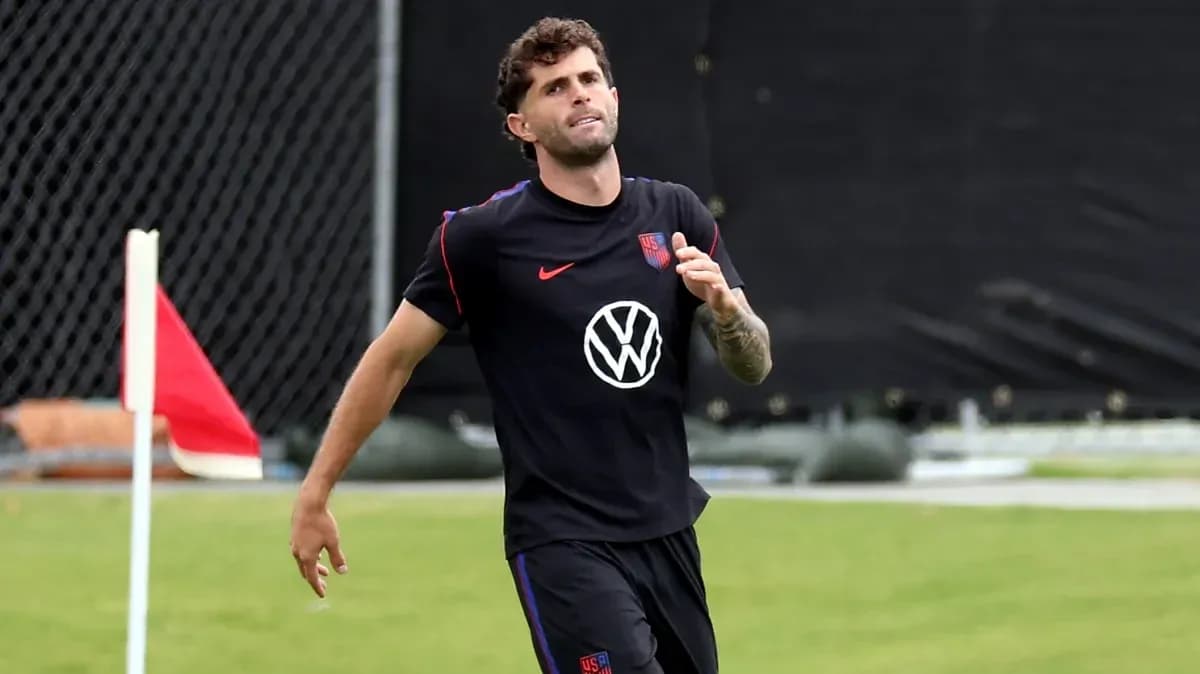
Christian Pulisic, their talisman and creative spark, is racing time and his own calf. He picked up the injury in the days leading up to the Paraguay match, played an impressive first half in that 4-1 win, then did not reappear after the break because of discomfort.
The USA staff now walk a tightrope. Push him and risk losing him for longer. Hold him back and face Australia without the player who knits so much of their attacking play together.
At 27, Pulisic has carried the hopes of this national team for years. Tonight will show whether they can shoulder the load without him, or whether he can play through the pain to shape another crucial group game.
A big night in Seattle
All of that funnels into one fixture.
In Seattle, the USA and Australia meet with three points each and a clear prize on the line: control of Group D. Win, and you seize the inside track to top spot. Lose, and the final round of group games becomes a scrap.
Kick-off is at 8pm local time (12pm PDT), under lights that will catch every sprint, every challenge, every misstep. Pochettino’s USA, fuelled by an opening rout but shadowed by Pulisic’s injury, face an Australian side that has finally learned how to start fast on this stage.
Around them, the World Cup keeps pulsing — Scotland fans in Boston, co-hosts surging, rows already brewing over 2030. But for 90 minutes in Seattle, the story narrows to one question:
Which of these two rising teams grabs hold of this group and refuses to let go?
Related News

UFC 332: Start Time and Fight Highlights for Natalia Silva vs. Wang Cong

Court McGee Opens Up About Choosing UFC 332 as His Final MMA Fight
WBC Orders Lightweight Title Unification: William Zepeda vs Jadier Herrera

BCCI Pension List: Monthly Payments to Retired Indian Cricketers in 2025

Why Fury vs Joshua Is Set for Cardiff, and Dua Lipa’s Unexpected Role
Kei Nishikori Reflects on His Japan Open Debut Nearly Two Decades Before Retirement