
Seattle Reign FC W Secures Narrow 1-0 Victory Over San Diego Wave W
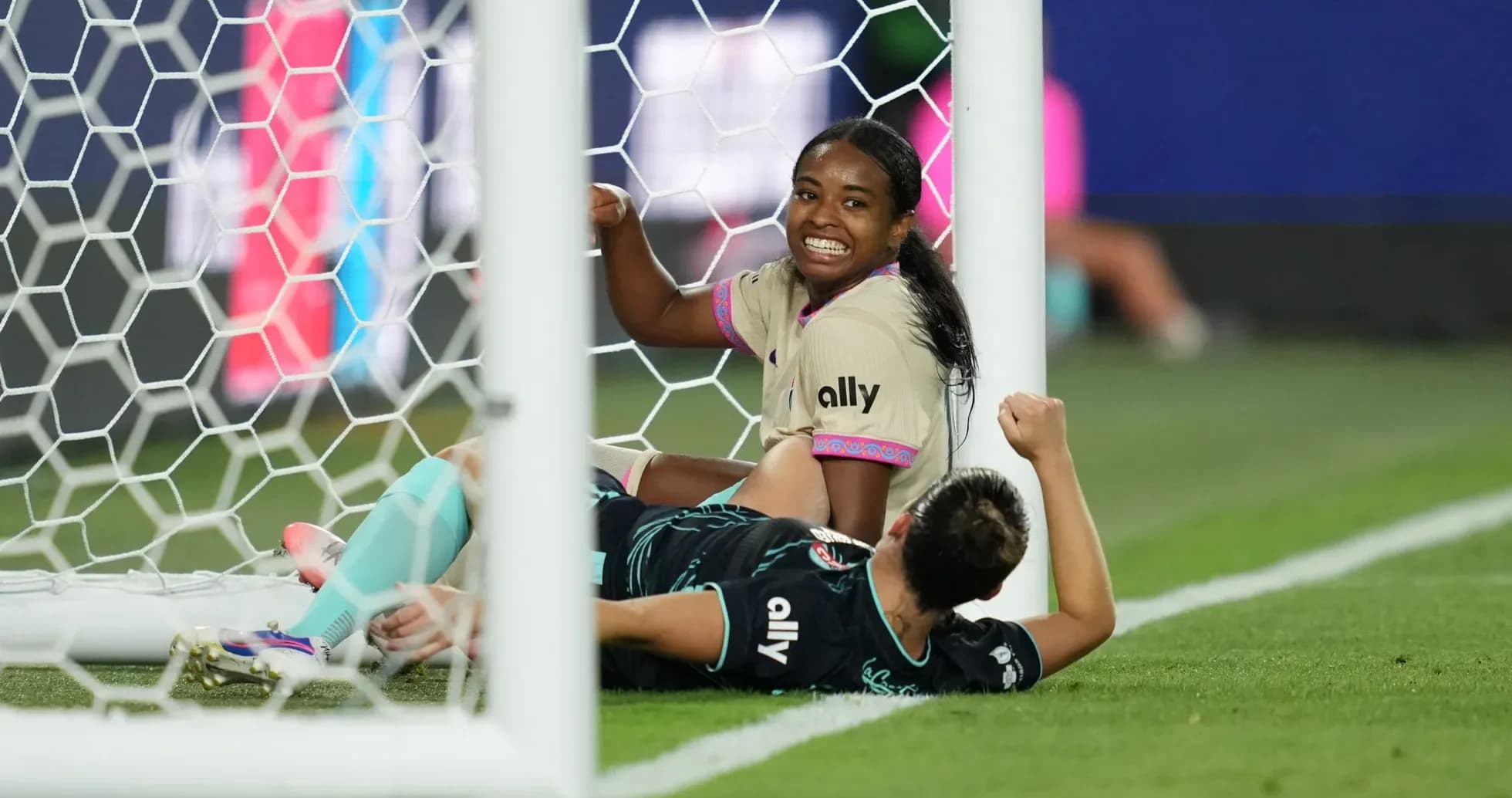
The floodlights at Lumen Field had barely cooled when the story of this Group Stage clash in the NWSL Women felt clear: Seattle Reign FC W, eighth in the table heading into this game, leaned into their defensive identity and their trusted 4-2-3-1 to edge a 1–0 win over a San Diego Wave W side that arrived in Seattle as the more expansive, fifth‑placed outfit. Over 90 minutes, Laura Harvey’s side turned a season of narrow margins into a statement that their structure and discipline can still suffocate one of the league’s most dangerous attacks.
Both coaches mirrored each other on the whiteboard, each opting for a 4-2-3-1, but the shapes carried different intentions. Seattle’s version was conservative and compact, built around a double pivot to protect a back four that has quietly been one of the league’s better home units: heading into this game they had conceded only 9 goals at home across 11 league fixtures, an average of 0.8 per match. San Diego’s, by contrast, was a platform for fluid rotation among their attacking midfielders and a lone striker, reflective of a side that had scored 32 goals in total this campaign at 1.4 per match.
Seattle's Formation
For Seattle, the spine began with C. Dickey in goal, shielded by a back line of S. Huerta, J. Bugg, P. McClernon and R. Brown. In front of them, A. James‑Turner and S. Meza formed the double pivot, with a narrow band of three – M. Dahlien to the left, S. Menti centrally, and top‑scoring midfielder M. Mercado to the right – all working off the movement of M. Fishel as the lone forward.
Harvey’s reliance on this 4-2-3-1 is no accident. Across the season, Seattle have used it 16 times, and their numbers at home tell the story: 6 wins, 2 draws and 3 defeats in 11 matches, scoring 12 and conceding 9. The goal difference of +3 at home (12 scored minus 9 conceded) is modest but underpins a side that leans on clean sheets – 6 at home, 8 in total – and accepts that attacking output will be incremental rather than explosive. That conservatism has a cost: they had failed to score in 4 home matches and 6 overall before this fixture, and their penalty record is a warning sign. From 3 penalties in total this season, they have scored only 2 and missed 1, a 33.33% miss rate that injects uncertainty into any spot‑kick scenario.
First Half Analysis
On this night, though, the structure worked. The first half tilted in Seattle’s favour, and their 1–0 lead at half-time reflected both their capacity to strike early at home and San Diego’s struggle to break down a low block away from their own ground. With an overall goal difference of +1 heading into this game (27 scored, 26 conceded), Seattle’s season has been built on winning tight games rather than blowing teams away, and this match slid neatly into that pattern.
San Diego's Profile
San Diego, meanwhile, arrived with the profile of a contender. Fifth in the standings with 39 points, they had 12 wins from 23 matches, scoring 32 and conceding 26 for a total goal difference of +6. On their travels they had been impressive: 6 wins, 2 draws and 3 defeats in 11 away fixtures, with 15 goals scored and 12 conceded, an away goal difference of +3. Their away attack averaged 1.4 goals per match, matched by an away defensive average of 1.1 conceded, numbers that usually translate into authority on the road.
Jonas Eidevall set them up with S. Panos in goal, a back four of A. D. Van Zanten, K. Wesley, K. McNabb and the combative P. Morroni, and a midfield axis of K. Dali and K. Ascanio. Ahead of them, the trio of M. Barcenas, L. E. Godfrey and T. Byars operated behind Ludmila up front.
Byars' Impact
The selection of T. Byars as the central attacking midfielder was a clear “Hunter vs Shield” storyline. Byars has been one of the league’s most efficient attackers this season: 9 goals and 2 assists from 18 appearances, with 18 shots and 15 on target. Her ability to arrive late in the box and her 14 key passes make her a hybrid finisher‑creator. But she ran into a Seattle defensive unit that, at home, specialises in denying central spaces. With James‑Turner and Meza screening, and Bugg and McClernon holding a tight line, Byars was often forced into deeper zones where her threat was more about link play than penetration.
Flank Duel
On the flanks, the duel between Mercado and Morroni was one of the game’s defining battles. Mercado, Seattle’s leading scorer with 7 goals this season, is a volume shooter (31 shots, 15 on target) and a relentless presser, having contested 178 duels and won 72. Morroni, one of the league’s most aggressive full-backs, came into this fixture with 6 yellow cards and a red‑card‑adjacent disciplinary profile, plus 53 tackles and 4 blocked shots. She is both a progressive outlet and a walking booking. Seattle targeted that edge; Mercado’s constant movement and willingness to drive at the French defender forced Morroni into repeated defensive decisions, and while there were no red‑card fireworks here, the psychological weight of her card history hung over every 50–50.
Engine Room Dynamics
In the “Engine Room” zone, Dali’s role was to orchestrate San Diego’s possession. With 943 passes this season at an 85% completion rate and 39 key passes, she is the metronome and the risk‑taker in one. But Seattle’s double pivot and central block were designed precisely to choke that influence. James‑Turner and Meza tracked her receiving lanes, while Menti dropped in to form a situational three, turning the centre into a numerical superiority that forced San Diego wide. Without the creative presence of Dudinha, who has 5 goals and 4 assists in the league but did not feature in this lineup, San Diego lacked a second line‑breaking threat between the lines.
Disciplinary Records
San Diego’s own disciplinary record subtly shaped the risk calculus. Their season card profile shows a pronounced aggression in the 61–75 minute window, where 20.83% of their yellow cards arrive, and an early‑game volatility with a red card already shown in the 0–15 minute range this season to A. D. Van Zanten. That history likely tempered how hard they could press after the interval, especially with Van Zanten and Morroni both key to their width and transition defence.
Set-Piece Narratives
Set‑piece and penalty narratives also hung in the background. San Diego’s penalty record this season is stark: 2 penalties awarded, 0 scored and 2 missed, a 100% miss rate that undercuts their otherwise strong attacking numbers. Luisa Agudelo, who has 5 goals and 3 assists and has missed a penalty herself, embodies that paradox: technically gifted, productive, but with a fragile record from the spot. By contrast, Seattle’s 2‑from‑3 conversion is better but still far from clinical. In a tight, knockout‑style Group Stage match, neither side could bank on penalties as a reliable edge.
Tactical Affirmation
Ultimately, the statistical prognosis for this fixture always hinted at a narrow margin. Seattle’s overall scoring rate of 1.2 goals per match and conceding rate of 1.2 framed them as a team that lives in one‑goal games. San Diego’s more potent 1.4 goals for and 1.1 against suggested they could tilt such contests in their favour, especially away, but only if they could drag opponents into open exchanges.
Seattle refused that invitation. They leaned on the familiarity of their 4-2-3-1, the security of a home defence that concedes less than a goal per game, and the individual quality of Mercado and Fishel in transition. San Diego, missing some of their usual creative variety and carrying the weight of a fragile penalty history and a combustible back line, found themselves locked out and chasing shadows rather than space.
Following this result, the story of the night is not just a 1–0 scoreline, but a tactical affirmation: in a league increasingly defined by high‑tempo chaos, Seattle’s controlled, disciplined structure can still bend the game to its tempo, even against one of the NWSL’s most dangerous attacks.
Related News

Kansas City W vs Orlando Pride W Prediction: Preview and Betting Tips

Portland Thorns W vs Chicago Red Stars W: Head-to-Head Stats and Insights

Orlando Pride Triumphs Over Houston Dash in NWSL Showdown

Portland Thorns vs Washington Spirit: Tactical Analysis of NWSL Clash
Washington Spirit W vs Boston Legacy W Stats: Head-to-Head Record

San Diego Wave W vs North Carolina Courage W: Head-to-Head Stats