
Socceroos vs USA: From Underdogs to Contenders
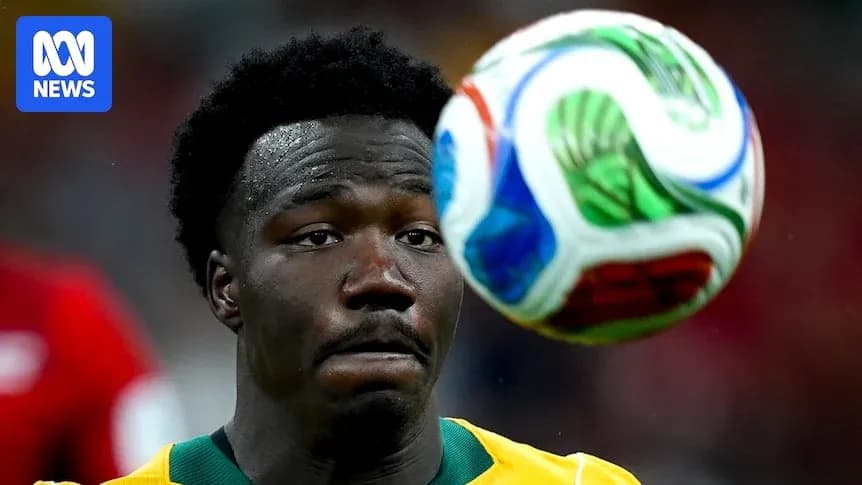
They were supposed to be a footnote. A “lay‑up”, as Mike Grella so casually put it when the draw came out. A soft touch at the far edge of the footballing map.
Now the Socceroos are staring the United States in the eye in what already feels like a Group D playoff, and all that pre‑tournament bravado is ageing badly.
From “lay-up” to live threat
In the build‑up, some of the loudest noise came not from the pitch, but from the US pundit class. Grella’s “lay‑up” line was followed by Landon Donovan dismissing Australia as group makeweights, predicting they would finish bottom and branding Tony Popovic “smug”.
It has not gone well for him. Donovan has spent this tournament picking fights he cannot win, calling France “arrogant” and earning public rebukes from Zlatan Ibrahimovic and Thierry Henry. When those two line up on one side of a debate, most people know which way to lean.
Inside the US camp, though, the tone is very different. The players are not buying the easy narrative.
“All the talk is nonsense to me,” Tim Weah said on Tuesday. “When you look at the Australian team, they are a young team that have a lot of fight, a lot of grit and a lot of hunger, just like us.
“We respect them in the same way that we would respect any other opponent. I don’t know what the media is trying to do, but we’re not really focused on that. We’re focused on the bigger picture and doing what we have to do as a team to be prepared.”
That “bigger picture” has shifted quickly. The US swatted aside Australia in a pre‑tournament friendly and both sides opened this World Cup with emphatic wins. What looked like a comfortable fixture on paper has hardened into the game that may decide who wins the group.
The irony is sharp. The team everyone in the US thought it was safe to mock has become the most serious obstacle to topping the section.
Bad blood in the Rockies
There is more than table position at stake. There is history, and it is still fresh.
Last October in Colorado, the two sides played out a snarling friendly that set the tone for what is expected in Seattle. That night brought the first defeat of the Popovic era, a 2‑1 US win, but the scoreline told only part of the story.
Mauricio Pochettino tore into his players at half-time, furious at how they had allowed themselves to be kicked around.
“Watching that game last year, you could see they were up for it,” Sebastian Berhalter recalled this week. “They were putting in challenges, and I think that’s one of the reasons Mauricio had that halftime rant, and said, ‘These guys can’t kick us around.’ I think he was right.”
The referee lost control. Both sides flew into tackles. Both sides got away with plenty. Christian Pulisic limped off after heavy contact from Jason Geria, and the temperature rose with every challenge.
“The game in Colorado was fun,” Weah said, choosing his words carefully. “That experience was fun. It was aggressive. I think from that game, we’ve changed a lot. We’ve gotten a bit more aggressive as well.”
The response that night was telling. With Pulisic off the pitch, the US found both goals, matching Australia’s physicality and then some. They refused to be bullied and turned the match on its head.
Now, they are openly embracing that edge.
“I think we need to play on the edge of the line,” Pochettino said on the eve of this reunion. “With not crossing the lines of the rules.”
Berhalter, who stepped into the spotlight with his World Cup debut against Paraguay, may again be asked to tilt the midfield battle.
“It’s going to be a physical game, but a fun game, and we’re excited,” he said. “[The Socceroos] are going to fight. We like teams that have that brotherhood, you know? We like teams that you can see they’re hungry, they want to fight.”
The message is clear: this will not be a friendly, in any sense of the word.
Popovic’s kids grow up fast
On the other side, Popovic has been careful to keep his young squad grounded. The 2‑0 win over Türkiye – a performance built on ruthless counter‑attacking and a granite defensive base – turned heads, but he treated it as a starting point, not a destination.
“Yes, they should get a boost, of course,” he said. “Ceiling? They’re nowhere near it.
“They’re a young group with no experience in the World Cup, very limited experience playing for their national team. Their ceiling should come in four or eight years, really, most of these boys.
“We know we need that, but we are delighted with the result.”
The numbers back him up. The XI that walked out in Vancouver had an average age of just 24 years and 226 days, the youngest Australia have ever fielded at a World Cup. Seven members of this squad – Lucas Herrington, Patrick Beach, Mohamed Touré, Alessandro Circati, Cristian Volpato, Paul Okon‑Engstler and Nestory Irankunda – are 22 or younger on the opening day of the tournament.
Only Senegal, with eight, bring more under‑23s to this World Cup.
This is a team being built for tomorrow that has barged into the conversation today. Raw, fearless, and not remotely interested in the old hierarchy that had them pencilled in as cannon fodder.
Noise, steel and 66,000 voices
All of it funnels into one of the most intimidating stages the tournament can offer.
Lumen Field, home of the Seattle Seahawks and Seattle Sounders, is no ordinary stadium. The north end opens onto the city skyline, a pyramid of seats rising into a video‑screen tower that seems to plug straight into downtown. When it fills, the place shakes – literally. Seahawks fans have generated seismic waves measured at 2.3 on the Richter scale.
Cristian Roldan has lived that noise since 2015. He knows what is coming.
“I fully expect this crowd to be extremely loud. And they’re going to energise our group,” he said. “This is one of the loudest stadiums in the world when you think about Seahawks games or Sounders games.
“Just seeing the Belgium game against Egypt and how the atmosphere was there, I fully expect the city of Seattle to come out and show out, and I think the guys are going to feel that type of energy.”
For this World Cup, the capacity sits at 66,925. Six matches will roll through here, but few will arrive with as much simmering context as USA v Australia.
A US team that has learned to enjoy the scrap. An Australian side that refuses to accept its assigned role. A media narrative already turned on its head.
The stadium will provide the noise. The question now is which of these two hard‑running, hungry young teams can rise above it and own the moment.
Related News

Anthony Joshua Names Murat Gassiev as Next Opponent if He Defeats Tyson Fury

UFC 332: Start Time and Fight Highlights for Natalia Silva vs. Wang Cong
Court McGee Opens Up About Choosing UFC 332 as His Final MMA Fight
WBC Orders Lightweight Title Unification: William Zepeda vs Jadier Herrera
BCCI Pension List: Monthly Payments to Retired Indian Cricketers in 2025
Why Fury vs Joshua Is Set for Cardiff, and Dua Lipa’s Unexpected Role