
South Korea vs Czechia: Tactical Analysis of World Cup 2026 Opener
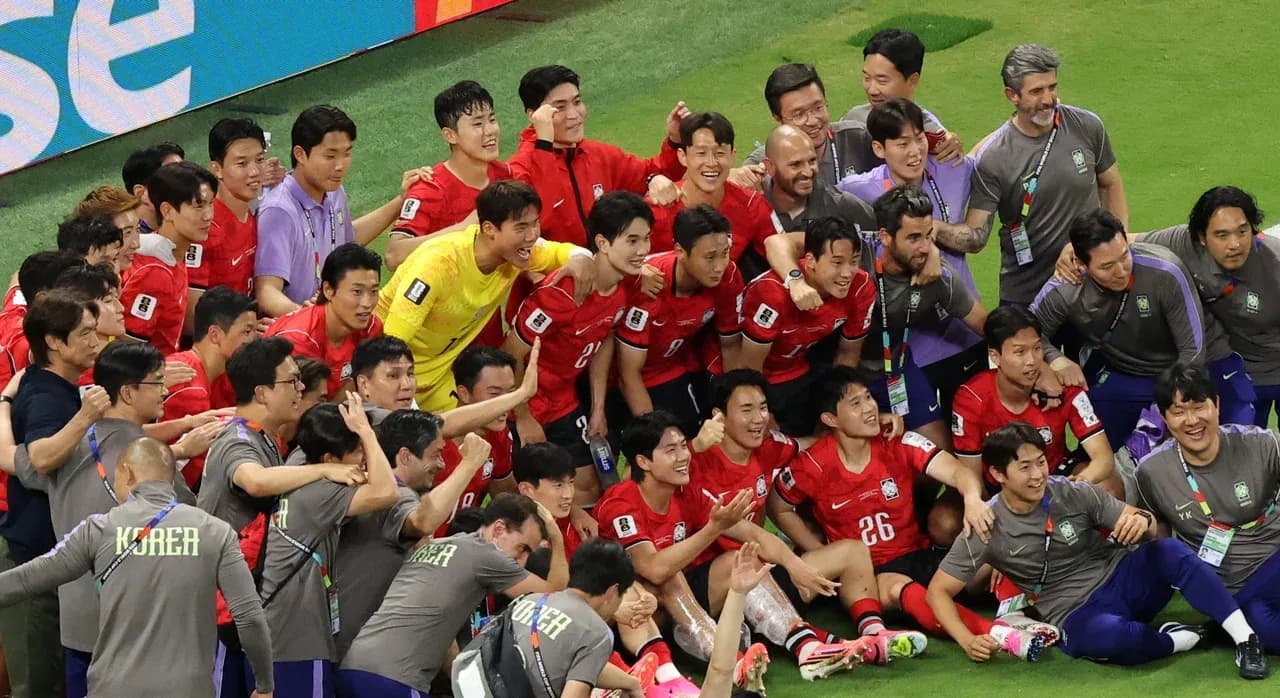
Under the lights of Estadio Akron in Guadalajara, South Korea and Czechia opened their World Cup 2026 journeys with mirrored tactical blueprints but diverging destinies. Both coaches, Myung-Bo Hong and Miroslav Koubek, sent their sides out in a 3-4-2-1, yet the same shape produced a 2-1 South Korean victory and two very different stories of control, adaptation, and risk.
Following this result, South Korea sit 2nd in Group A with 3 points, their overall goal difference at +1 after scoring 2 and conceding 1. Czechia, beaten by the same margin, are 3rd with 0 points and an overall goal difference of -1. The scoreline reflects a tight contest, but the underlying structures reveal why the Asian side’s plan translated into three points while the Europeans left with only a sense of what might have been.
I. The Big Picture – Mirrored Systems, Different Souls
South Korea’s 3-4-2-1 was built on clarity and continuity. This is the only lineup they have used so far in the tournament, and it shows: a back three of Gi-Hyuk Lee, Kim Min-jae and Han-Beom Lee, shielded by a hard-working midfield quartet and given creative freedom in the final third through Jae-sung Lee, Kang-in Lee, and Son Heung-min.
Overall this campaign, South Korea have played 1 match, winning it, scoring 2.0 goals per game at home and conceding 1.0. There is no clean sheet yet, but there is a clear attacking identity. The ball flows through Hwang In-beom, who has been one of the standout performers of the entire group stage so far. In total this campaign he has 1 goal and 1 assist, with 81 completed passes at 90% accuracy and a rating of 8.9. He is both metronome and scalpel.
Czechia, also in a 3-4-2-1, approached the game with a more direct, physically assertive interpretation. Their overall record now reads 1 match, 1 loss, 1.0 away goals for and 2.0 away goals against. The back three of Ladislav Krejčí, Robin Hranáč and Štěpán Chaloupek had to manage space against South Korea’s fluid front line, while the wing-backs Vladimír Coufal and Jaroslav Zelený were tasked with stretching the pitch and feeding the front trio of Lukáš Provod, Pavel Šulc and Patrik Schick.
II. Tactical Voids – Discipline, Risk, and the Red-Card Shadow
If there was a hidden fault line in South Korea’s display, it lay in discipline. Their season card profile is already skewed by a single, dramatic incident: one yellow and one red card both attributed to Gi-Hyuk Lee, recorded in the 91-105’ window. The statistics show 1 yellow card and 1 red card for him, and the team’s yellow-card distribution is stark – 100.00% of their cautions so far have come in that 91-105’ band. It paints a picture of late-game strain, a side that can become stretched and emotional when protecting a lead.
That dismissal reshaped the closing stages. With Lee sent off, Hong’s back line was forced into emergency defending, compressing into a makeshift two-plus-wing-back structure, narrowing the pitch and relying on Kim Min-jae’s anticipation and Kim Seung-gyu’s positioning to survive Czechia’s late push.
Czechia’s disciplinary slate, by contrast, is clean across the tournament data: no recorded yellows or reds by minute range. Yet that numerical discipline did not translate into defensive security. Their overall goals against average on their travels sits at 2.0, and they have yet to register a clean sheet. The absence of cards hints at a team that perhaps erred on the side of containment rather than aggressive disruption in midfield, allowing Hwang and Kang-in Lee too much room between the lines.
III. Key Matchups – Hunter vs Shield, Engine Room vs Enforcer
Hunter vs Shield
For South Korea, the “hunter” role is spread across a trio rather than a single poacher. Son Heung-min’s gravity pins back lines, but in this match the lethal edge came from deeper and wider: Hwang In-beom and substitute Hyeon-gyu Oh. Oh, coming from the bench, needed only 28 minutes to score 1 goal from 1 shot on target, winning 3 of 4 duels and adding a key pass. He is the late-game striker who turns territorial dominance into numbers.
On the Czech side, the unlikely hunter was Krejčí. Listed as a defender, he scored their only goal, finishing his night with 1 shot, 1 goal, and 43 passes at 72% accuracy. He also won 7 of 13 duels and made 3 tackles. In essence, he became an auxiliary target man and breaker of lines, stepping out of the back three to challenge South Korea’s midfield block.
Against him, South Korea’s “shield” was fragmented by the red card but still held. Gi-Hyuk Lee, before his dismissal, completed 62 passes at 93% accuracy and made 3 interceptions, winning 6 of 10 duels. His ability to step in front of Schick and Provod was central to limiting Czechia’s sustained pressure. Once he departed, Kim Min-jae’s leadership and positioning became the last bulwark.
Engine Room – Hwang vs Souček
The true chessboard was in midfield. Hwang In-beom orchestrated South Korea’s tempo with those 81 passes, 3 shots (2 on target), and 2 interceptions. He is both top scorer and top assister for his country in this campaign, a dual role that makes him the central problem for any opponent.
Opposite him, Tomáš Souček was meant to be Czechia’s enforcer and vertical outlet. While his detailed defensive stats are not fully listed in the dataset, his positioning at the heart of the 3-4-2-1 double pivot was designed to screen the back three and contest second balls. Yet the numbers around him tell a harsher truth: Czechia’s overall goals against of 2.0 away suggests that the midfield shield was repeatedly pierced, particularly when Kang-in Lee drifted inside.
Kang-in Lee’s 8.2 rating, 37 passes at 100% accuracy, 3 key passes, and 5 successful dribbles from 6 attempts underline how often he escaped Czech pressure. Time and again he received between the lines, turned, and forced the Czech back line to step out, dislocating the shape Souček was trying to protect.
On the right flank, Coufal’s duel with Lee Tae-seok and Jae-sung Lee was another tactical hinge. Coufal produced 1 assist, 26 passes at 65% accuracy, and 1 interception, but he also committed 3 fouls and won only 2 of 9 duels. His forward thrust gave Czechia width, yet each turnover invited Korean counters into the space he left behind.
IV. Statistical Prognosis – xG Echoes and Defensive Solidity
While explicit xG values are not provided in the dataset, the shot and passing profiles allow a reasoned reading of the balance of chances. South Korea’s overall attacking return of 2.0 home goals per game, coupled with high individual shooting efficiency from Hwang (2 shots on target from 3) and Oh (1 from 1), suggests a side that converts a good share of its opportunities rather than relying on volume.
Czechia’s overall 1.0 away goals for, with Krejčí scoring from his only shot, hints at a more opportunistic, lower-volume attack. The creative burden fell heavily on Coufal and Provod to find Schick, but the data does not show a second wave of high-quality chances beyond the goal itself.
Defensively, South Korea’s overall average of 1.0 home goals against is not elite, but the structure of their 3-4-2-1 – especially with Gi-Hyuk Lee and Kim Min-jae in the back line and Hwang screening – looks robust enough when at full strength. The real warning light is discipline: with 100.00% of their yellows recorded in the 91-105’ window and a red to their most active defender, late-game management could undermine their solidity if repeated.
Czechia’s defensive prognosis is more fragile. An overall away goals against average of 2.0, no clean sheets, and a reliance on Krejčí to both defend and score speaks to a unit still searching for balance. If Koubek continues with this 3-4-2-1, he may need to either drop his wing-backs deeper against stronger opponents or introduce a more destructive midfielder alongside Souček to limit the kind of central overloads that Hwang and Kang-in Lee exploited.
In narrative terms, this match felt like a microcosm of both teams’ tournament trajectories. South Korea look like a side with a clear identity: a possession-based 3-4-2-1 anchored by a conductor in Hwang and lit by the creativity of Kang-in Lee, with impactful depth in Hyeon-gyu Oh. Their weaknesses – late-game discipline and the vulnerability that comes with a high defensive line when reduced to ten men – are real but manageable.
Czechia, by contrast, leave Guadalajara knowing their structure is promising but incomplete. Krejčí’s emergence as both defender and scorer, Coufal’s adventurous wing play, and Schick’s presence give them weapons. Yet until their midfield can consistently smother players like Hwang and Kang-in Lee, and until their back three can defend without relying on last-ditch heroics, their statistical profile – 0 points, -1 goal difference, 2.0 away goals conceded – will continue to mirror the narrow margins of this 2-1 defeat.
Related News
Estevao Opens Up on World Cup Heartbreak and His Unexpected Return to Brazil Under Ancelotti
Thomas Tuchel Shares Unusual Regret After England's 10-Man World Cup Victory Over Mexico

South Korea Names Robert Moreno as Interim Coach After World Cup Exit

Jude Bellingham Returns to Form at Real Madrid Following World Cup Success

Chloe Kelly, Beth Mead and 13 Lionesses Target Big WSL Seasons Ahead of England's 2027 World Cup Campaign
Barcelona Cancels World Cup Tribute for Spain Stars Amid Political Tensions