
Spain Dominates Austria 3-0 in World Cup Knockout Stage
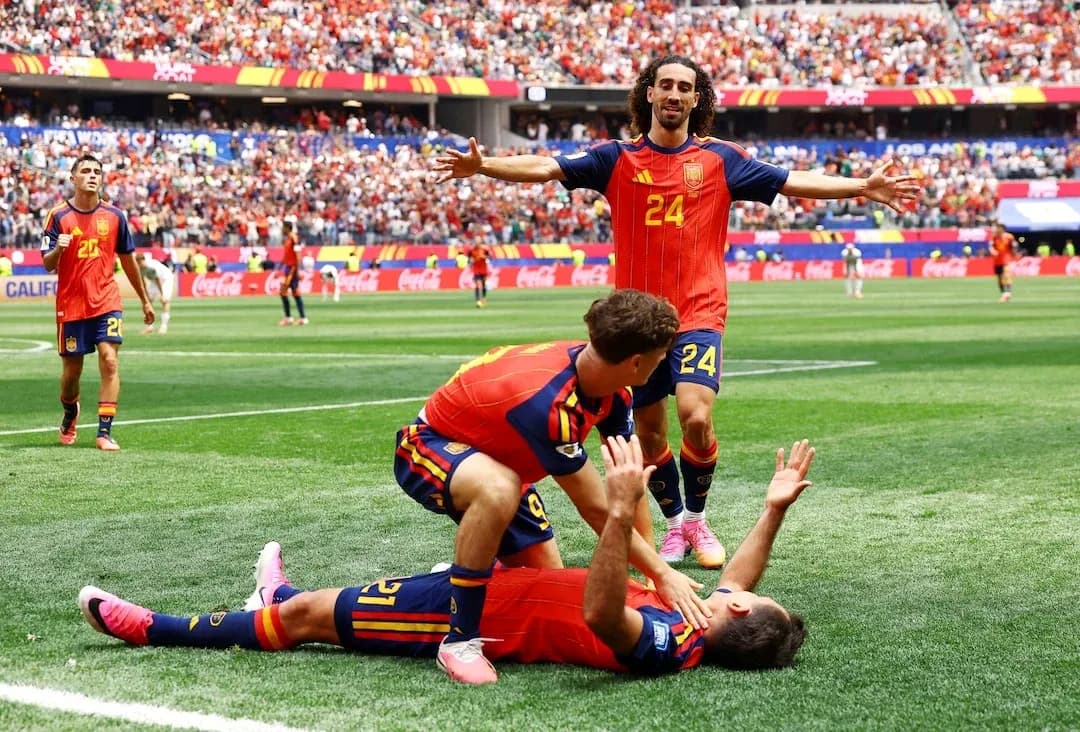
Spain 3-0 Austria at SoFi Stadium sends Luis de la Fuente’s side into the World Cup Round of 16 with authority, extending their unbeaten run and underlining their status as one of the tournament’s form teams. Group H winners coming into the Round of 32, Spain add three more goals to an already flawless defensive record, while Austria’s campaign ends with a comprehensive defeat that exposes the gap between their group-stage resilience and true knockout-level control.
Match Report
The game settled early into a familiar pattern: Spain monopolising the ball and Austria retreating into a compact 4-2-3-1 block. The breakthrough came on 36', Spain goal — Mikel Oyarzabal (assisted by Marc Cucurella). The left-back overlapped again, delivered low into the box and Oyarzabal timed his movement across the front post to steer in, rewarding Spain’s territorial dominance and giving them a 1-0 half-time lead.
Austria sought a reset at the interval with a double change on 46': Carney Chukwuemeka replaced Nicolas Seiwald (Austria), adding a more vertical profile in midfield, and Florian Grillitsch replaced Xaver Schlager (Austria) to improve their build-up and passing range from deep. The structural tweak pushed Marcel Sabitzer higher, but Austria still struggled to progress through Spain’s counter-press.
On 60', Ralf Rangnick rolled the dice again: Marko Arnautovic replaced Michael Gregoritsch (Austria) to provide more mobility and link play up front, while Saša Kalajdžić replaced Romano Schmid (Austria), effectively turning Austria into a more direct, dual-striker threat. Yet the next decisive action came at the other end.
On 66', Spain doubled their lead, Spain goal — Pedro Porro (assisted by Alex Baena). Baena drifted inside from the left half-space and slid a disguised pass into the right channel, where Porro had underlapped to arrive in the box and finish low across Alexander Schlager. At 2-0, Spain’s control of territory and tempo was finally reflected in the scoreline.
De la Fuente then began to manage minutes. On 71', Ferran Torres replaced Alex Baena (Spain), offering fresh legs and depth in wide areas, and Mikel Merino replaced Dani Olmo (Spain), adding height and defensive security in midfield to protect the lead while still enabling Spain to sustain pressure.
Austria’s growing frustration surfaced on 83', when Stefan Posch (Austria) — yellow card (Holding) — was booked for halting a Spanish transition down the flank, a rare moment where Austria were exposed in the open field.
Spain continued to rotate in the closing stages. On 85', Gavi replaced Lamine Yamal (Spain), a like-for-like swap in terms of central occupation but with more control than direct wing threat. Simultaneously, Austria adjusted their back line as Alexander Prass replaced Stefan Posch (Austria), a change that shifted the defensive balance but came too late to alter the pattern.
The third goal arrived on 89', Spain goal — Mikel Oyarzabal (assisted by Marc Cucurella). Once again, Cucurella advanced aggressively from left-back, and his delivery found Oyarzabal attacking the space between centre-back and full-back to finish, sealing both his brace and Spain’s dominance at 3-0.
In added time, Spain made two final substitutions to close the game out. On 90+3', Fabián Ruiz replaced Pedri (Spain), reinforcing control in midfield, and Marc Pubill replaced Aymeric Laporte (Spain), adding fresh legs in the back line for the final moments as Spain calmly saw out a win that had long felt inevitable.
Fixture Statistics & Tactical Audit
- xG: Spain 2.84 vs 0.32 Austria
- Possession: Spain 65% vs 35% Austria
- Shots on Target: Spain 10 vs 0 Austria
- Goalkeeper Saves: Spain 0 vs 6 Austria
- Blocked Shots: Spain 7 vs 1 Austria
The numbers paint a picture of a dominant Spain (2.84 xG, 23 total shots, 65% possession) whose 3-0 margin was entirely in line with the underlying chance quality. Their high volume of shots inside the box and seven blocked efforts underline how often they were able to pin Austria deep and force last-ditch defending. Austria, by contrast, failed to register a single shot on target (0.32 xG from five attempts), a reflection of how effectively Spain controlled central spaces and restricted them to speculative efforts. Alexander Schlager’s six saves kept the scoreline from becoming heavier, while Spain’s goalkeeper was untested, underlining the one-sided territorial and chance profile.
Standings Update & Seasonal Impact
Spain arrived in the Round of 32 as Group H winners with 7 points, 5 goals scored and none conceded. This 3-0 victory lifts them to 10 points in the tournament, with their goals for tally rising to 8 and goals against still at 0, stretching their goal difference to +8. It is the continuation of a campaign defined by control and defensive perfection, and it sends them into the Round of 16 with both momentum and a clear tactical identity.
Austria, who had progressed from Group J with 4 points and a neutral goal difference (6 scored, 6 conceded), exit the competition with their total remaining at 4 points but their goals for and against columns shifting to 6 and 9 respectively, dropping their goal difference to -3. The defeat exposes the limitations of their current model against elite possession sides: while effective enough to escape the group, their inability to create high-quality chances here ultimately ended their World Cup run at the Round of 32 stage.
Lineups & Personnel
Spain Starting XI
- GK: Unai Simón
- DF: Pedro Porro, Pau Cubarsí, Aymeric Laporte, Marc Cucurella
- MF: Rodri, Pedri, Lamine Yamal, Dani Olmo, Alex Baena
- FW: Mikel Oyarzabal
Austria Starting XI
- GK: Alexander Schlager
- DF: Stefan Posch, Kevin Danso, David Alaba, Konrad Laimer
- MF: Nicolas Seiwald, Xaver Schlager, Romano Schmid, Paul Wanner, Marcel Sabitzer
- FW: Michael Gregoritsch
Post-Match Verdict
This was a clinical Spain performance (3 goals from 2.84 xG, 10 shots on target) built on territorial dominance and structural control. Their 4-2-3-1 consistently overloaded the half-spaces, with Cucurella and Porro providing width and penetration from full-back, while Rodri and Pedri dictated the rhythm and ensured quick counter-pressing whenever possession was lost. The recurring combination of Cucurella’s advanced positioning and Oyarzabal’s intelligent movement was a deliberate pattern, not an accident, and it yielded two of the three goals.
Defensively, Spain were equally impressive, limiting Austria to 0 shots on target and just 0.32 xG, with seven Spanish blocks showing how quickly they collapsed around the ball in their own third. Austria’s plan to sit compact and counter was undermined by their struggle to escape the press: they managed only five shots and no corners, indicating how rarely they sustained attacks in the final third. While Schlager’s six saves and some last-ditch interventions prevented a heavier defeat, the lack of offensive threat made this a comfortable night for Spain and a clear illustration of the gap between a well-drilled possession heavyweight and a side reliant on reactive, low-possession football at this level.
Related News

FIFA Dismisses COO Kevin Lamour After Criticizing Infantino’s World Cup Investment Plan
PSG Near €55m Deal to Sign World Cup Star Ferran Torres from Barcelona
Qualified Teams for the 2027 Women’s World Cup in Brazil: Complete List

Premier League 2026-27 Season Preview: Arsenal's Title Defense, Fresh Faces, and What Lies Ahead
Carlo Ancelotti Supports Neymar’s World Cup Selection as Brazil Legend Retires
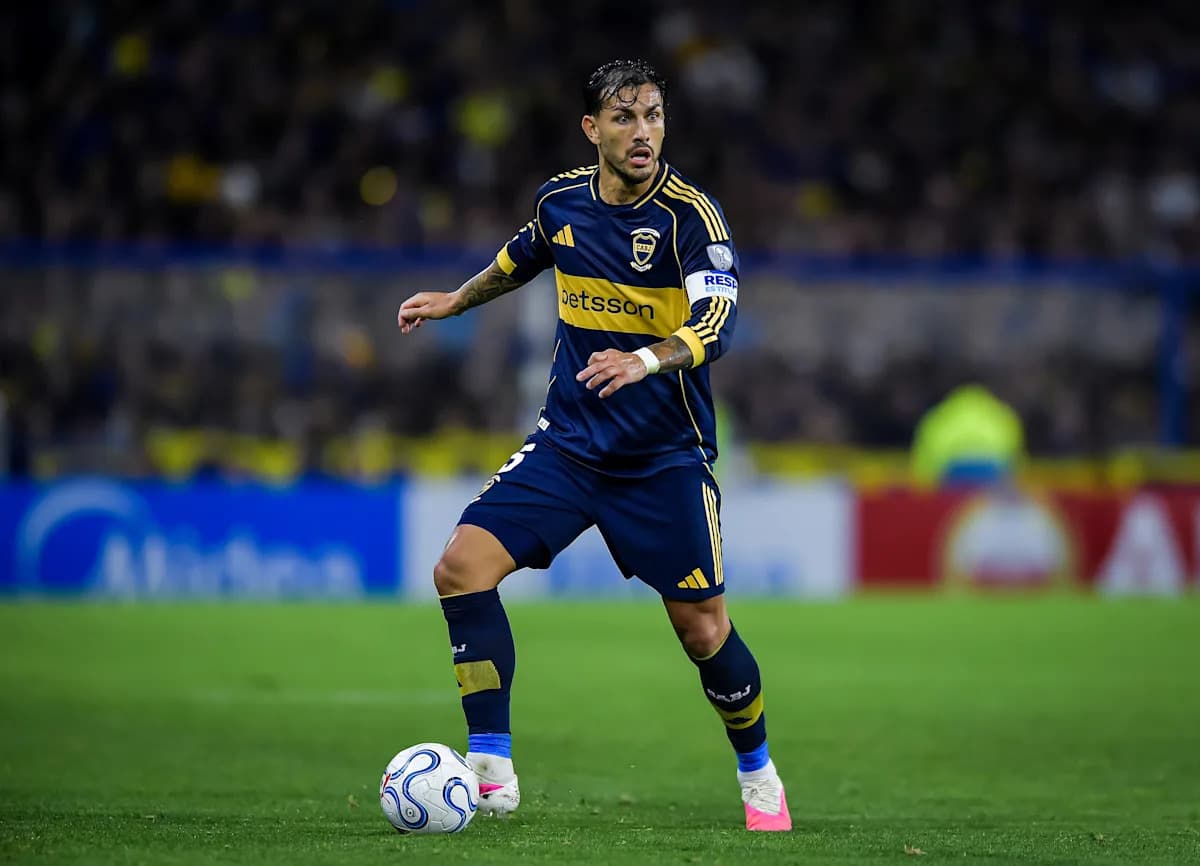
Leandro Paredes Returns to Action Just Days After World Cup Final Controversy