
Sporting JAX and San Antonio Battle to Thrilling 4-4 Draw
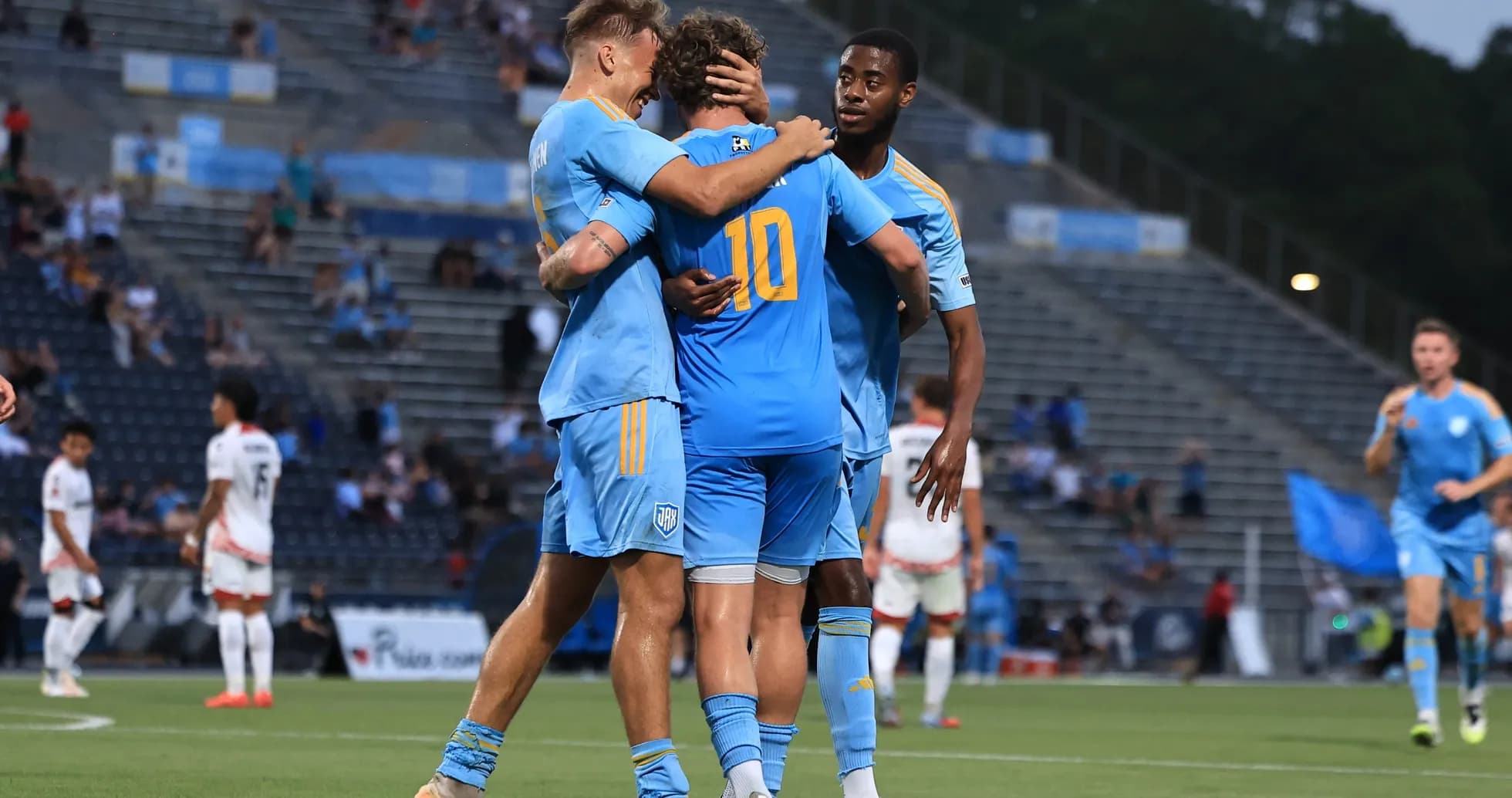
Under the Hodges Stadium lights, this Group Stage clash in the USL Championship turned into something far more than a routine top‑versus‑bottom encounter. Sporting JAX, rooted in 13th in USL 1 with just 2 points from 10 matches and a goal difference of -14 heading into this game, raced into a 3-0 half-time lead before league leaders San Antonio, first in the group on 21 points, dragged the night into chaos and eventually parity. The 4-4 full-time score felt like two different matches welded together.
For Sporting JAX, whose season-long DNA has been defined by fragility – 10 goals for and 24 against overall, conceding an average of 2.4 per match – this fixture initially looked like a statement of reinvention. At home they had been brittle, allowing 12 goals in just 4 games, an average of 3.0, with no clean sheets all season. Yet the starting XI carried an aggressive, front-foot feel: C. Olivares in goal behind a back line of E. Rito, H. Neville, R. Edwards and A. Gomez, with T. Rose adding defensive presence. Ahead of them, the technical core of K. Sadlier and J. Rossiter was tasked with stitching transitions into service for the mobile trio of R. Pedder, E. Jaaskelainen and A. Al Qaq.
Opposite them, San Antonio arrived with the measured confidence of a side that had lost only once in 12, scoring 18 and conceding 14 overall. Their defensive record at home had been superb, but on their travels they were more human: 8 goals scored and 9 conceded in 6 away matches, averaging 1.3 for and 1.5 against. That away looseness was reflected in the starting group: R. Sanchez in goal; a defensive unit built around R. Buckmaster, A. Crognale, D. Barbir and M. Taintor; a midfield shield of N. Blanco and D. Erofeev; with M. Maldonado, C. Calov and J. Hernandez supplying C. Sorto up top.
The tactical voids in this fixture were more structural than personnel-based. With no formal list of absentees, both coaches had close to full decks, yet Sporting JAX’s season-long issues were baked into their numbers. They had failed to score in 5 of 10 matches overall, and at home their attacking average of 1.5 goals per game had been constantly undermined by defensive collapse. Their disciplinary profile hinted at a team that frays as matches wear on: 28.57% of their yellow cards and 50.00% of their red cards had come in the 76-90 minute window heading into this game, a late-game surge of indiscipline that often invites pressure.
San Antonio, by contrast, are controlled rather than chaotic. They had accumulated yellow cards in a steady mid-to-late-game band – 19.44% between 46-60 minutes, 22.22% between 61-75, and 19.44% between 76-90 – but with no red cards at all. That profile speaks to a side that can live on the edge without tipping over it, an attribute that would prove vital as they chased the game in Jacksonville.
On the pitch, the “Hunter vs Shield” narrative was inverted. Statistically, San Antonio’s attack is the hunter: 1.5 goals per match overall, with a highest away haul of 4 and a demonstrated ability to win 2-3 on their travels. Sporting JAX’s shield, in theory, is porous: 3.0 goals conceded per home game, with their heaviest home concession being 4. Yet in the first half, it was the bottom side who hunted. The front three of Pedder, Jaaskelainen and Al Qaq constantly asked questions of a San Antonio back line that has been more comfortable dictating territory than defending large spaces. Sadlier and Rossiter knitted play vertically, and the home side’s historical weakness – protecting their own box – was masked by relentless pressing and numbers committed forward.
San Antonio’s response after the break, however, revealed why they sit atop USL 1. The “Engine Room” battle shifted. Early on, Blanco and Erofeev had been outnumbered and forced into reactive defending. As the second half wore on, they began to assert control, winning second balls and feeding the creative axis of Maldonado, Calov and Hernandez. The bench options – S. Patino, L. Haakenson, A. Souahy, A. Ward, E. Cuello, L. Berron and V. Velazquez – gave Carlos Llamosa multiple vectors of change. Each substitution injected either fresh legs in wide channels or extra presence between the lines, and the cumulative effect was a San Antonio side that could maintain pressure without losing defensive structure.
The defensive resilience that had produced 5 clean sheets overall for San Antonio this season did not manifest as a shutout, but rather as a refusal to mentally collapse at 3-0 down and then again when chasing a late equaliser. On their travels they had already kept 2 clean sheets and only once conceded more than 2, but here their back line was exposed by the volume and ferocity of Sporting JAX’s first-half surges. Still, the psychological solidity that underpins a record of just 1 away defeat in 6 allowed them to keep playing their football rather than chasing chaos.
For Sporting JAX, the bench told a different story. J. McGuire, W. Ackwei, W. Kuzain, J. Evans, E. Dudley, L. Granitur and D. Armstrong offered energy, but the season-long numbers betray a squad built more for moments than for 90-minute control. They had never won a league game heading into this fixture, with 0 victories from 10, and their longest streak in the season data showed 7 consecutive defeats. Even in a night where their attack finally roared, the underlying habit of conceding – 12 goals at home, 12 away – resurfaced once San Antonio increased the tempo and forced them into deeper, more desperate defending.
From a statistical prognosis standpoint, a wild 4-4 was always within the realm of possibility once you overlay San Antonio’s consistent away scoring (1.3 on average) with Sporting JAX’s home concession rate of 3.0. Even without explicit xG figures, the profiles suggest a match where the leaders were likely to generate enough chances to at least match their typical away output, and the hosts, buoyed by the need to break a winless run, were always going to push numbers forward. The late-game card patterns for Sporting JAX, combined with San Antonio’s habit of drawing matches away (4 draws from 6 on their travels), pointed to a scenario where the visitors would be the calmer side in the final stretch.
Following this result, the narrative for both squads crystallises. Sporting JAX discovered they can hurt the best team in the group, but their season-long defensive DNA remains unchanged. San Antonio, meanwhile, showed why they are promotion contenders: not because they are flawless, but because they can survive flawed performances and still emerge with something. The next time these sides meet, the tactical preview will be shaped by this night – a reminder that even a team with 0 wins overall can, for 45 minutes, look like a contender, and that the league leaders’ true strength lies in what they do when everything goes wrong.
Related News
San Antonio's Tactical Edge Secures 2–1 Victory Over Colorado Springs

Charleston Battery Dominates Loudoun United 4–1 in Statement Win

Miami FC vs Orange County SC: USL Championship Clash Highlights
Colorado Springs vs San Antonio: USL Championship Group Stage Preview

Charleston Battery vs Loudoun United: Match Preview
Miami FC vs Orange County SC Match Preview