
Sunderland's Defeat to Huddersfield: A Pre-War Snapshot
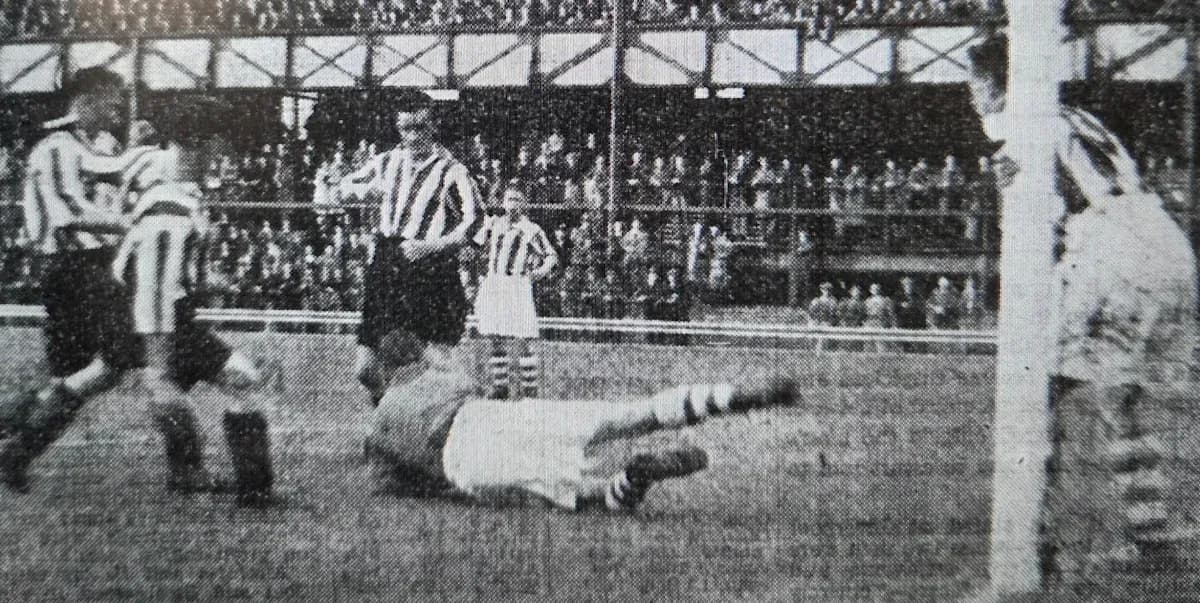
On the eve of war, Sunderland’s worries were still mainly about football.
Bill Murray had only just taken the reins from Johnny Cochrane that spring, a former player stepping into his old manager’s shoes with a clear brief: restore standards at Roker Park. The club of the 1936 league title and 1937 FA Cup win had drifted badly in Cochrane’s final season. Murray’s task was to drag them back towards that level.
An opening-day win over Derby County in the 1939-40 campaign hinted that the climb might already be under way. Then Huddersfield Town came to Wearside on 30 August 1939 and stripped that optimism bare.
A flat Sunderland, a sharper Huddersfield
Huddersfield left with both points and, more tellingly, with the air of a side that knew exactly what it was doing. Sunderland did not. Town were better drilled, more cohesive, and their organisation underlined just how far Murray’s new project still had to go.
At the back, Sunderland were hesitant and slack in their marking. Up front, the forwards never really found a rhythm. Match reports the following day complained that the officials had allowed Huddersfield to push the limits with a series of borderline fouls, challenges that disrupted Sunderland’s flow and went largely unchecked.
But the bigger problem wore the captain’s armband.
Raich Carter, the club’s talisman, took a knock and was clearly hampered. He could not move with his usual authority, and once he was dulled, nobody around him truly seized responsibility. The criticism in the papers was blunt: too many of his team-mates shrank when their leader was struggling.
Only one Sunderland player escaped with real praise. Goalkeeper Johnny Mapson was widely judged blameless for both goals and, by consensus, the only man in red and white who matched Huddersfield’s standards on the day.
Goals, confusion and a late sting
The afternoon began badly. Just four minutes in, Clem Stephenson’s side were in front. The identity of the scorer sparked an argument that outlived the game itself. Many in the ground were adamant Billy Price’s header had flown straight in. The referee, though, recorded it as an own goal by Jimmy Gorman, who had challenged Price as the cross came in.
The pressure eased when Carter briefly dragged his side level. On 33 minutes, even with his movement restricted, the captain found a way to equalise and Roker Park finally had something to cling to. For a while, it felt as though Sunderland might grind out a result they scarcely deserved.
Price had other ideas. With ten minutes to play, he struck what proved to be the winner, rewarding Huddersfield’s cleaner, more coherent display. When the final whistle went, there was little dissent. The home crowd knew the better team had won.
They filed out not just wondering what sort of season lay ahead, but whether there would even be a season to follow.
War on the front page, football on the back
Anyone who had bought a newspaper on the way to the ground that day would have seen the real story on the front, not the back. International tension dominated. The spectre of a second world war hung over every column.
The Sunderland Echo and Shipping Gazette carried reports of French radio being handed over to military control and of frantic diplomatic exchanges across Europe. A photograph showed workmen stacking sandbags in front of the Royal Infirmary, a visual reminder that the danger was no longer abstract.
Alongside it sat a chillingly practical notice: details of helmet and respirator arrangements for Sunderland parents. The paper listed schools where children could be fitted out—Redby, Hudson Road, Cowan Terrace, Thomas Street, Commercial Road, Hylton Road, Diamond Hall, High Southwick, James William Street and Barnes. Specially adapted versions were being prepared for infants.
It was the sort of information that seeps into the back of your mind and refuses to leave, no matter how much you want ninety minutes of escape.
Roker Park under a shadow
That mood inevitably seeped into Roker Park. Among the 16,315 in attendance were soldiers and sailors already called up, uniforms visible on the terraces. They were given half-price entry, so long as they were willing to come in through what was usually the “boys gate”. It was a small concession, and a quietly jarring image: grown men in service dress queuing where children normally stood.
The football did little to lift anyone. A flat home performance, a deserved defeat, and the nagging sense that this might be the last time many of those present would see their team for a while. Some will have tried to savour it for exactly that reason.
Within days, the world changed.
By the time Sunderland travelled to Arsenal the following weekend, German forces had invaded Poland. A wider war was no longer a possibility; it was a certainty. The match at Highbury went ahead, but even that bore the marks of crisis. Kick-off was pushed back to 17:00 so that emergency public transport timetables would be under less strain and a hastily organised evacuation of local children could be completed.
Football shrank in importance. Soon, the results against Derby, Huddersfield and Arsenal were wiped from the official records, as if that short, strange start to the season had never happened.
Murray’s job changed overnight. Instead of plotting a rebuild and drilling his back line to avoid the kind of lapses Huddersfield had exposed, he spent his time overseeing fitness training for troops stationed in County Durham. Roker Park, quickly designated an evacuation zone, lay largely idle for the next two years.
For Sunderland, that 2-1 home defeat to Huddersfield Town became something more than just an early-season setback. It was the last, uneasy snapshot of a club—and a country—on the brink of a very different battle.
Saturday 30 August 1939
Football League Division One
Sunderland 1 (Carter 33')
Huddersfield Town 2 (Gorman o.g. 4', Price 80')
Sunderland: Mapson; Gorman, Hall; Housam, Lockie, Hastings; Duns, Carter, Robinson, Smeaton, Burbanks.
Roker Park, attendance 16,315
Related News
Borussia Dortmund's New Greek Duo Shines in Bundesliga Opener

Thuram Injury Crisis Forces Juventus Into Transfer Emergency
Tactical Decisions for Critical Match: Team Analysis
Manchester United's Season Starts with Defeat: Carrick Responds to Criticism
Chelsea vs Brighton: Team News and Predictions

Sunderland vs Fulham: Black Cats Aim for First Points