
Sweden's Tactical Masterclass: 5-1 Victory Over Tunisia
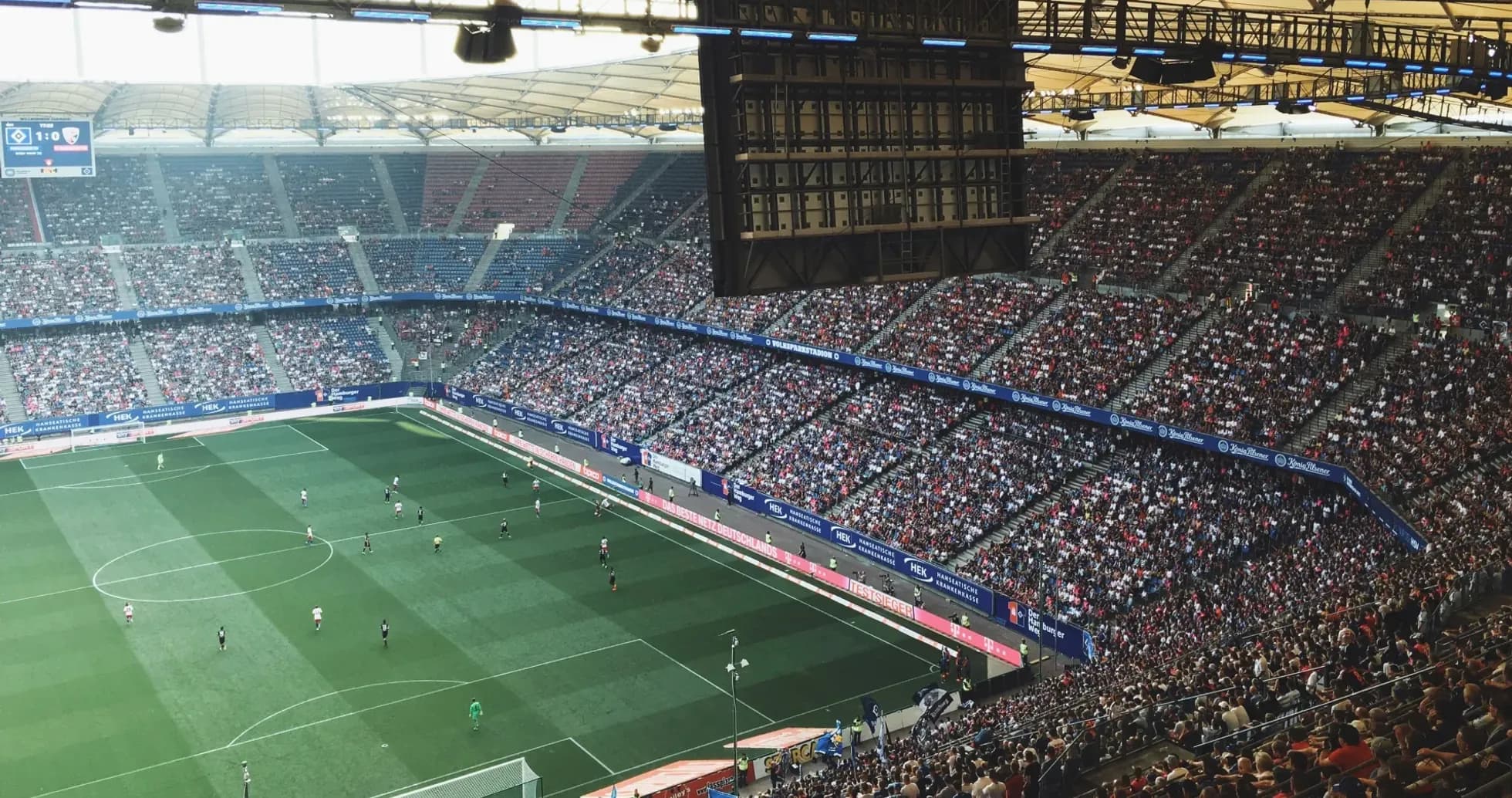
Sweden’s 5-1 dismantling of Tunisia at Estadio BBVA was a clinic in vertical, striker-led football layered onto an aggressive 3-1-4-2 structure. Despite trailing slightly in possession (49% to 51%) and posting a modest xG of 1.36, Sweden repeatedly converted transitional moments and final-third superiority into ruthless efficiency. Tunisia, set up in a conservative 5-3-2, generated only 0.28 xG and six shots, their back five progressively pulled apart by Sweden’s twin forwards and high, narrow wing positioning.
Graham Potter’s 3-1-4-2 for Sweden hinged on clear positional roles. The back three of Victor Lindelöf, Isak Hien and Gustaf Lagerbielke provided a stable rest-defense platform against Tunisia’s two forwards, enabling early, aggressive positioning from wing-midfielders Alexander Bernhardsson on the right and Gabriel Gudmundsson on the left. In front of the defense, Jesper Karlström operated as the single pivot, screening Tunisia’s counters and facilitating vertical progression into the advanced midfield line of Benjamin Nygren and Yasin Ayari, with Viktor Gyökeres and Alexander Isak as a fluid front two.
First Goal
The first goal at 7’ encapsulated Sweden’s structural intent. With Tunisia’s 5-3-2 narrow and compact, Sweden used their double “No.10s” and forwards to overload the central lane. Ayari arrived from the right half-space, exploiting the gap between Tunisia’s midfield and defensive lines. The fact that the opener came without an assist underlines Sweden’s readiness to attack second balls and loose phases around the box rather than relying solely on elaborate combination play.
Second Goal
Isak’s 30’ strike, assisted by Gyökeres, highlighted the strike partnership’s complementary movement. Isak often dropped off the last line, with Gyökeres stretching depth; here, Gyökeres’ contribution as provider drew Tunisian defenders out of their line, opening a shooting window for Isak. Sweden’s Total Shots (13, with 9 inside the box) show how consistently the front four (two 10s plus two strikers) managed to pin Tunisia deep and create central finishing positions.
Tunisia’s Response
Tunisia’s 5-3-2, under Sabri Lamouchi, initially aimed to compress the middle and counter through Hannibal Mejbri and Elias Saad. Their lone goal at 43’ came from a rare, well-constructed pattern: Mejbri found space to assist Omar Rekik, stepping out of the back line into an advanced position. This sequence reflected Tunisia’s best version of their structure—defender stepping in, midfield connecting—but it remained an isolated moment. Across 90 minutes they produced only two shots on goal and just two efforts inside the box, indicating that Sweden’s back three plus Karlström largely neutralized their central progression.
Second Half
The second half exposed the fragility of Tunisia’s defensive block. Sweden’s third goal at 59’, finished by Gyökeres and assisted by Isak, was emblematic of how the forwards continually manipulated Tunisia’s three centre-backs. With Sweden’s wing-midfielders pinning the Tunisian wing-backs deep, Isak could receive between the lines and slide Gyökeres into space. Tunisia’s back five struggled to maintain compactness horizontally, and Sweden repeatedly found the channel between outside centre-back and wing-back.
Substitutions
Potter’s in-game management further tilted the tactical balance. At 65’, Graham Potter introduced Elliot Stroud and Lucas Bergvall:
- Elliot Stroud (IN) came on for Gabriel Gudmundsson (OUT)
- Lucas Bergvall (IN) came on for Benjamin Nygren (OUT)
These changes refreshed the wide and central creative roles without altering the core 3-1-4-2 structure. Bergvall, in particular, later provided the assist for Ayari’s 90+6’ goal, underlining how Sweden’s positional blueprint remained intact even as personnel rotated.
Tunisia’s triple substitution wave at 72’—
- Sebastian Tounekti (IN) came on for Elias Saad (OUT)
- Mohamed Belhadj Mahmoud (IN) came on for Yan Valery (OUT)
- Elias Achouri (IN) came on for Ellyes Skhiri (OUT)
—was an attempt to inject energy and attacking threat, but structurally it did not solve their main issue: Sweden’s superiority between the lines. Removing Skhiri, a key screening midfielder, further weakened Tunisia’s central protection just as Sweden were accelerating. Later changes, with Ismael Gharbi (IN) for Rani Khedira (OUT) at 83’ and Firas Chaouat (IN) for Anis Ben Slimane (OUT) at 84’, tilted Tunisia towards a more attacking posture but came with the cost of defensive control.
Fourth Goal
Sweden’s fourth goal at 84’ was tactically significant. Moments after Mattias Svanberg entered:
- Mattias Svanberg (IN) came on for Jesper Karlström (OUT)
Svanberg immediately advanced into higher midfield zones and finished, assisted again by Isak. Sweden effectively transitioned from a single-pivot structure to a more aggressive double-8 profile, accepting greater open-space risk in exchange for overloads around Tunisia’s box. At this stage Tunisia’s midfield, already reshaped by substitutions, could not track late runs from deep.
Late-Game Substitutions
Late-game substitutions further underlined Sweden’s depth and tactical coherence:
- Anthony Elanga (IN) came on for Alexander Isak (OUT) at 90’
- Daniel Svensson (IN) came on for Alexander Bernhardsson (OUT) at 90+1’
Elanga’s pace threatened the channels, while Svensson stabilized the flank. In the 90+6’ sequence, Bergvall, operating as an advanced midfielder, found Ayari, whose second goal capped Sweden’s pattern of exploiting half-spaces and arriving midfielders. That this fifth goal came in added time, with fresh legs and the same structural principles, showed how Sweden’s game model scaled across 90+ minutes.
Statistical Overview
From a statistical perspective, the 5-1 scoreline far outstripped the underlying xG (1.36 vs Tunisia’s 0.28), emphasizing Sweden’s clinical edge and Tunisia’s defensive collapse. Sweden took 13 shots to Tunisia’s 6, with a decisive 9-2 advantage in shots inside the box, confirming that Sweden repeatedly generated higher-quality locations. Both sides recorded 79% passing accuracy—Sweden with 353 passes, 280 accurate (79%), Tunisia with 364 passes, 288 accurate (79%)—but Sweden used their possession more vertically, while Tunisia’s slightly higher share of the ball (51%) did not translate into penetration.
Defensively, Sweden committed 10 Fouls to Tunisia’s 8, but Tunisia collected the only booking: at 54’, Rani Khedira received a Yellow Card for “Tripping”, symbolizing their increasing desperation in midfield duels. Corner Kicks (4 for Sweden, 2 for Tunisia) and Offsides (3 vs 6) further illustrate Sweden’s more controlled attacking structure versus Tunisia’s more hopeful runs against a well-organized back three.
In goal, Kristoffer Nordfeldt (Sweden) made 1 save, reflecting how effectively Sweden’s structure suppressed Tunisia’s chance quality. Abdelmouhib Chamakh (Tunisia) also recorded 1 save, but with Tunisia’s goals prevented figure at -2.99 and Sweden scoring five times from limited xG, the data underlines a night where Tunisia’s defensive unit and goalkeeper were repeatedly exposed by Sweden’s coordinated, high-tempo attacking patterns.
Related News
Brazil's First Post-World Cup Friendly: What Should the Lineup Be?
Harry Kane Calls England’s World Cup Exit to Argentina His Deepest International Pain
Estevao Opens Up on World Cup Heartbreak and His Unexpected Return to Brazil Under Ancelotti
Thomas Tuchel Shares Unusual Regret After England's 10-Man World Cup Victory Over Mexico

South Korea Names Robert Moreno as Interim Coach After World Cup Exit

Jude Bellingham Returns to Form at Real Madrid Following World Cup Success