
Sweden Dominates Tunisia 5–1 in World Cup Opener
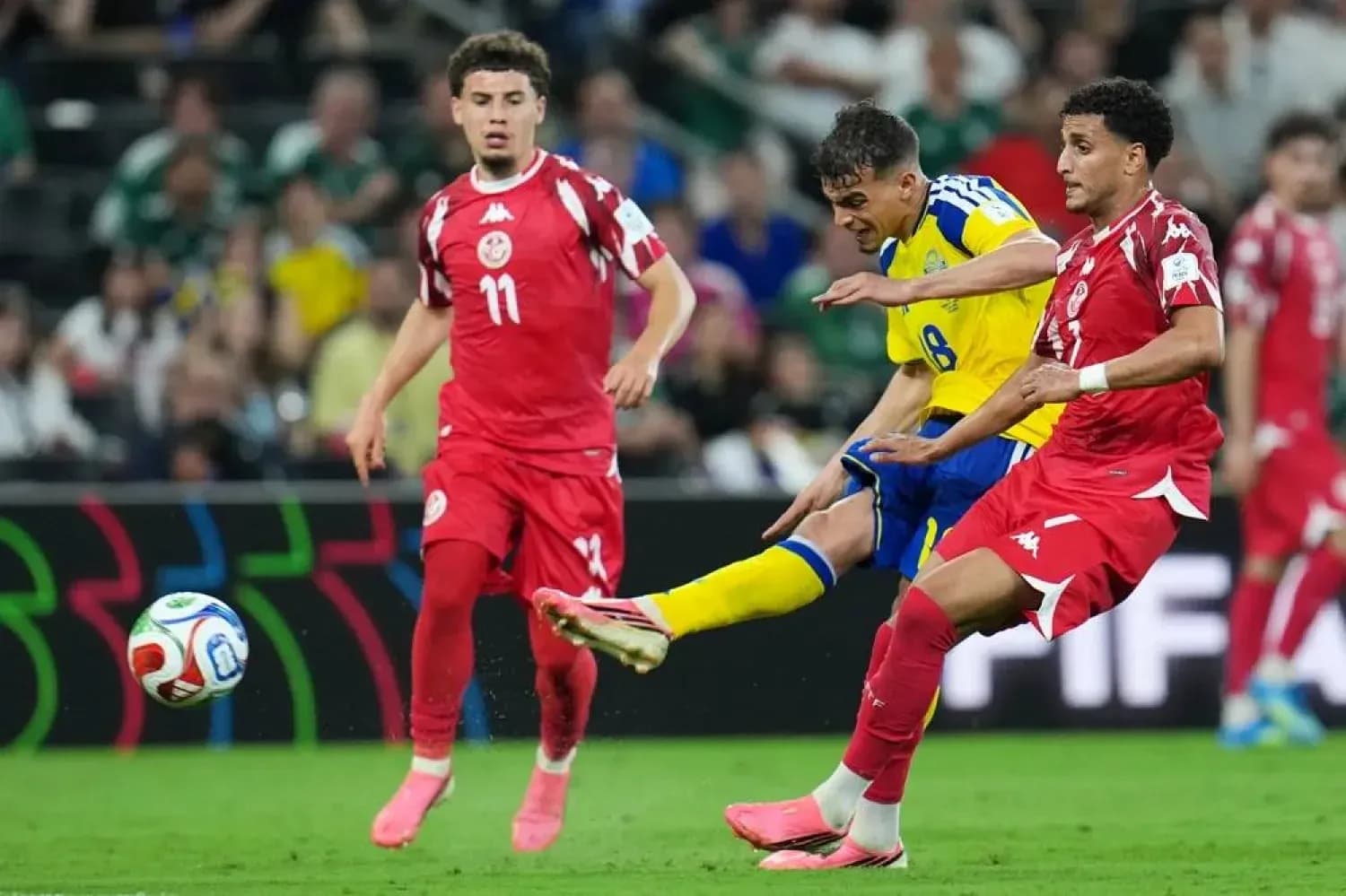
Under the lights of Estadio BBVA in Monterrey, Sweden’s World Cup campaign opened with a statement: a 5–1 dismantling of Tunisia that felt as much like a tactical manifesto as a group-stage win. Following this result, Sweden sit top of Group F with 3 points, a goal difference of +4 (5 goals for, 1 against) and the look of a side whose structural ideas are already bedded in. Tunisia, bottom of the group with 0 points and a goal difference of -4 (1 for, 5 against), leave the same pitch searching for balance and belief.
I. The Big Picture – Shapes, Intent, and Territory
Graham Potter rolled out a bold 3-1-4-2, a system that demands courage from the back three and constant running from the midfield line of four. K. Nordfeldt anchored the structure in goal, with a back trio of G. Lagerbielke, I. Hien and V. Lindelof spreading wide to stretch Tunisia’s first line. Ahead of them, J. Karlstrom operated as the single pivot, the hinge between build-up and press resistance.
Across the second line, G. Gudmundsson and A. Bernhardsson held the width, while B. Nygren and Y. Ayari played as advanced interiors, the true accelerators of Sweden’s attacks. Up front, the partnership of V. Gyökeres and A. Isak offered complementary profiles: one a powerful runner and reference point, the other a gliding connector who drops into pockets and finishes with economy.
Tunisia, by contrast, arrived in a 5-3-2 that, on paper, offered defensive security and transitional threat. A back five of Y. Valery, O. Rekik, M. Talbi, M. Ben Hamida and A. Abdi shielded goalkeeper A. Chamakh, with a midfield trio of R. Khedira, E. Skhiri and H. Mejbri asked to cover vast horizontal spaces. Up front, E. Saad and A. Slimane were tasked with punishing any Swedish over-commitment.
Yet the story of the night was territorial. Sweden’s home statistics in this World Cup now show 1 match played, 1 win, 5 goals scored and 1 conceded, with an average of 5.0 goals for and 1.0 against at home. Tunisia’s away profile is the mirror image: 1 match on their travels, 1 defeat, 1 goal scored and 5 conceded, with an away average of 1.0 goal for and 5.0 against. The numbers underline what the eye test already suggested: one side structurally coherent, the other stretched and exposed.
II. Tactical Voids – Where the Plans Frayed
There is no explicit injury list, so the absences here are tactical rather than medical. For Sweden, the notable “void” is almost philosophical: playing with just one natural holding midfielder in Karlstrom in a World Cup opener is a risk. It worked because the back three were aggressive in stepping out, and because Ayari and Nygren were tireless in counter-pressing the moment possession was lost.
Tunisia’s voids were positional. The 5-3-2 only functions if the wing-backs can simultaneously protect the flanks and offer an outlet. Y. Valery and A. Abdi were pinned deep by Sweden’s width, which meant the Tunisian front two were often isolated, chasing long clearances rather than structured counters.
Disciplinary data is sparse but telling. Tunisia’s season card profile shows a single yellow card in the 46–60 minute range, accounting for 100.00% of their bookings so far. It hints at a side that emerges from half-time trying to raise intensity, sometimes overstepping. Sweden, by contrast, have no recorded yellow or red cards in any time range yet, reflecting a controlled aggression within Potter’s structure.
III. Key Matchups – Hunter vs Shield, Engine Room vs Enforcer
Hunter vs Shield was defined by Sweden’s forwards against Tunisia’s central defensive trio. Gyökeres, already with 1 goal and 1 assist in this World Cup, took 4 shots (2 on target) and made 4 key passes, constantly dragging Talbi and Rekik into uncomfortable zones. Isak, with 1 goal and 2 assists, needed only 2 shots on target to leave a decisive imprint. For a Tunisian defence that has already conceded 5 goals on their travels with an average of 5.0 against, this was a brutal introduction.
Behind them, the Engine Room belonged to Y. Ayari. With 2 goals, an 8.6 rating, 27 passes and 3 tackles, Ayari was both conductor and disruptor. His positioning between the lines forced R. Khedira and E. Skhiri into reactive roles, always turning, always chasing. Tunisia’s midfield, built to screen and spring forward, instead spent long stretches in a low block, compressed against their own back five.
On Sweden’s side, Karlstrom’s quiet work as the single pivot allowed the more expressive players to flourish. Lindelof, Hien and Lagerbielke stepped in to compress space behind Ayari and Nygren, ensuring Tunisia’s forwards rarely received the ball facing goal.
For Tunisia, H. Mejbri was meant to be the creative needle, dropping into half-spaces and linking with Saad and Slimane. But Sweden’s compact 3-1-4-2 off the ball turned those spaces into traffic zones. Mejbri’s influence was sporadic, and without consistent wing-back support, the Tunisian front two became increasingly detached from the rest of the structure.
IV. Statistical Prognosis – Where This Points Next
Following this result, Sweden’s overall record in the tournament stands at 1 win from 1, with 5 goals scored and 1 conceded, no clean sheets yet but a clear attacking ceiling. Their biggest home result so far is precisely this 5–1, and their most used formation, 3-1-4-2, has been played in 1 out of 1 fixtures. The Expected Goals data is not provided, but the shot and goal output from Gyökeres, Isak, Ayari and even substitute M. Svanberg (1 goal in 13 minutes) suggests a side turning territory into high-quality chances.
Tunisia’s overall picture is harsher: 1 defeat from 1, 1 goal for and 5 against, with their heaviest loss on their travels already logged as 5–1. Their 5-3-2 has been used in 1 of 1 games, but the defensive returns – conceding 5 in a single outing – will force Sabri Lamouchi to reassess the balance between protection and ambition.
In tactical terms, Sweden emerge from Monterrey with a clear identity: a back three comfortable in space, a single pivot anchoring a mobile midfield four, and a front pair that combines finishing with creativity. Tunisia leave with questions about their wing-backs’ positioning, the connectivity of their midfield, and the ability of their back five to withstand sustained pressure.
If we project forward, Sweden’s attacking volume and structural clarity make them early favourites to progress from Group F and justify the “Round of 32” tag attached to their current first-place ranking. Tunisia, rooted to fourth, must quickly convert their 5-3-2 from a reactive shell into a platform that can both protect A. Chamakh and give E. Saad and A. Slimane more than scraps in transition.
In Monterrey, the scoreboard read 5–1, but the deeper story was about a team whose ideas are already in sync, and another still searching for the right map.
Related News
Brazil's First Post-World Cup Friendly: What Should the Lineup Be?
Harry Kane Calls England’s World Cup Exit to Argentina His Deepest International Pain
Estevao Opens Up on World Cup Heartbreak and His Unexpected Return to Brazil Under Ancelotti

Thomas Tuchel Shares Unusual Regret After England's 10-Man World Cup Victory Over Mexico

South Korea Names Robert Moreno as Interim Coach After World Cup Exit

Jude Bellingham Returns to Form at Real Madrid Following World Cup Success