
Tottenham's Goal Drought: De Zerbi's Challenge Ahead
Four games into the new Premier League season and the numbers are stark. Tottenham Hotspur and Coventry City stand alone as the only teams yet to score.
Tottenham have spent around £320million on new talent, much of it aimed at sharpening their attack. Yet the scoreboard still refuses to budge.
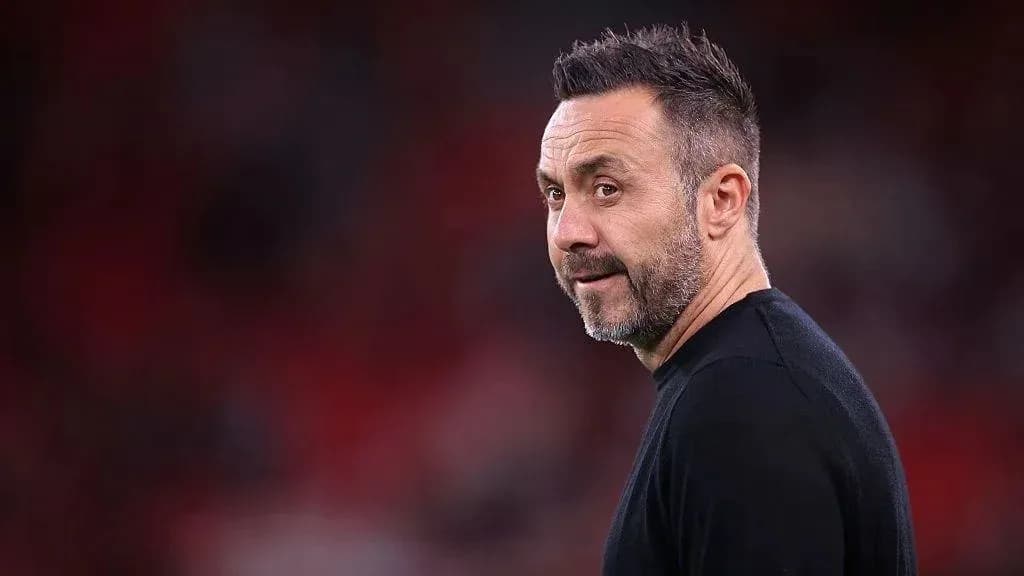
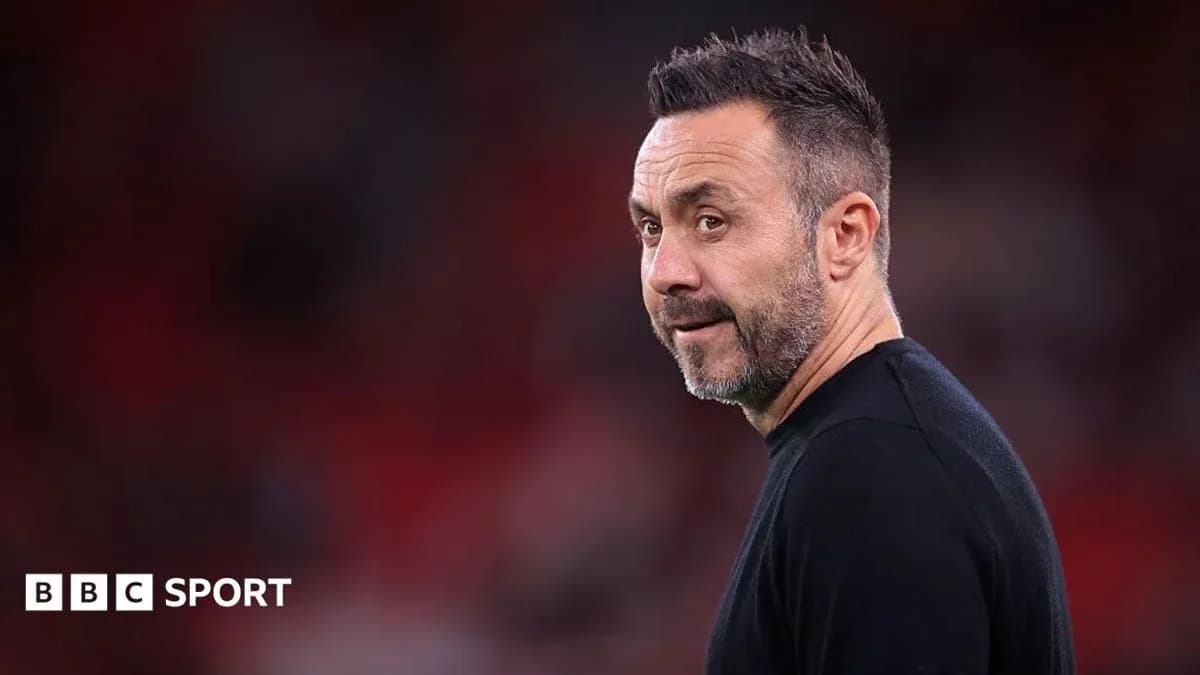
So where is it breaking down for Roberto De Zerbi?
De Zerbi’s Spurs: Same ideas, new landscape
The Premier League De Zerbi has returned to is not the one he left when he walked away from Brighton in 2024. The pace is different, the tactical trends have shifted. But his principles? Those are familiar.
His teams invite pressure. They slow the game, pass backwards, tempt opponents to step up and overcommit. Then they strike.
Once the press comes, the tempo changes. Passes become vertical, ball carriers drive forward, and the spaces behind the pressing line are attacked with aggression.
As De Zerbi explained at a coaching seminar in 2020: “The stronger the pressure of the opponent, the more vertical [our] action becomes. [The fewer opponents behind], the easier it becomes to go and score.”
We have already seen Tottenham’s forwards finding themselves in larger spaces, facing fewer defenders. The structure is producing the situations he wants.
The problem is turning those situations into goals.
The 2-3-2-3 that doesn’t stand still
On paper, Spurs’ shape in possession often resembles a 2-3-2-3. On the pitch, it constantly morphs.
Rodrigo Bentancur typically anchors in front of the two centre-backs. That trio stays relatively fixed, providing the base. Ahead of them, wingers, full-backs and central midfielders rotate, swapping zones to preserve the overall structure.
The rule is simple: if a team-mate vacates a space, someone else fills it. The pattern matters more than the name on the shirt.
Layered on top of this positional framework are De Zerbi’s principles. Much of it echoes what worked so effectively at Marseille between 2024 and 2026, when his side averaged 2.3 goals per game.
Tottenham are nowhere near that output yet. But they are not operating in chaos. The ideas are visible. The execution is not.
Central routes, crowded rooms
De Zerbi wants his teams to play through the middle.
That choice has two clear effects. When Spurs’ centre-backs have the ball and look inside, opposition forwards and midfielders step up to close them down. Space then opens between the lines for Tottenham’s attacking midfielders.
At the same time, the more the opposition are dragged into central areas, the more room appears out wide for Spurs’ direct wingers to attack.
The reward is obvious. So is the risk. Playing into the middle under pressure demands technical security and composure. Not every player thrives in those conditions.
Sandro Tonali, for example, is more dangerous when he can face forward in bigger spaces. De Zerbi has recognised that. We have already seen Tonali swap positions with Archie Gray, who starts at right-back, to free Tonali from the most crowded zones.
Gray, just 20, is operating out of his natural role but has coped reasonably well in tight areas and seems to grasp what his manager wants.
The return of James Maddison, back from a shoulder injury for last Tuesday’s Carabao Cup tie at Liverpool, should sharpen that central play. Maddison is far more comfortable receiving under pressure between the lines and could become the key to unlocking those attacking zones more frequently.
Yet this is not only about individual quality. It is about habit. Many of these players spent last season under Thomas Frank building almost exclusively down the flanks, avoiding the middle to limit the risk of central turnovers.
Now De Zerbi is asking them to do the opposite: to step into traffic, to be brave on the ball in congested zones. Unlearning old instructions takes time.
The pass that never comes
Spurs have repeatedly broken beyond opposition midfields after luring teams into the press. The build-up works. The trap is sprung. The pitch opens up.
Then the move fizzles.
Converting those promising moments into shots and goals depends on three things: seeing the best pass, making the right runs ahead of the ball, and executing the final ball cleanly.
So far, the biggest blockage has been in the first part. Tottenham players are often either failing to recognise the through ball in behind or choosing not to play it.
The runs are there. Omar Marmoush, in particular, has made aggressive, well-timed movements off the last line. Too often, he is ignored.
Gray has tried to slide passes down the line, but Spurs have not used those same patterns as frequently in central areas.
The imminent full return of Pedro Porro could shift that dynamic. Porro, who operated in more central areas for Spain during their World Cup win this summer, is a natural risk-taker with the ball. His instincts align with De Zerbi’s demands and could help convert those broken lines into genuine chances.
If that happens, Tottenham may finally start to experience the same attacking joy De Zerbi’s forwards enjoyed at Marseille.
Runs, timing and the Marseille blueprint
While Porro works his way back, others are still learning the choreography.
At Marseille, De Zerbi’s wide attackers frequently made diagonal runs across the last line, receiving vertical passes from team-mates willing to thread the ball between defenders. It was a simple pattern, but ruthlessly drilled.
Igor Paixao’s goal in Marseille’s 2-2 draw with Toulouse last season was a textbook example: direct passing, sharp movement off the ball, and perfect timing.
There were glimpses of something similar at Anfield on Tuesday. Destiny Udogie repeatedly found promising positions on the left as the game stretched.
Andy Robertson has been one of Tottenham’s more reliable performers this season, but Udogie’s power and timing allowed him to exploit Liverpool’s disorganised shape and drive Spurs into crossing positions.
The structure is creating the runs. The final connection is still missing.
The last action: where moves die
When a team suddenly accelerates an attack, defenders tend to retreat in a rush, collapsing towards their own box to protect the goal.
That panic creates a different kind of space – not behind the line, but in front of it. It is the zone for late-arriving midfielders and strikers who drop off cleverly.
Marmoush has tried to occupy that pocket several times, peeling away rather than always running in behind. He is not consistently being found.
Some of this is chemistry. New signings, new patterns, new manager. Combinations do not click overnight.
There are technical constraints too. Savio, a left-footed right-winger, is more comfortable driving to the byline than cutting the ball back sharply on his weaker foot. On the opposite flank, left-footers Udogie and Robertson have produced clearer chances with their crosses.
At Marseille, both the right winger and right full-back were happy receiving wide and then cutting back on their stronger right foot. Those deliveries were made to look even better by the box movement of Pierre-Emerick Aubameyang, who, even at 37, attacked space in the area with expert timing.
Tottenham do not lack runners. They lack the precision to match them.
Close, but not close enough
Look closely at what De Zerbi is trying to build and the pattern becomes obvious: Tottenham’s attacks are frequently one detail short.
One bolder through ball. One better-timed diagonal run. One cleaner cut-back on the correct foot.
This will not become Marseille overnight. That team was powered by forwards who thrived in space and finished ruthlessly.
But if Spurs tighten the small details across the pitch, the process suggests the goals will come. The question now is not whether the ideas work.
It is how long a club of Tottenham’s ambitions will wait for those ideas to finally hit the net.
Related News

Sevilla vs Barcelona: Can Sevilla Halt Barcelona's Momentum?

Roma vs Inter: Scudetto Clash at Stadio Olimpico
Tottenham's Goal Drought: De Zerbi's Challenge Ahead
Arteta Faces Right-Back Dilemma as White Struggles with Injury
Tottenham’s Struggles Under De Zerbi: A New Era Begins
Socceroos Squad Changes: Maty Ryan Omitted as New Talents Enter