
Tottenham's Stadium Under Scrutiny Amid Injury Surge
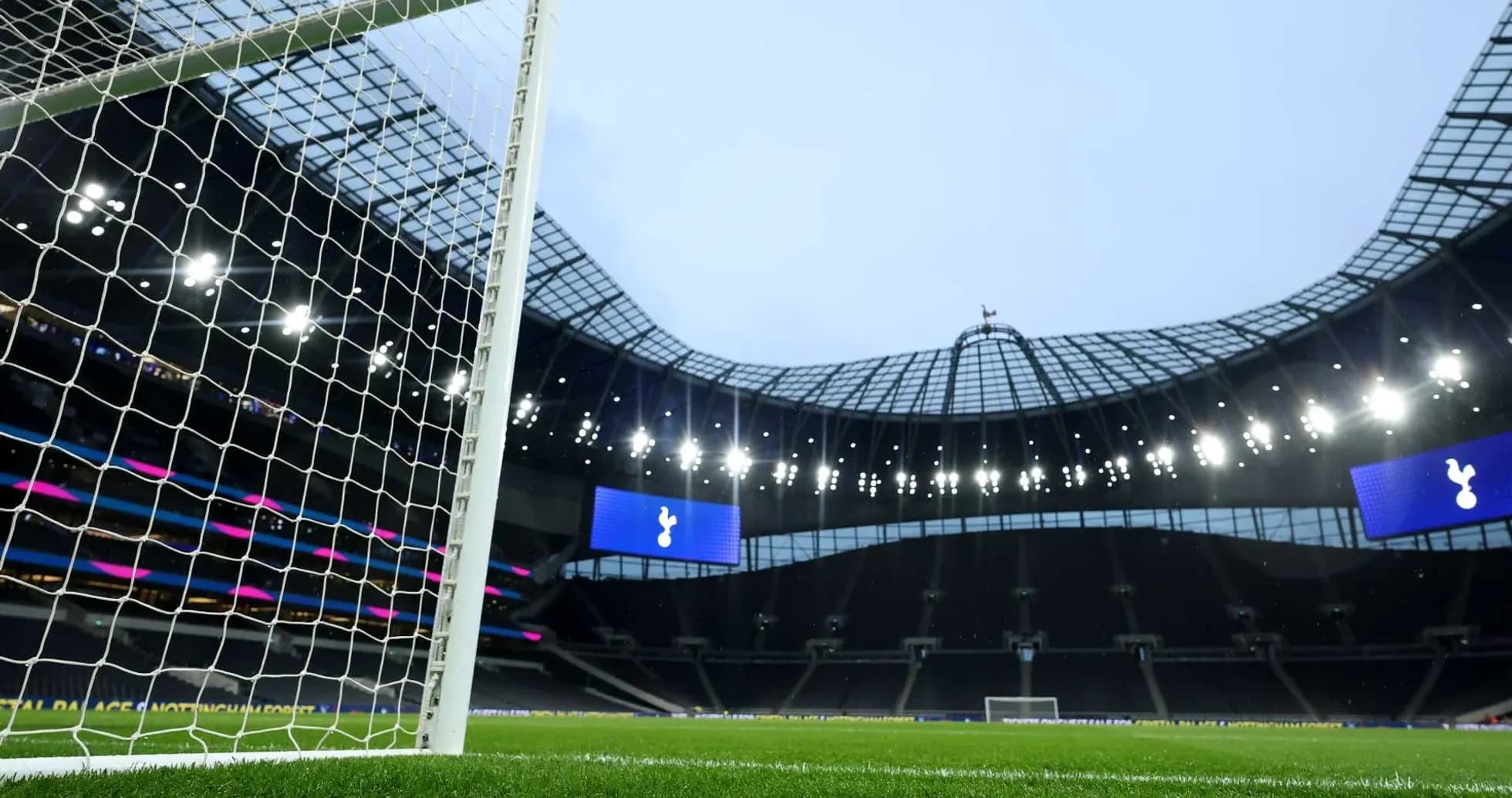
The Tottenham Hotspur Stadium was meant to be the gleaming symbol of a new era: a dual-surface, retractable pitch that could slide away to host NFL games and concerts, then glide back into place for Premier League football without missing a beat.
Now that same engineering marvel is under forensic scrutiny.
New performance director Dan Lewindon has launched a detailed investigation into whether the surface beneath Spurs’ feet is playing a role in a surge of serious leg and ligament injuries. Independent tests have already been run on the pitch’s bounce and surface tension. The science, so far, is sitting on the fence. The data is inconclusive, so the club is digging deeper, benchmarking their turf against other Premier League grounds.
The timing is uncomfortable.
High-profile injuries are stacking up in N17 – and crucially, many of them have come at home. Dejan Kulusevski, Radu Dragusin and Wilson Odobert have all suffered major setbacks on that pitch. James Maddison partially tore his ACL during a home clash with Bodo/Glimt before later rupturing it completely.
It is not just a Tottenham problem, either. Real Madrid are wrestling with similar questions at the renovated Santiago Bernabeu, where their own retractable pitch has coincided with a spate of ACL injuries. Two of Europe’s most advanced arenas, both suddenly under suspicion.
A Performance Department Under the Microscope
Lewindon’s work has not stopped at the grass. His three‑month review has peeled back layers inside the club’s performance structure, and what he has found is uncomfortable viewing for those in charge.
The picture emerging is of a department that has not always pulled in the same direction. There is a growing belief at board level that poor integration between medical and coaching staff – and a lack of genuine shared decision-making – has created a damaging cycle of repeat injuries. Players return, break down, return again, break down again.
The response is drastic by design. Spurs plan to move to a “small-team approach”: specific physios assigned to tight groups of around six players, responsible for tailored training plans and closer day-to-day oversight. The idea is simple: fewer gaps, fewer assumptions, fewer players slipping through the cracks.
If the pitch is one suspect, the churn in the dugout is another.
In just one year, Tottenham have been led by four different head coaches: Ange Postecoglou, Thomas Frank, Igor Tudor and Roberto De Zerbi. Four managers, four philosophies, four sets of training methods. The squad has been dragged from one tactical and physical demand to another at speed, with little time for adaptation.
Inside the club, there is a clear sense that this turbulence has increased the physical risk. Players have had to accelerate and decelerate not just on the pitch, but through entire regimes.
The Xavi Simons Flashpoint
The handling of Xavi Simons’ season-ending injury at Wolves became a lightning rod for criticism of Tottenham’s medical staff.
During a victory at Molineux, Simons went down, was treated with ice spray and allowed to return to the field, only to be stretchered off later with a ruptured ACL. For supporters, the optics were damning: a key player hobbling back on, then collapsing to a long-term lay-off.
Inside the club, the view is very different. Spurs have stood firmly behind their medical team. Lewindon, it is understood, was highly satisfied with how the incident was managed. Simons wanted to continue, and with a proper ACL test almost impossible to perform accurately at pitchside in the heat of a game, the decision to let him try to carry on has been judged internally as the correct call.
Crucially, Tottenham insist his brief return did not worsen the damage. The ligament had already gone.
It was, nonetheless, another brutal blow in a nightmare opening spell for De Zerbi. Within his first three matches, Spurs also lost Cristian Romero and Destiny Udogie to serious injuries. For a new coach trying to impose a demanding style, the foundations crumbled almost as soon as he stepped through the door.
De Zerbi is now pushing hard for a stronger support network around the squad, including the appointment of a team psychologist. The aim is not just to patch up bodies, but to improve communication and cohesion across performance and medical departments at a time when pressure and scrutiny are rising.
Maddison’s Reality Check
From the dressing room, James Maddison has become one of the clearest voices on the crisis.
“Our situation with the injuries has been worse than any other club,” he said recently. “People try and say, ‘Oh, but we’ve got this and that’. But ours is astronomical, and we need to look at why that is.”
He is not buying every theory thrown at the club, though. Maddison pointed to the randomness of certain incidents – his own ACL, Kulusevski suffering a horrendous knock from Marc Guehi – as examples where no pitch, no physio and no grand conspiracy can reasonably be blamed.
“That’s not the medical team, that’s not the pitch or all the theories that you see, sometimes that’s rubbish,” he argued.
Yet even with that pragmatism, he is adamant about one thing: the sheer volume of absences has warped Tottenham’s season.
“We’ve been a bit unlucky,” he admitted. “But like I said, the big names that we’ve missed, it does affect you and you can’t just deny that. Myself, Kulusevski and Mohammed Kudus, and Rodrigo Bentancur missed three months and whatnot. If you had had them for the whole season, we wouldn’t have been in this situation, I strongly believe. That’s just not me being naive, that’s just a fact.”
Tottenham spent the run‑in fighting to stay clear of relegation, a scenario that would have sounded absurd when the stadium opened as a monument to ambition and modernity. Maddison, for his part, chose to focus on the players who remained standing.
“It is the situation we find ourselves in,” he said. “And I am just proud of the lads to dig deep today.”
The questions now cut far beyond one bad campaign.
Can a club built around cutting-edge infrastructure and constant innovation find a way to make its players simply stay fit? Or will one of the most advanced stadiums in world football keep casting a long, uneasy shadow over the team that calls it home?
Related News

Wilfred Ndidi’s Marriage Reportedly Ends as He Enters New Relationship

Cristiano Ronaldo's Top 5 Most Valuable Cars in His Extraordinary Collection
Ben Whittaker’s Challenge to Prove Eddie Hearn’s Bold British Boxing Bet
Peter Handscomb on the Challenge of Facing Indian Bowlers
How to Watch UFC 332: Silva vs. Wang Live on CBS and Paramount+ This Saturday
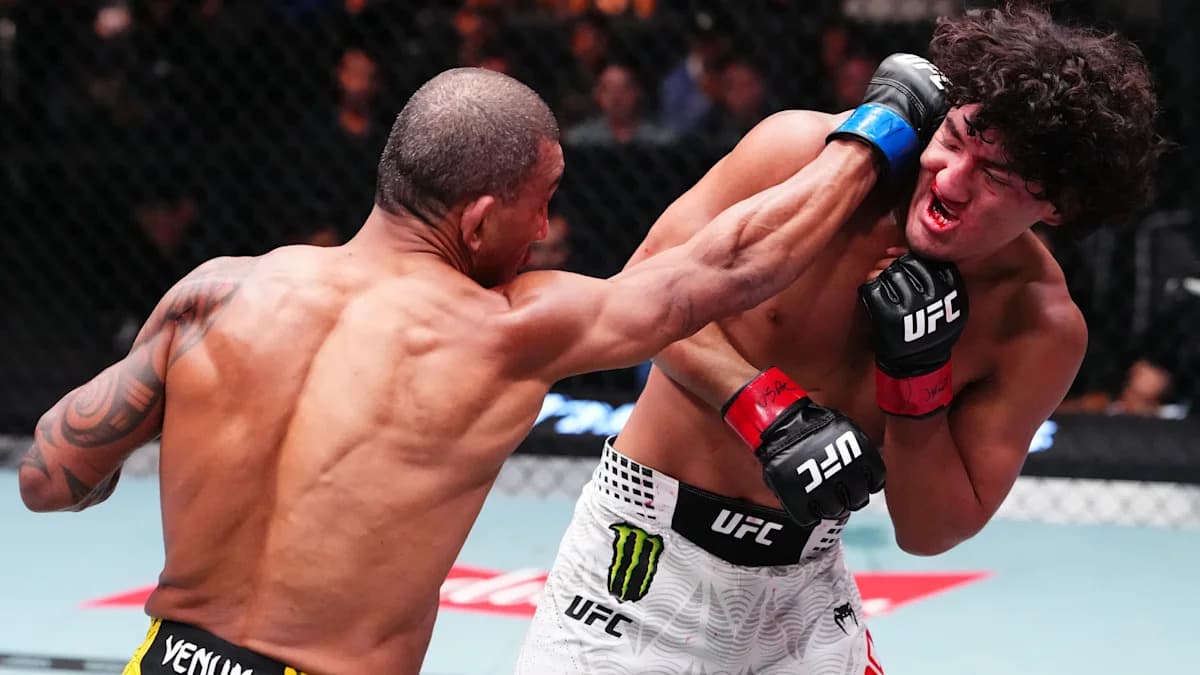
Raul Rosas Jr. Shares His Thoughts on the Shocking UFC Vegas 121 Finish Against Raoni Barcelos