
Tottenham’s Struggles Under De Zerbi: A New Era Begins
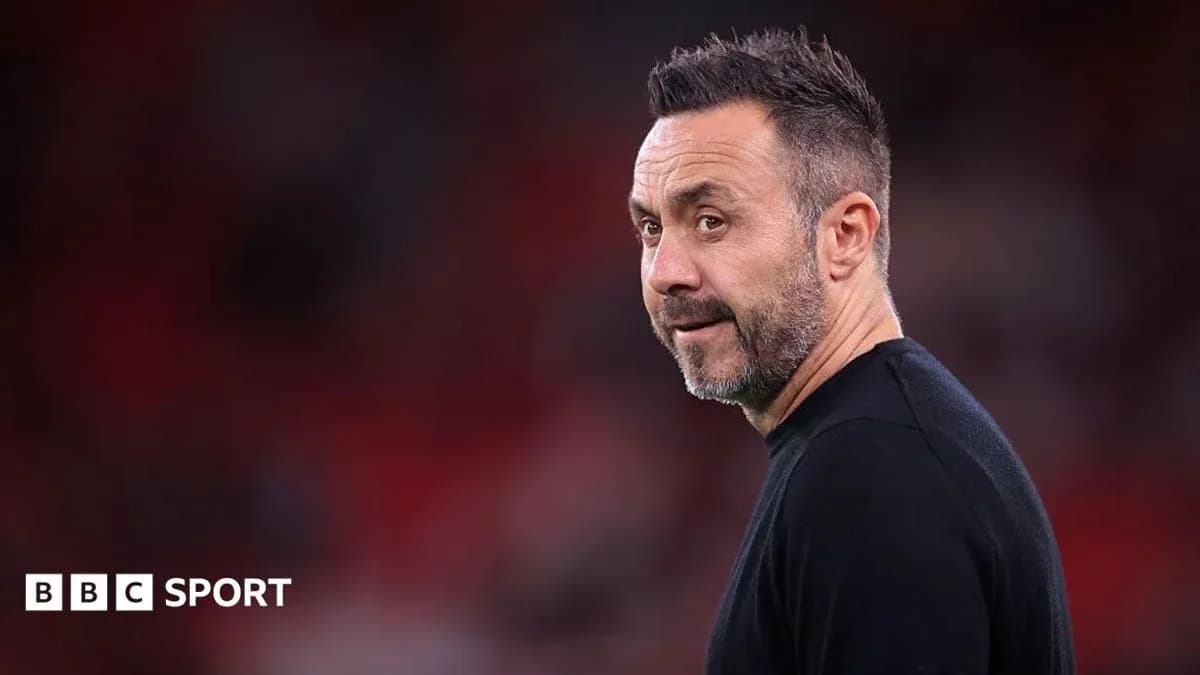
Tottenham’s new era under Roberto De Zerbi was supposed to roar. Four league games in, it hasn’t even cleared its throat.
Spurs and Coventry City stand alone as the only Premier League teams yet to score this season. That’s despite Tottenham pouring around £320m into the squad, much of it on attacking firepower. The goals were meant to flow. Instead, they’ve jammed.
Look closer, though, and the problem isn’t a lack of ideas. It’s a team still learning how to live inside a demanding, high‑risk system.
De Zerbi’s Spurs: Same Principles, New Landscape
The Premier League De Zerbi has returned to is not the one he left with Brighton in 2024. The pace is different, the pressing is sharper, and opponents know his blueprint. But the Italian has not abandoned his core beliefs. He has simply bent them.
His sides tempt pressure. They slow the game down, roll the ball back, dare opponents to jump. Then they strike.
Once the press comes, De Zerbi wants his players to flip the tempo, punch passes through the middle or carry the ball past the first wave and into the space behind. It’s a trap: lure the press, then sprint into the gaps it leaves.
He explained the logic in a 2020 coaching seminar: “The stronger the pressure of the opponent, the more vertical [our] action becomes. [The fewer opponents behind], the easier it becomes to go and score.”
We’ve already seen that pattern at Tottenham. Spurs forwards have found themselves in big, open spaces, facing fewer defenders than you’d expect in elite football. The structure is doing its job.
But turning promising build-up into goals is another level of difficulty entirely.
The 2-3-2-3 Shell – And The Rotating Cast Inside It
In possession, Spurs often resemble a 2-3-2-3. It’s not always obvious at first glance, because the roles inside that skeleton keep shifting.
Rodrigo Bentancur usually sits at the base of midfield, just in front of the two centre-backs. Those three form a relatively fixed spine. Ahead of them, the shape stays recognisable but the names inside the zones change.
Wingers, full-backs, and central midfielders rotate constantly. When one player vacates an area, another is expected to slide in and keep the structure intact. It’s choreography: maintain the 2-3-2-3, even as the dancers swap places.
On top of that positional framework, De Zerbi layers his principles. Take the ball under pressure. Invite the opponent in. Use the middle of the pitch, not the flanks, as the main highway.
It worked at Marseille between 2024 and 2026, where his side averaged 2.3 goals per game. There, the patterns were drilled, the forwards ruthless. At Spurs, the movements are still being learned, the connections still forming.
They’re not miles off. But they’re not there yet.
Learning To Live Under Pressure
When Spurs thread passes into the middle, several things must click at once.
The receiver has to be brave enough to take the ball with an opponent closing fast. Some players thrive in that chaos. Others don’t. De Zerbi has already started tweaking.
Sandro Tonali, for instance, is far more dangerous when he can face forward in larger spaces. So we’ve seen him rotate with Archie Gray, who starts at right-back. Gray has been asked to step into those tighter central zones, while Tonali drifts into areas where he can drive play on.
It’s not a natural role for a 20-year-old full-back, but Gray has coped. He looks like he understands what De Zerbi wants, even if execution is not yet perfect.
James Maddison’s return from a shoulder injury, marked by his appearance in the Carabao Cup tie at Liverpool, changes the picture again. Maddison is built for those tight pockets. He can receive under pressure, turn, and thread the next pass. His presence should help Spurs carry the ball from their own half into true attacking zones more often.
Still, individual quality only goes so far. This style relies on the whole squad internalising complex instructions. Old habits must be broken.
Under Thomas Frank at the start of last season, Spurs mostly built down the flanks, almost bypassing central areas. The logic was simple: lose the ball wide, not in the middle, where turnovers are lethal.
De Zerbi is pushing in the opposite direction. He wants his players to be bold in the most crowded parts of the pitch. That shift in mentality does not happen overnight.
From Advantage To End Product: Where The Moves Break Down
For all the teething issues, Spurs’ build-up is doing its primary job. Time and again, they’ve managed to play through pressure and emerge behind the opposition midfield line, running at a retreating defence.
Those are golden situations. They just aren’t turning into goals.
- The ball-carrier must spot the best pass.
- The movement ahead of the ball has to create that pass.
- The final ball must be delivered cleanly.
Right now, the biggest blockage is the first step. Spurs players are either not recognising through-ball opportunities or choosing safer options instead.
The runs are there. Omar Marmoush, in particular, has made sharp, well-timed bursts in behind. Too often, he’s been ignored.
Archie Gray has tried to slide passes down the line, but Spurs have not consistently attempted those more dangerous, central through balls that slice teams apart.
The return of Pedro Porro could alter that dynamic. For Spain’s World Cup-winning side this summer, Porro operated more centrally in possession, using his vision and passing range to create chances from inside rather than just hugging the touchline. His instincts align neatly with what De Zerbi demands.
If Porro leans into those tendencies in a Spurs shirt, the volume and quality of chances should rise. At Marseille, similar patterns produced a steady stream of goals for De Zerbi’s forwards.
Width, Crosses, And The Final Touch
Tottenham’s wide play has also hinted at promise.
In the Carabao Cup tie at Anfield, Destiny Udogie repeatedly surged into dangerous positions on the left. Andy Robertson has been impressive for Spurs this season, but Udogie’s blend of power and timing gave Liverpool problems once the game opened up.
Those runs dragged Spurs into prime crossing areas against a disorganised back line. That is exactly the sort of chaos De Zerbi wants once his team has accelerated play.
When an attacking side suddenly ups the tempo, defenders usually panic and drop. As they retreat, space appears just in front of the back four. Late-arriving midfielders, or strikers clever enough to drop off the shoulder, can feast there.
Marmoush has tried to exploit that zone, stepping back into pockets to receive cut-backs. He has not been found often enough.
On the flanks, there are technical details still to iron out. Savio, a left-footed right winger, is excellent at driving to the byline, but pulling the ball back on his weaker foot is a challenge. That limits the quality of his final ball.
On the opposite side, the left-footed Udogie and Robertson have produced clearer chances from crosses. Their natural footedness suits those cut-back and whipped-delivery scenarios.
At Marseille, both the right winger and right full-back were comfortable chopping the ball back on their right foot. Those deliveries were then attacked by Pierre-Emerick Aubameyang, whose movement in the box at 37 remained razor sharp. The system looked devastating because the fine details were polished and the finishing was elite.
Almost There – But “Almost” Doesn’t Score
Watch Tottenham closely and you can see the outline of something coherent. The build-up patterns work often enough. The rotations make sense. The pressing traps spring. Attacking moves advance to the edge of becoming clear chances.
Then they fizzle.
No one is pretending this will click instantly. De Zerbi’s football is demanding, and Marseille’s forwards – ruthless, experienced finishers who thrived in space – were perfectly tuned to it.
Spurs are not yet that team. But the margins are shrinking.
If the small details sharpen – the bravery to play the through ball, the timing of the runs, the quality of the cut-back, the understanding between new signings – the chances will come in volume. And if you create enough, even a misfiring attack eventually finds its range.
Tottenham have spent the money. They have the coach. The structure is in place.
Now the question is simple: how long can a club with this much attacking talent wait for the first Premier League goal of the De Zerbi era?
Related News
Arteta Faces Right-Back Dilemma as White Struggles with Injury

Raphinha's Transformation: From Ballon d'Or Snub to Barca's Star No.9
Tottenham’s Struggles Under De Zerbi: A New Era Begins
Socceroos Squad Changes: Maty Ryan Omitted as New Talents Enter

Celtic's Defensive Woes Exposed in Europa League Loss
NEC Faces Heavy Defeat Against Juventus in Europa League