
USA Secures 2-0 Victory Over Bosnia & Herzegovina in World Cup Clash
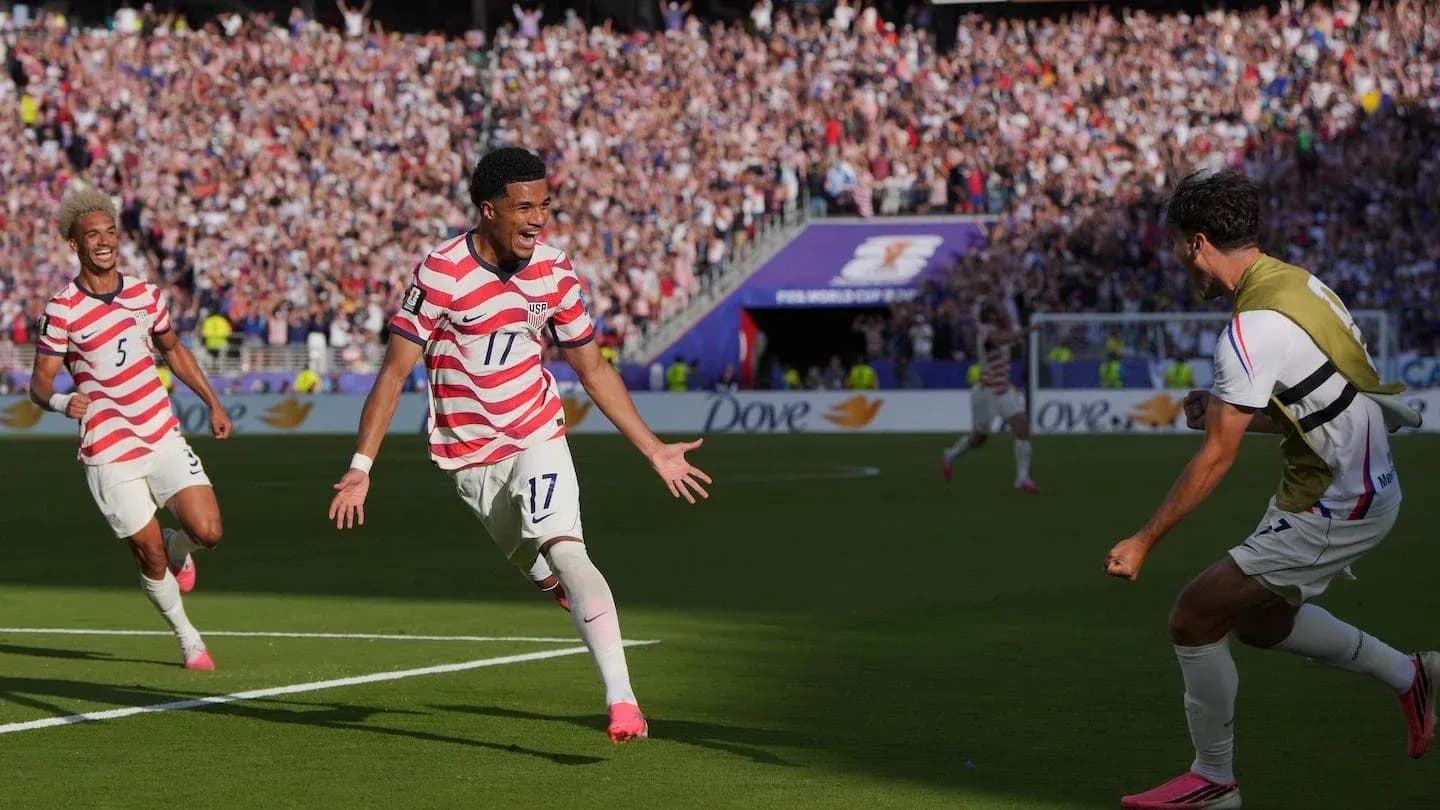
USA’s 2-0 win over Bosnia & Herzegovina at Levi's Stadium in this World Cup Round of 32 tie was defined less by volume of chances than by clarity of structure and game management. Mauricio Pochettino’s side used a 4-3-3 to control key spaces and punish transitional moments, while Sergej Barbarez’s 5-3-2 never quite converted its territorial edge into genuine threat, despite marginally higher possession and more total shots.
Bosnia & Herzegovina actually saw more of the ball (52% to USA’s 48%) and attempted more shots (10 to 8), but the underlying quality of chances told a different story. USA produced 0.92 xG to Bosnia & Herzegovina’s 0.25, reflecting a clearer attacking plan: work the ball into the box (6 shots inside the box versus 5 for Bosnia & Herzegovina) and accept a lower shot volume in exchange for higher-value looks. The Americans’ ability to stay compact after going down to ten men on 64 minutes, yet still add a second goal, underlined a mature tactical performance.
In Possession
In possession, USA’s 4-3-3 was built on a stable back four and a balanced midfield trio. Chris Richards and Tim Ream formed a left-right central defensive pairing, with Antonee Robinson and Alexander Freeman as full-backs. Tyler Adams anchored midfield, with Weston McKennie and Malik Tillman ahead of him. The front line of Sergiño Dest, Folarin Balogun and Christian Pulišić stretched Bosnia & Herzegovina’s back five horizontally, creating the channels that led to both goals.
USA’s passing structure was efficient rather than dominant: 415 total passes with 346 accurate, an 83% completion rate. That slightly better accuracy than Bosnia & Herzegovina (82%) despite having less of the ball hints at a more purposeful use of possession. Adams’ role as the central pivot was crucial: he linked the back line to the advanced interiors, allowing McKennie and Tillman to take up aggressive half-space positions. With Dest and Pulišić holding wide starting spots, USA often created a 2-3-5 in settled attack, pinning Bosnia & Herzegovina’s wing-backs deep and limiting their counter-attacking launch points.
Opening Goal
The opening goal at 45' from Folarin Balogun crystallised this approach. USA had been selectively probing rather than bombarding—only 2 shots on goal from 8 total attempts—but the structure repeatedly put the centre-forward in promising zones. Bosnia & Herzegovina’s back five, with Sead Kolašinac and Stjepan Radeljić on the left side, were dragged laterally by USA’s rotations, and Balogun found the decisive pocket at the end of the half. The Americans went into the break 1-0 up despite parity in many surface metrics.
Bosnia & Herzegovina's Structure
Bosnia & Herzegovina’s 5-3-2 was designed to protect central zones and spring Edin Džeko and Ermedin Demirović in transition. The back three of Nikola Katić, Tarik Muharemović and Radeljić, flanked by Amar Dedić and Kolašinac, formed a solid shell, but the midfield trio of Armin Gigović, Ivan Šunjić and Kerim Alajbegović struggled to progress the ball through USA’s first line. Their 446 passes (364 accurate) gave them more circulation, yet the low 0.25 xG indicates that much of this possession was sterile, forced wide or into harmless areas.
The triple substitution on 51'—Gigović (OUT) for Esmir Bajraktarević (IN), Šunjić (OUT) for Benjamin Tahirović (IN), and Džeko (OUT) for Ermin Mahmić (IN)—was a clear attempt by Barbarez to inject energy and more vertical running. It marginally increased Bosnia & Herzegovina’s ability to sustain pressure, reflected in their 3 shots on goal and 3 blocked shots, but they still found it difficult to disorganise USA’s back four, especially with Adams screening in front.
Defensive Performance
Defensively, USA combined aggression with discipline in their shape, if not always in individual actions. They committed only 7 fouls to Bosnia & Herzegovina’s 13, suggesting they were more often in good defensive positions and less reliant on tactical fouling. The red card to Balogun at 64' for “Serious foul” forced a structural re-think: with ten men, Pochettino’s side effectively morphed into a 4-4-1, sacrificing a forward but keeping the double-wide presence via Dest and Pulišić until late substitutions. The fact that USA still found a second goal at 82' through Malik Tillman speaks to their compact block and counter-attacking clarity; they waited for Bosnia & Herzegovina to over-commit, then exploited the space behind.
Goalkeeping Perspective
From a goalkeeping perspective, Matthew Freese (USA) made 3 saves, matching Bosnia & Herzegovina’s 3 shots on goal and underlining that, while the Americans controlled the quality of chances, they still required key interventions to preserve the clean sheet. His goals prevented figure of -1.73 suggests that, relative to the xG of shots faced, he slightly underperformed expectation, but Bosnia & Herzegovina’s low xG total means the defensive unit in front of him largely limited the danger. At the other end, Nikola Vasilj (Bosnia & Herzegovina) registered 0 saves despite USA hitting the target twice, both of which resulted in goals. His goals prevented metric of -1.73 mirrors Freese’s, indicating that, statistically, he too conceded more than the model would anticipate from the shot profile.
Set-Pieces and Discipline
Set-pieces and rest defence were another quiet but decisive frontier. USA had 4 corner kicks to Bosnia & Herzegovina’s 3, and their organisation behind the ball after attacking set-plays prevented the kind of long counter-attacks that a 5-3-2 often thrives on. Offside numbers (USA 3, Bosnia & Herzegovina 0) show the Americans were more willing to push the last line and risk runs in behind, consistent with their more vertical, punchy approach.
Discipline tilted heavily towards Bosnia & Herzegovina in volume but not severity. USA finished with 1 red card and no yellows, while Bosnia & Herzegovina collected 1 yellow card officially recorded for a player—Stjepan Radeljić at 80' for “Holding”—plus a separate yellow to coach Sergej Barbarez at 80'. The Bosnian total of 13 fouls versus USA’s 7 aligns with their need to disrupt transitions as they chased the game.
Statistical Verdict
Statistically, the verdict supports the scoreline. USA converted their 0.92 xG into 2 goals, slightly overperforming, while Bosnia & Herzegovina’s 0.25 xG and 0 goals accurately reflect their lack of cutting edge. The Americans’ slightly lower possession but higher efficiency in chance creation, combined with a solid defensive block and coherent adjustments after the red card, made this a tactically controlled 2-0 victory rather than a smash-and-grab.
Related News

FIFA Dismisses COO Kevin Lamour After Criticizing Infantino’s World Cup Investment Plan
PSG Near €55m Deal to Sign World Cup Star Ferran Torres from Barcelona
Qualified Teams for the 2027 Women’s World Cup in Brazil: Complete List

Premier League 2026-27 Season Preview: Arsenal's Title Defense, Fresh Faces, and What Lies Ahead
Carlo Ancelotti Supports Neymar’s World Cup Selection as Brazil Legend Retires
Leandro Paredes Returns to Action Just Days After World Cup Final Controversy