
World Cup 2023: Storms, History, and Political Tensions
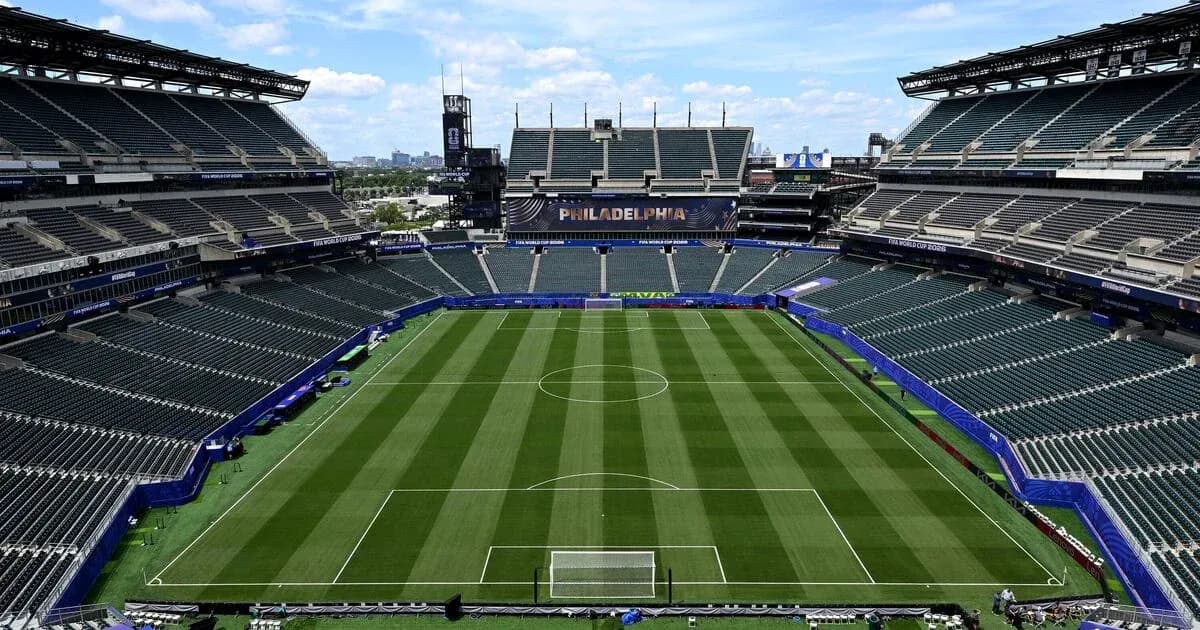
The World Cup caravan rolled across North America on Sunday with a bit of everything: lightning warnings in Philadelphia, political tension in Los Angeles, a historic night for Egypt in Vancouver and a heavyweight wobble from Uruguay in Miami. Off the pitch, an England flag was turned away at the turnstiles, a Brazil star talked up Scotland, and Jeremy Doku’s impending fatherhood kept rumbling through the headlines.
Storm clouds over France vs Iraq
France’s late kick-off against Iraq in Philadelphia is already a tactical puzzle. Now the weather has joined in.
Local forecasts warn of “apocalyptic” conditions, with several severe thunderstorms expected, bringing damaging winds, intense lightning and even a risk of isolated tornadoes. Under FIFA regulations, a lightning strike within eight miles of the stadium stops everything.
“They'll start to evacuate the stadium to the main concourse and seek emergency shelter,” said Lauren Lambrugo, chief operating officer of Philadelphia Soccer 2026. “And then it has to wait 30 minutes prior to them bringing everybody back on the field.”
So one of the tournament’s marquee fixtures could turn into a stop-start survival exercise, with players, coaches and fans all at the mercy of the radar.
Salah dances into history as Egypt finally arrive
In Vancouver, Egypt finally stepped out of the shadows.
They trailed New Zealand at half-time, undone by a towering Finn Surman header from a corner – the kind of textbook finish you’d find in a coaching manual. Egypt looked flat, the occasion heavy, the wait for a first World Cup win threatening to drag on into a ninth game.
Then the second half blew the script apart.
Ziko struck first to level the match as Egypt poured forward. From that moment, there was only one team playing with conviction. The pressure mounted, the chances came, and the inevitable man delivered.
Mohamed Salah, chasing his first goal of the tournament, exchanged a neat one-two on the edge of the area and drilled low into the corner. Egypt had turned the game around, and their talisman had finally stamped his name on these finals.
Trezeguet’s third finished it. New Zealand simply could not live with the intensity. The final whistle brought joyous, cathartic scenes, Egypt celebrating their first ever World Cup victory.
Later, footage emerged of Salah in Vancouver’s streets, singing and dancing with fans. For a country that has carried World Cup scars for decades, this was more than three points. It was a release.
Cape Verde refuse to blink against Uruguay
In Miami, Cape Verde’s debut World Cup story grew another chapter. And it is no fairytale padding – they are earning every line.
They struck first against Uruguay with a thunderbolt. Kevin Pina stood over a free-kick from around 30 yards and unleashed a laser. The ball flew past Fernando Muslera, a sensational strike that silenced the South American support and lit up the contest.
Uruguay hit back with their familiar fury. Ronald Araujo nodded an effort against the post, then reacted fastest to head in the rebound. Moments later, Araujo rose again to send a cross back across goal, where Agustín Canobbio arrived to tap home and flip the scoreline in a heartbeat.
Cape Verde looked rattled but never broken. The game seemed to be slipping away. Then Uruguay blinked.
A defensive mix-up left Muslera stranded in no man’s land, and substitute Helio Varela pounced, firing into an empty net just three minutes after coming on. Another historic moment for Cape Verde. Another point. Another warning to anyone assuming they are here to make up the numbers.
Marcelo Bielsa now faces an uncomfortable equation. Two draws, a fractured camp by some reports, and Spain to come. Lose to the European champions and, if either Cape Verde or Saudi Arabia win their own match, Uruguay are staring at third place and a likely exit. Bielsa has already confirmed that Giorgian de Arrascaeta and Ronald Araujo will not feature in the final group game. They are not certain to be fit even if Uruguay sneak into the last 32.
Cape Verde, by contrast, know exactly what they need: beat Saudi Arabia and they are through. Simple. Brutal. Within reach.
Spain reset as Yamal announces himself
Atlanta saw a different kind of storm. Spain, still smarting from a flat 0-0 against Cape Verde, tore into Saudi Arabia and were 3-0 up before the first drinks break.
Lamine Yamal, restored to the starting XI, changed the mood in an instant. Mikel Oyarzabal swept a teasing ball across the box and the Barcelona prodigy arrived to tap home his first World Cup goal. Spain looked sharper, quicker, more inventive with Yamal on the pitch. Nobody should be surprised.
Oyarzabal, heavily criticised after the opener, flipped his own narrative too. Provider for the first, he then struck twice himself with tidy finishes from close range. From woeful to ruthless in the space of a few days.
After the interval, Spain eased off the throttle. They did not need to chase more, but the scoreline still swelled. Marc Cucurella’s effort was turned into his own net by Hassan Al Tambakti, the eighth own goal of the tournament. A late Ferran Torres strike was chalked off for offside after a lengthy VAR check, but the damage was long done.
“It’s special,” Yamal told DAZN afterwards. “I've always dreamed about being at a World Cup, and being able to score in my first start is a dream. I watched the last World Cup in class at school.” Now he is dictating this one.
Spain, the 2024 European champions, have one foot in the knockouts. They barely needed third gear to get there.
Belgium, Iran and a night that never caught fire
Los Angeles promised drama in Group G. Belgium vs Iran delivered tension, a red card and VAR controversy – but very little quality.
Iran thought they had landed the first blow when Mehdi Taremi found the net in the first half, only for VAR to rule him offside. It was a warning for Belgium, but they never really heeded it.
Chances came and went, the tempo sagged, and the game drifted until a flash of chaos. Nathan Ngoy hauled down Taremi just past halfway with the Iranian striker bearing down on goal and no other defender close. The referee went red, VAR agreed, and Belgium were left to see out the night with ten men.
Even then, Iran could not seize control. A frantic goalmouth scramble saw three Belgian players swing at the ball inside the six-yard box, only for Iranian defenders to somehow hack clear. At the other end, Maxim De Cuyper should have won it for Belgium but shot straight at Alireza Beiranvand.
The final whistle confirmed a 0-0 that pleased nobody. Two games, two points each. Belgium now face New Zealand, Iran meet Egypt, and both know they are running out of lives.
Roy Keane did not bother dressing it up on ITV. “In terms of the quality of the game, I thought it was rubbish,” he said. “Really bad… the standard in terms of the passing, movement, decision-making... so poor.” Hard to argue.
Anthem boos and protests around Iran
Iran’s matches continue to play out against a charged political backdrop.
Their national anthem was booed for a second straight game, and captain Alireza Jahanbakhsh tried to steer a careful line afterwards.
“We play for all the Iranians in Iran, outside Iran, with whatever ideology, whatever preferences they have, and we make sure to make them happy,” he said. “The most important thing we can do as a team is to perform well, to make sure we put our heart on the pitch.”
Outside the stadiums, protests roll on. Iranian fans in Los Angeles again used the World Cup stage to voice opposition to the regime. One supporter told the Daily Mirror: “First, we want the fall of the Islamic Republic. And second, that team is not our team and they don't represent us and we don't support that team.”
On the pitch, Iran are fighting for a place in the last 32. Off it, their World Cup remains a lightning rod.
England: flags, fitness and a Tuchel curfew
England’s build-up to their second group match against Ghana in Boston has been anything but dull.
First came the flag. An England banner featuring a submarine was denied entry to the opener against Croatia under FIFA’s strict ban on military imagery inside stadiums. The story travelled fast enough that Barrow FC, whose nickname is “The Bluebirds” but whose town has deep submarine links, responded with a tongue-in-cheek post blurring out the offending image.
More serious for Thomas Tuchel are the bodies, not the banners. Declan Rice remains a doubt after hobbling off in the win over Croatia. Bukayo Saka arrived at the tournament managing an Achilles issue and missed Saturday’s group session, instead following his own tailored programme. He did, though, train fully behind closed doors on Sunday in Kansas City, a significant boost before Tuesday’s game.
Tuchel has already suggested he might hold Saka back until the final group match against Panama. Now he must decide whether to roll the dice earlier. Saka insists he is fit and that the problem has not worsened.
Off the grass, Tuchel has stamped his authority with a strict curfew. Defender Dan Burn revealed that some players had to leave a concert early to make it back in time. He spent a friends-and-family day with his wife, then headed out in full cowboy gear – hat, boots and all – to watch country artist Ella Langley, only to cut the evening short to stay within the rules.
England know the stakes. Beat Ghana and they are through, possibly as group winners. Lose focus, and the group opens up.
Doku’s dilemma and a row that will not die
Jeremy Doku did not play in Belgium’s draw with Iran, officially due to a chest infection. His name, though, never left the conversation.
The Manchester City winger has made it clear he wants to be present for the birth of his first child, due in the second week of July. “It's my first child, so I would definitely want to be there,” he said. “If you ask me what I want, my answer is that nobody wants to miss the birth of their first child. But I also know that football involves many other considerations.”
He added that he expects understanding from the federation and that “we'll see what we can do.”
That stance drew a fierce and widely condemned response from L’Equipe presenter France Pierron, who called the idea of leaving a World Cup camp “to be present for the birth of your child” a “disgusting moment” where the father is “just an extra”. She has since apologised and been suspended, according to reports in France, but the debate has not gone away.
Ollie Watkins, speaking from England camp and as a father of two, backed Doku unequivocally.
“It only happens once, your first child,” he said. “Welcoming them into the world is a blessing, and you don't get that opportunity (again)… I don't think it's anyone else's business. If he goes back and does that, that's fair enough.”
For now, Doku remains with Belgium, his infection keeping him out of action. The calendar, the baby and the tournament bracket are all ticking.
Brazil’s respect and Scotland’s chance
Elsewhere, Brazil are keeping their tone measured ahead of a Group C meeting with Scotland. A draw would be enough to send both teams through, but Lucas Paqueta insists that is not how they are thinking.
“All the teams at the World Cup deserve respect,” he said. “You have to study them and prepare as best as possible to face them. We have great respect for Scotland, but we also know we need to play our game and follow what the coach asks of us. Regardless of the opponent, our goal in every match is to win.”
Scotland, roared on by the travelling Tartan Army, will relish hearing that. A point suits them. Pride will not let them play for it.
Curacao’s keeper and the small nations making noise
Curacao’s goalless draw with Ecuador may not dominate global headlines, but it mattered deeply on the ground. Goalkeeper Eloy Room emerged as the hero, his saves preserving a historic point and underlining a broader theme of this World Cup: the so-called minnows are refusing to bow.
Cape Verde, Curacao, Egypt – each has already bent the narrative. Each has shown that reputation counts for nothing once the whistle goes.
A flag, a storm, and a question
From a banned England flag at one stadium gate to lightning protocols that could empty another, this World Cup keeps reminding everyone that control is an illusion.
Coaches can plan for pressing triggers and set-piece routines. They cannot plan for a thunderstorm rolling over Philadelphia at 9.59pm, or for a 30-yard free-kick from Kevin Pina that rips up an entire continent’s assumptions.
Egypt finally have their World Cup win. Spain have reasserted their authority. Uruguay are wobbling. Belgium and Iran are stuck in neutral. England juggle injuries and curfews. Jeremy Doku weighs fatherhood against a once-in-a-career stage.
The group tables will soon sort themselves out. The real question now is simpler, sharper, and it hangs over every favourite and every upstart alike:
Who is actually ready to live with the chaos this tournament keeps throwing at them?
Related News
Anthony Joshua Names Murat Gassiev as Next Opponent if He Defeats Tyson Fury

UFC 332: Start Time and Fight Highlights for Natalia Silva vs. Wang Cong
Court McGee Opens Up About Choosing UFC 332 as His Final MMA Fight
WBC Orders Lightweight Title Unification: William Zepeda vs Jadier Herrera
BCCI Pension List: Monthly Payments to Retired Indian Cricketers in 2025
Why Fury vs Joshua Is Set for Cardiff, and Dua Lipa’s Unexpected Role