
World Cup 2026: Socceroos and England Face Crucial Challenges
World Cup 2026™ has finally slipped into that familiar chaos: injuries reshaping line-ups, giants stumbling, legends raging against the dying of the light, and a few old grudges resurfacing on the touchline.
Socceroos Lose Their Breakout Star
Australia’s World Cup has taken a sharp turn before a ball is even kicked in their decisive clash with Paraguay.
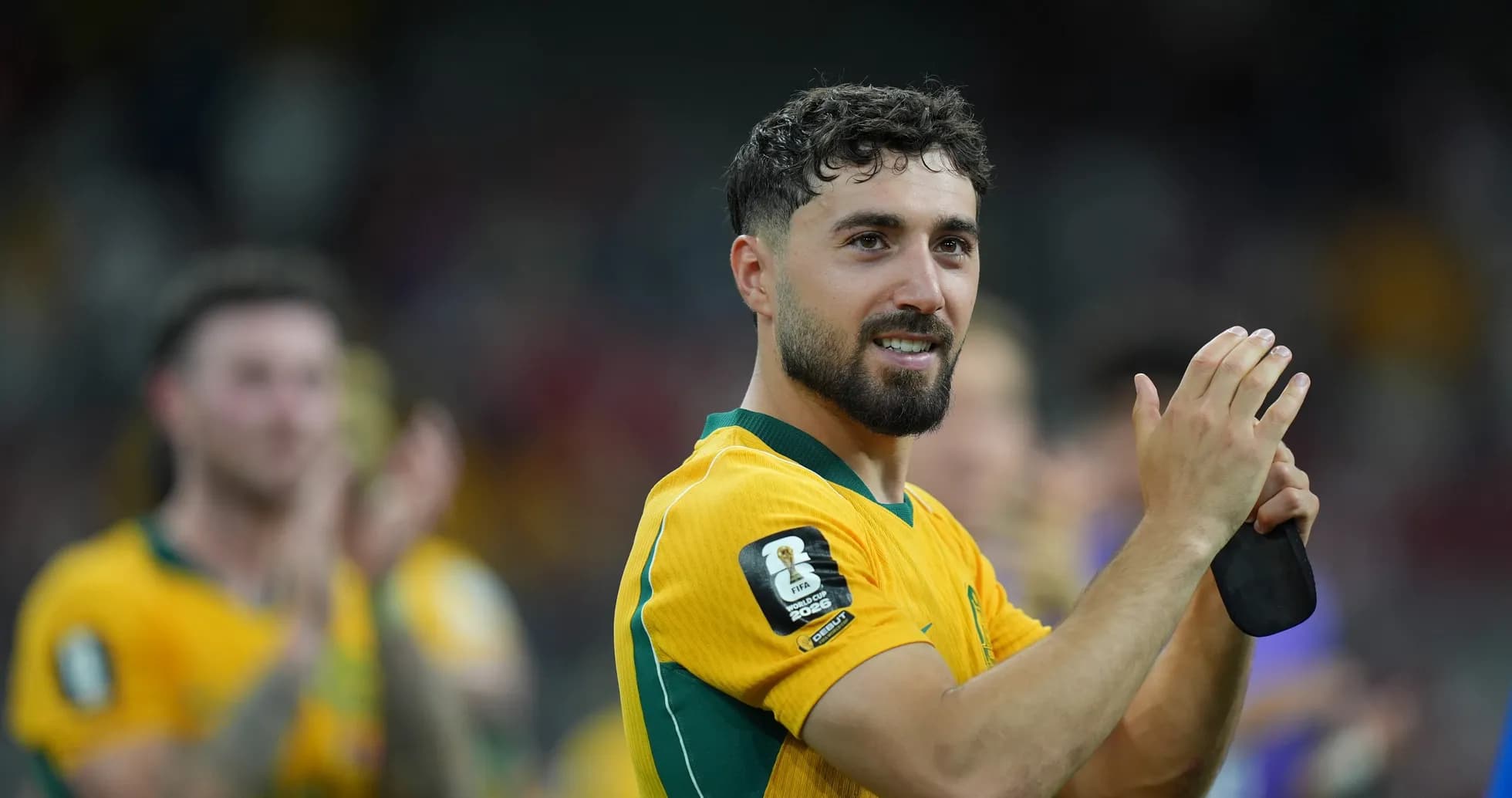
Alessandro Italiano, who muscled his way into the starting XI as right wing-back, is set to miss out with an injury concern. It’s a brutal blow. He had started both of Australia’s games, first grafting relentlessly to help keep Turkiye scoreless on Matchday 1, then going the distance again against the USA.
With Mat Leckie already sidelined, Tony Popovic heads into the final group game stripped of two key pieces of his wide armoury.
The USA match in Seattle still lingers. Australia retreated, absorbed pressure, and paid for it. Two goals down by half-time, they only came alive when Connor Metcalfe, Nestory Irankunda and Cristian Volpato were unleashed after the break, ripping into a tiring American back line and flipping the tone of the contest.
That’s exactly what Craig Foster wants to see from the opening whistle this time.
Speaking on 1170 SEN Breakfast, Foster acknowledged Popovic’s naturally cautious streak but pushed for more ambition against Paraguay. He praised Popovic’s record — automatic qualification, something Australia hadn’t managed for some time — yet pointed to the USA game as a warning: sit too deep, fall behind, and the climb becomes steep.
Foster called for Volpato and Irankunda to start, highlighting Volpato’s electric cameo as a statement the coach can’t ignore. Get ahead, he argued, then lean on the defensive organisation that has already made the Socceroos so hard to break down. The equation is simple enough: if Australia want to stay in this tournament, their best attacking players need to be on the pitch early, not waiting for a rescue job.
Colombia Climb, Congo Cling On
Elsewhere, Group K now belongs to Colombia.
Right-back Daniel Muñoz delivered the decisive blow, scoring the only goal of the game in the 76th minute to move Colombia to six points and the top of the group. Efficient, controlled, ruthless when it mattered.
Congo, by contrast, are hanging on by the skin of their teeth. With just one point, they now face a must-win clash against Uzbekistan on Sunday. Victory could still drag them through as one of the best third-placed sides. Anything less, and the World Cup ends there.
Bellingham, Queiroz and a Touchline Flashpoint
In Boston, a goalless draw between England and Ghana felt like a match played in slow motion, but the temperature spiked on the touchline.
Jude Bellingham escaped a card for a heavy challenge on Jerome Opoku right in front of the benches. The tackle sparked a heated exchange between the England star and Carlos Queiroz as the players left the field, a rare moment of real fire in an otherwise flat affair.
Queiroz later explained his anger. He said Bellingham reacted badly, used “some bad names,” and that his own first instinct had been to calm things down after seeing his player caught by the challenge. In the heat of the moment, tempers flared, words flew, then it settled. “Football is not dancing in a saloon with tuxedos,” Queiroz said. “It’s not a show.”
Bellingham admitted his part. He called it a “silly tackle,” said he’d tried to win the ball and followed through, catching his opponent. He spoke to the player afterwards, then watched the opposing bench leap up in unison, appealing for a yellow card. When he realised the man confronting him was the former Manchester United assistant, he insisted there was nothing more than a competitive edge between them, underlining his respect for Queiroz.
On the table, the draw changes everything. England and Ghana both move to four points in Group L, with England on top only by goal difference. Croatia, after finally opening their account with a win that lifted them to three points and third place, now eye Ghana on June 28. A win sends them through. A draw leaves them sweating on the third-place permutations.
Panama, already eliminated, will play for pride against England on the same day. For them, the World Cup is almost over. For England, it’s just become a little more complicated than it needed to be.
England Run Into a Wall
At Foxborough, Ghana parked the bus and then bolted the doors.
For 95 minutes, they sat deep, clogged the spaces, and turned the game into a grind. The officiating didn’t help either side, the physicality spiked, and frustration seeped into everything England tried. Declan Rice’s yellow card summed up the mood: a challenge born of exasperation as much as intent.
The contrast to the 4-2 win over Croatia was stark. Then, England had space, rhythm, and a swagger in the second half. Against Ghana, they had safe passes and stale ideas.
Micah Richards didn’t spare them. He accused England of lacking bravery against a low block, of playing too safe, too sideways, when the situation demanded risk and incision.
Harry Kane explained his own quieter night. Tracked closely by Thomas Partey, he found no room to drop deep and then surge into the box late. Ghana defended their area with discipline, forcing England to rely on crosses. The delivery came, the first contacts did not. The middle of the pitch remained too crowded, too compact, and England only really threatened when their wide players finally started winning one-on-one duels.
Wayne Rooney, who knows Queiroz’s methods from their Manchester United days, saw a familiar pattern from the Ghana coach’s side: disciplined, stubborn, unyielding. He pointed again to crosses as England’s best route to goal and urged calm. Top spot in the group remains within reach. Panic, he insisted, helps no one.
Penalty Shoot-outs Get a Shake-Up
Change is coming to one of football’s most nerve-shredding rituals.
FIFA are set to alter the procedure for penalty shoot-outs from the last 32 onwards. At present, there are two coin tosses: one to decide the end, another to determine who kicks first. When Arsenal’s Champions League final went to penalties, they lost both tosses, shot second, and aimed into a stand full of PSG fans. They lost the shoot-out too, and the sense of imbalance lingered.
To address that, FIFA will move to a single coin toss. The winner will choose either to kick first or to pick the end. The loser takes the remaining option. It’s a small tweak, but one designed to strip away at least one layer of perceived unfairness in the game’s cruelest decider.
Ronaldo Roars Back
Cristiano Ronaldo’s World Cup had barely begun and already the knives were out.
A 1-1 draw with DR Congo in Portugal’s opener triggered familiar questions: is the 41-year-old still worth his place? Is Roberto Martinez too afraid to leave him out?
Uzbekistan got the answer.
Ronaldo scored twice in a 5-0 demolition that all but books Portugal’s ticket to the knockouts. The performance dropped him straight back into the conversation on a weekend dominated by the game’s elite forwards. Lionel Messi, Kylian Mbappé and Erling Haaland had each struck twice the day before. Ronaldo refused to be left out of that party.
He spoke of a “difficult, dark week,” of feeling almost retired, of clinging to hard work over hype. He framed his response as a familiar story: doubts, criticism, then another resurgence.
Roy Keane, never shy in his opinions, leapt to his former teammate’s defence. Ronaldo, he insisted, was never gone. He called him “the man,” compared him to Tom Brady among the pantheon of all-time sporting greats, and reminded everyone that the hardest thing in football is still putting the ball in the net. Ronaldo, he said, still does that better than most.
At 41, Ronaldo is not supposed to be dictating World Cup storylines. He is doing it anyway.
Deschamps Leaves Camp After Bereavement
Amid the noise of results and controversy, there was a sombre note from the France camp.
Didier Deschamps has left the squad after the death of his mother. The French Football Federation confirmed he will miss training sessions and will not be on the bench for the final Group I game against Norway.
With the agreement of FFF president Philippe Diallo, assistant coach Guy Stephan will take charge until Deschamps returns. It is a moment that cuts through tactics and selection debates. France will play on, but their coach has more important duties to attend to.
England’s Frustration, America’s Ceiling
Back with England, the mood among fans watching that second group game was raw. Ghana didn’t just park a bus; they parked a double-decker. England failed to find the key, ran out of ideas, and let irritation seep into their play. The yellow for Rice felt inevitable.
Across the Atlantic, another debate rages.
The USA have talked a big game around this World Cup, and their win over Australia only fed the swagger. Yet one of their own has poured cold water on the idea of a miracle run.
Former goalkeeper Tim Howard, speaking on the Unfiltered Soccer Podcast, dismissed the notion that the USA can win the tournament. Not just unlikely. “Literally impossible,” in his words. He argued that the team would need to produce the greatest performance in their history four matches in a row, against four global heavyweights, from the round of 16 through to the final.
That’s the standard this World Cup is setting. Tight groups. Heavyweights dropping points. Legends refusing to fade. Coaches clinging to caution or daring to gamble on youth.
Some teams are already out. Some are hanging on by a thread. Others, like Portugal and Colombia, are hitting their stride.
The question now is simple: who has the nerve, and who is about to blink?
Related News
Anthony Joshua Names Murat Gassiev as Next Opponent if He Defeats Tyson Fury
UFC 332: Start Time and Fight Highlights for Natalia Silva vs. Wang Cong
Court McGee Opens Up About Choosing UFC 332 as His Final MMA Fight
WBC Orders Lightweight Title Unification: William Zepeda vs Jadier Herrera
BCCI Pension List: Monthly Payments to Retired Indian Cricketers in 2025
Why Fury vs Joshua Is Set for Cardiff, and Dua Lipa’s Unexpected Role