
World Cup Thursday: Mexico vs South Korea and Key Matches
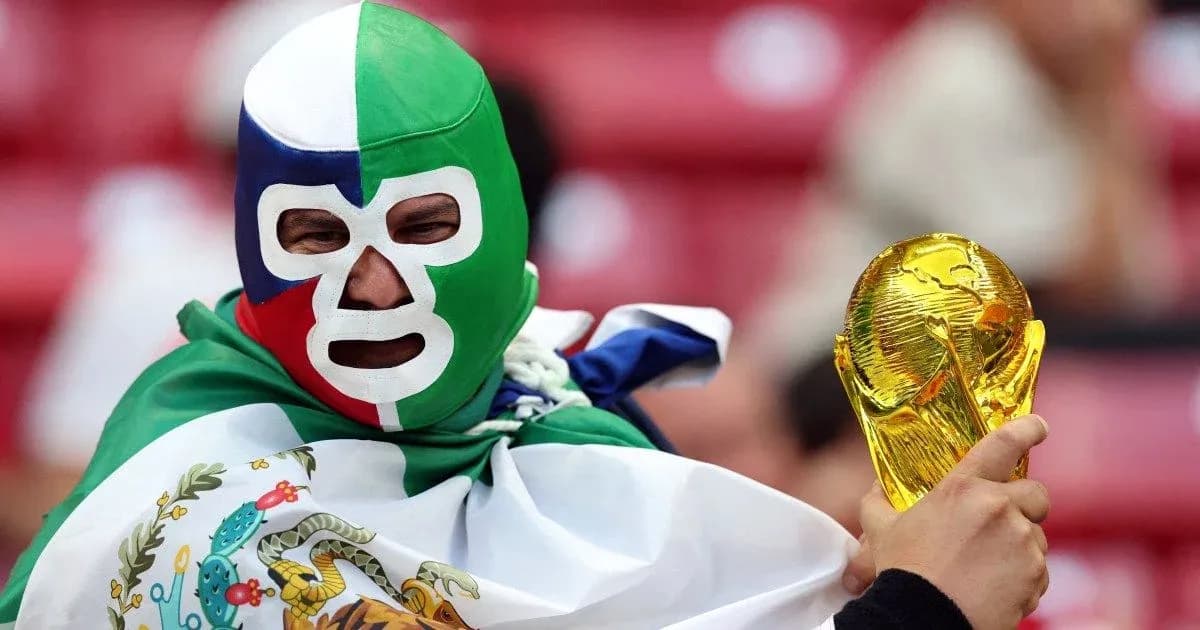
The World Cup rolls into Thursday with four more group games and a tournament that has wasted no time finding its voice. Goals, shocks, politics, and a Golden Boot race already laced with star power – the rhythm of this World Cup is set, and it is relentless.
At the heart of the day sits Mexico against South Korea in Guadalajara, a clash between two sides who opened with wins and now stare at a chance to seize control of Group A.
Thursday’s fixtures: four games, four very different moods
The day starts in Atlanta, where Czechia meet South Africa at Atlanta Stadium at noon local time (16:00 GMT). At the same time on the West Coast, Switzerland face Bosnia and Herzegovina at Los Angeles Stadium (19:00 GMT).
Later, Vancouver takes the baton as Canada host Qatar at Vancouver Stadium at 3pm (22:00 GMT), before the noise and colour of Guadalajara close the night with Mexico vs South Korea at 7pm (01:00 GMT Friday).
Every game carries points. Not every game carries the same weight.
Mexico vs South Korea: history on Mexico’s side, numbers too
Mexico have seen this opponent before on this stage and usually walked away smiling. They have beaten South Korea in both of their previous World Cup meetings, including that tight 2-1 win at Russia 2018.
Both sides arrive with momentum after opening victories, but the data tilts green, white and red. Opta’s supercomputer ran 25,000 simulations of this Group A meeting. Mexico came out on top in 49.1 percent of them. South Korea won just 24.3 percent, with 26.6 percent ending level.
History, numbers, and home soil all lean the same way. South Korea know exactly how big a punch they’ll have to land.
Czechia vs South Africa: numbers say Czechs, history hints at danger
Czechia and South Africa have barely crossed paths. Just one previous meeting, and nothing to draw on from World Cup history between them beyond wider trends.
Those trends should keep Czechia honest. South Africa have a respectable record against European opposition at this tournament. They stunned France 2-1 back in 2010 and have lost only one of their last four World Cup matches against European sides.
Czechia’s own experience against African opposition is not a happy reference point: a 2-0 defeat to Ghana in their only such World Cup game.
Even so, the models are firm. Opta’s supercomputer makes Czechia clear favourites, giving them a 54.9 percent chance of victory. South Africa sit at 21.8 percent, with the draw at 23.3 percent. The warning for the Czechs is obvious: the numbers don’t erase scars.
Switzerland vs Bosnia and Herzegovina: new stage, old reminder
This is a first World Cup meeting between Switzerland and Bosnia and Herzegovina, but the Swiss do not need to search too far back for a reminder of what can go wrong.
The only previous encounter between the two came in a 2016 friendly in Zurich. Bosnia walked away 2-0 winners, with Edin Dzeko and Miralem Pjanic on the scoresheet. Different stakes now, same flag across the halfway line.
This time, Switzerland carry the favourites’ tag with some comfort. In 25,000 simulations, Opta’s model gave them victory in 61.6 percent of scenarios. Bosnia won 17 percent of the time, with 21.4 percent ending in a draw.
The friendly in Zurich still lingers in the background. So does the sense that Bosnia, even as underdogs, rarely arrive just to make up the numbers.
Canada vs Qatar: hosts backed by history and the data
World Cup history tends to treat host nations kindly when they face Asian opposition. Three times before a host has played a team from the Asian confederation. Three times the hosts have won: Mexico over Iraq in 1986, France over Saudi Arabia in 1998, Russia over Saudi Arabia in 2018.
Canada step into that pattern with confidence and a statistical tailwind. Opta’s supercomputer has them winning 72.9 percent of its 25,000 simulations. Draws account for 16.5 percent. Qatar are left with just a 10.6 percent chance of springing an upset.
The numbers say this should be straightforward. World Cups have a way of ignoring the script, but Qatar will need something extraordinary.
Golden Boot race: Messi sets the pace, giants follow
The tournament’s first round has already lit the fuse on the Golden Boot race, and one familiar name sits at the top.
Lionel Messi has three goals to his name after a hat-trick in Argentina’s opening win over Algeria. At 36, he is still bending World Cups to his will.
Just behind him, a crowded chasing pack of seven players waits on two goals each:
- Kylian Mbappe (France)
- Erling Haaland (Norway)
- Folarin Balogun (USA)
- Kai Havertz (Germany)
- Yasin Ayari (Sweden)
- Elijah Just (New Zealand)
- Harry Kane (England)
One round in, the race already feels like a sprint between eras: Messi at full stride, Mbappe and Haaland pounding the same track, Kane and the rest refusing to fall away.
DR Congo’s historic night
Some moments at a World Cup go beyond the scoreline. DR Congo’s draw with Portugal in Houston was one of them.
Yoane Wissa, the Newcastle United forward, rose after half-time and headed in the DRC’s first-ever World Cup goal. It wiped out Joao Neves’s early strike and secured a 1-1 draw against a team ranked fifth in the world by FIFA.
It was their first World Cup appearance in 52 years, their first point, and a night that sent Congolese fans into celebration in the stadium and across the globe. For the Leopards, it was more than a result. It was a return.
Colombia back in stride
Colombia, absent from the 2022 World Cup in Qatar, have come back with intent. Their 3-1 win over debutants Uzbekistan at Mexico City Stadium was controlled, assured, and anchored by a familiar star.
Luis Diaz ran the game. He set up Daniel Munoz for the opener, then scored Colombia’s second after the break. Uzbekistan briefly clawed level through Abbosbek Fayzullaev, but Colombia reset, tightened up, and closed the door.
The win hands them an early advantage in Group K and a platform to aim for the knockout stages they missed four years ago.
Shocks and stalemates: Cape Verde, DRC and Iran shake the bracket
Every World Cup needs its early tremors. This one already has several.
Cape Verde’s 0-0 draw with Spain may be the standout shock of the opening round. On their World Cup debut, the Blue Sharks held one of the tournament favourites and walked away with a historic first point.
DR Congo’s 1-1 draw with Portugal belongs in the same bracket of surprises, a heavyweight checked by a newcomer with no intention of playing the victim.
Iran’s 2-2 draw with New Zealand also turned heads. Many expected Iran to control their Group G opener. New Zealand had other ideas and left with a point that could reshape the group’s balance.
A World Cup stitched together by diversity
Look across the squads and the modern game is written in every lineup. Teams are built from different faiths, cultures and backgrounds, and several of the tournament’s biggest contenders embody that mix.
England, France, Spain and Sweden all field squads that include both Christian and Muslim players. Spain’s teenage sensation Lamine Yamal and Sweden midfielder Yasin Ayari are part of a growing generation of Muslim footballers playing under the brightest lights.
Analysts have pointed to these squads as living examples of cooperation in an era marked by fierce debates over immigration, identity and integration in parts of Europe. On the pitch, the message is simple: players celebrate, pray in their own ways, then embrace as teammates. The result is a team, not a talking point.
Ronaldo’s sixth World Cup starts with frustration
Cristiano Ronaldo made history just by stepping onto the pitch. At 41, he joined Lionel Messi as one of only two players to appear at six World Cups.
The night did not bend to the narrative. Ronaldo failed to score despite several second-half chances, a sharp contrast to the opening games of Messi, Mbappe, Haaland and Kane, all of whom found the net.
Portugal’s 1-1 draw with DR Congo leaves them chasing in Group K and piles pressure onto their next fixture. Ronaldo has the record. What he does with this final chapter is still unwritten.
Hydration breaks: protection or disruption?
Not all of the debate around this World Cup is about tactics and talent. FIFA’s new hydration breaks, brought in to help players cope with the summer heat in the US, Canada and Mexico, have split opinion.
Critics argue the stoppages fracture the rhythm that defines football and can tilt momentum. The flashpoint came in Houston, where Curacao scored against Germany before a hydration break, then conceded twice before half-time in what became a 7-1 defeat.
Alan Shearer called the break a momentum killer. Roy Keane compared the pauses to timeouts, insisting they cut into the natural flow that makes the sport unique.
FIFA’s stance is clear: player welfare comes first. Detractors counter that these breaks also hand coaches extra tactical windows and broadcasters more advertising time. The argument is unlikely to cool as the temperatures rise.
Africa’s record presence – and the obstacles off the pitch
On the field, this is a landmark tournament for sub-Saharan Africa. Six nations from the region are here, more than ever before.
South Africa’s Bafana Bafana were the first to appear, losing 2-0 to Mexico in the opener. Behind them stand some of the continent’s traditional powers and compelling stories.
Ghana’s Black Stars, quarterfinalists in 2010, are back, as are Senegal, who matched that feat in 2002 and return with renewed ambition. Ivory Coast, winners of two Africa Cup of Nations titles in recent years, are at their first World Cup since 2014.
Then come two of the most intriguing sides: DR Congo and Cape Verde. The Leopards are at their first World Cup since 1974, when they played as Zaire. Many of their current squad were born in Europe, a pattern mirrored by Cape Verde, whose diaspora-built team has already earned that stunning draw with Spain.
Off the pitch, the road has been rough. Travel and visa problems have hit teams, officials and supporters. One controversial policy initially required many fans with African passports to post $15,000 bonds to enter the United States. The rule was later dropped, but too late for some to rearrange plans.
One familiar sound from Africa’s last World Cup on home soil is missing. The vuvuzela, the plastic horn that droned through South Africa 2010, is banned this time.
Even so, the continent will not lack for noise. More than three million people of African birth live across the US and Canada. Their presence, in stadiums and fan zones, gives the six African teams a powerful backing as they try not just to compete, but to drive deeper into the tournament than ever before.
The games on Thursday will not decide that story. They will, however, sharpen it. As Mexico face South Korea and the rest of the field jostles for position, one question hangs over the day: who will grab their moment before the World Cup moves on without them?
Related News

Anthony Joshua Names Murat Gassiev as Next Opponent if He Defeats Tyson Fury

UFC 332: Start Time and Fight Highlights for Natalia Silva vs. Wang Cong

Court McGee Opens Up About Choosing UFC 332 as His Final MMA Fight
WBC Orders Lightweight Title Unification: William Zepeda vs Jadier Herrera

BCCI Pension List: Monthly Payments to Retired Indian Cricketers in 2025

Why Fury vs Joshua Is Set for Cardiff, and Dua Lipa’s Unexpected Role