
Belgium's Tactical Comeback Against Senegal in World Cup Round of 32
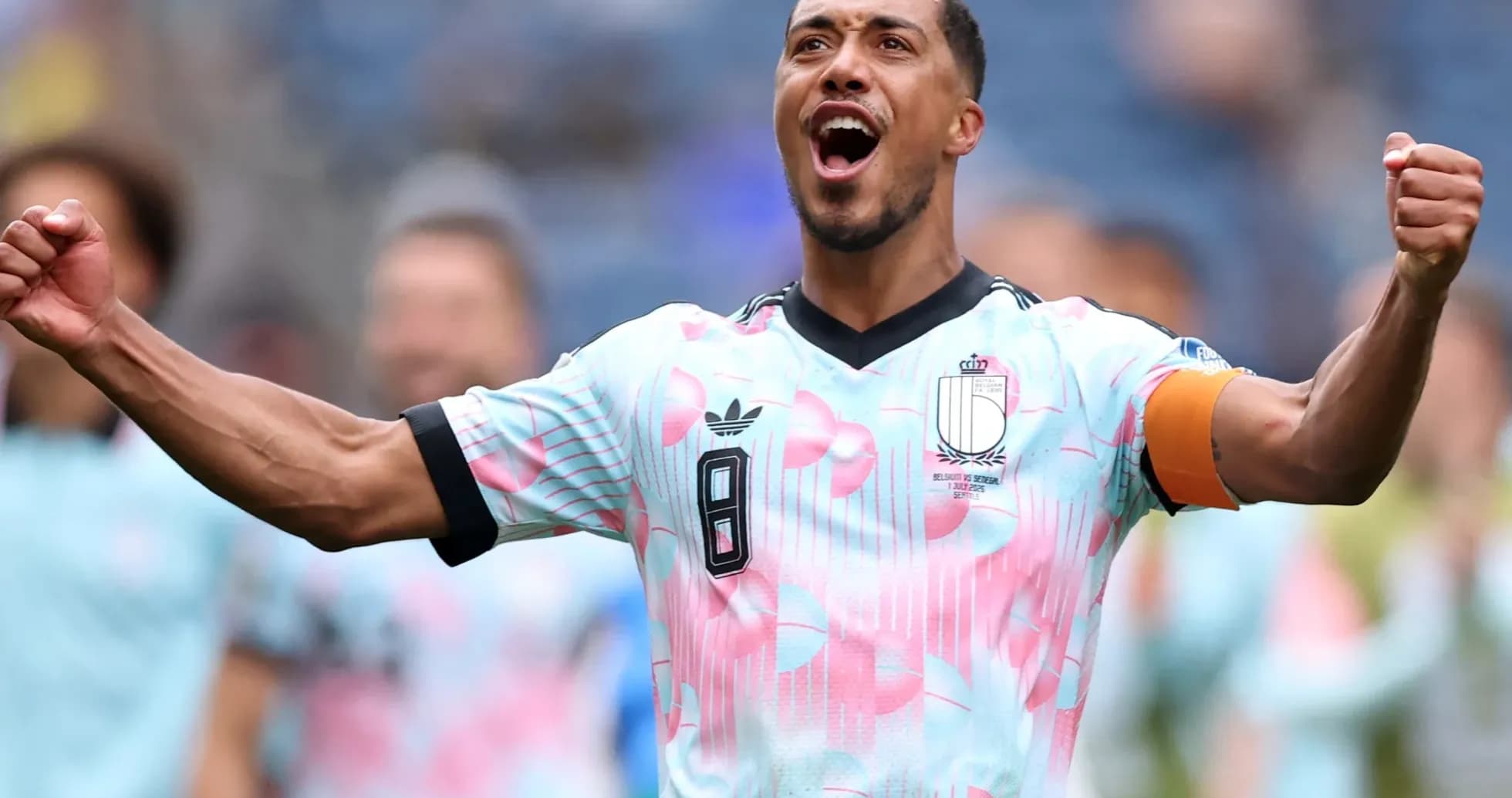
Belgium’s 3-2 extra-time win over Senegal at Lumen Field in the World Cup Round of 32 was a tactical arm-wrestle that flipped twice: first in Senegal’s favour through their vertical transitions, then decisively towards Belgium once Rudi Garcia reconfigured the attack around Romelu Lukaku and Youri Tielemans. Over 120 minutes, Belgium’s 4-2-3-1 evolved from sterile control into a high-risk, high-reward structure, while Senegal’s 4-3-3, so aggressive and incisive for an hour, gradually lost compactness and energy until it broke under sustained pressure and a stoppage-time penalty confirmed by VAR.
The scoring timeline underlines that momentum swing. At 25', Habib Diarra (Senegal) struck the opener with a normal goal (no assist), rewarding Senegal’s early willingness to commit midfield runners beyond the first line. After the break, Ismaïla Sarr (Senegal) doubled the lead at 51', finishing a move assisted by Moussa Niakhaté and giving Bouna Thiaw Pape’s side a 0-2 platform built on counter-punching efficiency.
Belgium’s comeback began late. At 86', Romelu Lukaku (Belgium) converted from close range after a cross by Thomas Meunier, cutting the deficit to 1-2 and crystallising the impact of Belgium’s reshaped front line. Three minutes later, at 89', Youri Tielemans (Belgium) arrived from deep to make it 2-2, finishing a move assisted by Leandro Trossard. Extra time remained tight until 120+5', when Tielemans (Belgium) completed the turnaround from the penalty spot; the decision had been checked and the penalty confirmed by VAR at 120', a key psychological blow that ended Senegal’s resistance.
Discipline
Discipline was limited but tactically relevant. At 64', Brandon Mechele (Belgium) — Foul — was booked, a reflection of Belgium’s increasingly aggressive counter-press as they chased the game. Three minutes later, at 67', Lamine Camara (Senegal) — Foul — received Senegal’s yellow, emblematic of the midfield strain as Belgium’s possession phases lengthened. Total cards: Belgium 1, Senegal 1, overall 2.
Team Structures
Structurally, Belgium started in a clear 4-2-3-1: Thibaut Courtois in goal behind a back four of Timothy Castagne, Brandon Mechele, Arthur Theate and Maxim De Cuyper; a double pivot of Youri Tielemans and Hans Vanaken; an attacking line of Leandro Trossard, Kevin De Bruyne and Jérémy Doku supporting Charles De Ketelaere as the nominal striker. In practice, the first hour saw Belgium dominate the ball (52% possession, 699 passes, 602 accurate at 86%) but struggle to turn circulation into penetration. The front four often occupied similar vertical lanes, with De Bruyne dropping into the half-spaces and De Ketelaere drifting, leaving no fixed reference to pin Senegal’s centre-backs.
Senegal’s 4-3-3 was built to exploit that. With Mory Diaw in goal, a back four of Krépin Diatta, Pathé Ismaël Ciss, Moussa Niakhaté and Ismail Jakobs stayed relatively narrow, while the midfield trio of Habib Diarra, Idrissa Gana Gueye and Pape Gueye focused on screening central zones and springing transitions. Up front, Iliman Ndiaye, Ismaïla Sarr and Sadio Mané formed a fluid front line that repeatedly targeted the space behind Belgium’s advanced full-backs. Senegal matched Belgium’s shot volume (19 total, 10 inside the box) but with a far more transition-heavy shot profile, reflected in a significantly higher xG of 3.54 compared to Belgium’s 1.8.
Tactical Inflections
The first key tactical inflection came at half-time. At 46', Romelu Lukaku (IN) came on for Charles De Ketelaere (OUT), giving Belgium a fixed central target. This immediately changed the dynamic: Senegal’s centre-backs had to defend deeper and more narrowly, opening corridors for Doku and Trossard. At 56', Rudi Garcia doubled down, with Nicolas Raskin (IN) for Kevin De Bruyne (OUT) and Dodi Lukebakio (IN) for Jérémy Doku (OUT). Raskin’s fresher legs and more vertical passing allowed Tielemans to push higher, effectively turning Belgium’s shape into a 4-1-4-1 in possession, with Vanaken and Tielemans alternating between the half-spaces.
At 63', Diego Moreira (IN) came on for Hans Vanaken (OUT), further increasing Belgium’s attacking density between the lines. On the left, Belgium later swapped full-backs as Thomas Meunier (IN) replaced Maxim De Cuyper (OUT) at 78', a move that directly paid off when Meunier assisted Lukaku’s 86' goal with a more aggressive overlapping run and higher crossing quality. In extra time, Amadou Onana (IN) replaced Leandro Trossard (OUT) at 109', adding defensive ballast and aerial presence as Belgium protected their lead and continued to contest second balls.
Senegal’s changes were initially more conservative, aimed at refreshing legs rather than altering the structure. At 66', Lamine Camara (IN) came on for Pape Gueye (OUT), but his yellow card at 67' limited his ability to press with full intensity. At 73', Pape Matar Sarr (IN) replaced Habib Diarra (OUT) and Ibrahim Mbaye (IN) came on for Iliman Ndiaye (OUT), adjustments that slightly reduced Senegal’s ball-carrying threat from midfield and the right side. Late in regulation and early in extra time, El Hadji Malick Diouf (IN) for Ismail Jakobs (OUT) and Nicolas Jackson (IN) for Sadio Mané (OUT) at 93', plus Bara Sapoko Ndiaye (IN) for Idrissa Gana Gueye (OUT) at 96', left Senegal with a more fragmented, less experienced structure at precisely the moment Belgium were maximising pressure.
Goalkeeping Performance
In goal, Thibaut Courtois (Belgium) made 3 saves, but with Belgium’s xG conceded significantly higher than the two goals allowed, the goals prevented figure of -0.61 underlines that he did not outperform the shot quality he faced. Mory Diaw (Senegal) also made 3 saves, with the same -0.61 goals prevented, suggesting that neither goalkeeper was the decisive factor; instead, the match was dictated by the volume and quality of chances created.
Statistical Overview
Statistically, the contest was remarkably balanced in raw volume but not in chance quality. Both sides finished with 19 total shots, Belgium with 11 inside the box and Senegal with 10. Belgium’s 5 shots on goal and 5 blocked shots show a team increasingly camped around the Senegalese box, especially after 70', but their xG of 1.8 indicates that, on average, their shooting positions were less dangerous. Senegal’s 5 shots on goal and 3 blocked shots, paired with 3.54 xG, point to clearer, higher-value opportunities, largely born from fast breaks and early vertical passes into space.
Belgium’s superior passing metrics — 699 passes to Senegal’s 639, with 86% versus 84% accuracy — reflect their territorial control, but also their initial sterility. It took structural changes and the introduction of Lukaku to convert that control into box occupation and penalty-box events, culminating in the 120+5' winner. Fouls (Belgium 22, Senegal 12) underline how much Belgium had to disrupt transitions and how Senegal increasingly resorted to last-ditch defending as fatigue set in.
Conclusion
In synthesis, Senegal’s game plan and execution were strong enough to build a 0-2 lead and generate the better chances, but Belgium’s bench, tactical flexibility and late-game territorial siege flipped the tie. Over 120 minutes, the numbers and the narrative converge: Belgium survived a transition-heavy onslaught, then methodically wore Senegal down until the decisive penalty in added time of extra time.
Related News
FIFA Dismisses COO Kevin Lamour After Criticizing Infantino’s World Cup Investment Plan
PSG Near €55m Deal to Sign World Cup Star Ferran Torres from Barcelona
Qualified Teams for the 2027 Women’s World Cup in Brazil: Complete List
Premier League 2026-27 Season Preview: Arsenal's Title Defense, Fresh Faces, and What Lies Ahead
Carlo Ancelotti Supports Neymar’s World Cup Selection as Brazil Legend Retires
Leandro Paredes Returns to Action Just Days After World Cup Final Controversy