
Bologna vs Inter: A Thrilling 3-3 Finale Analysis
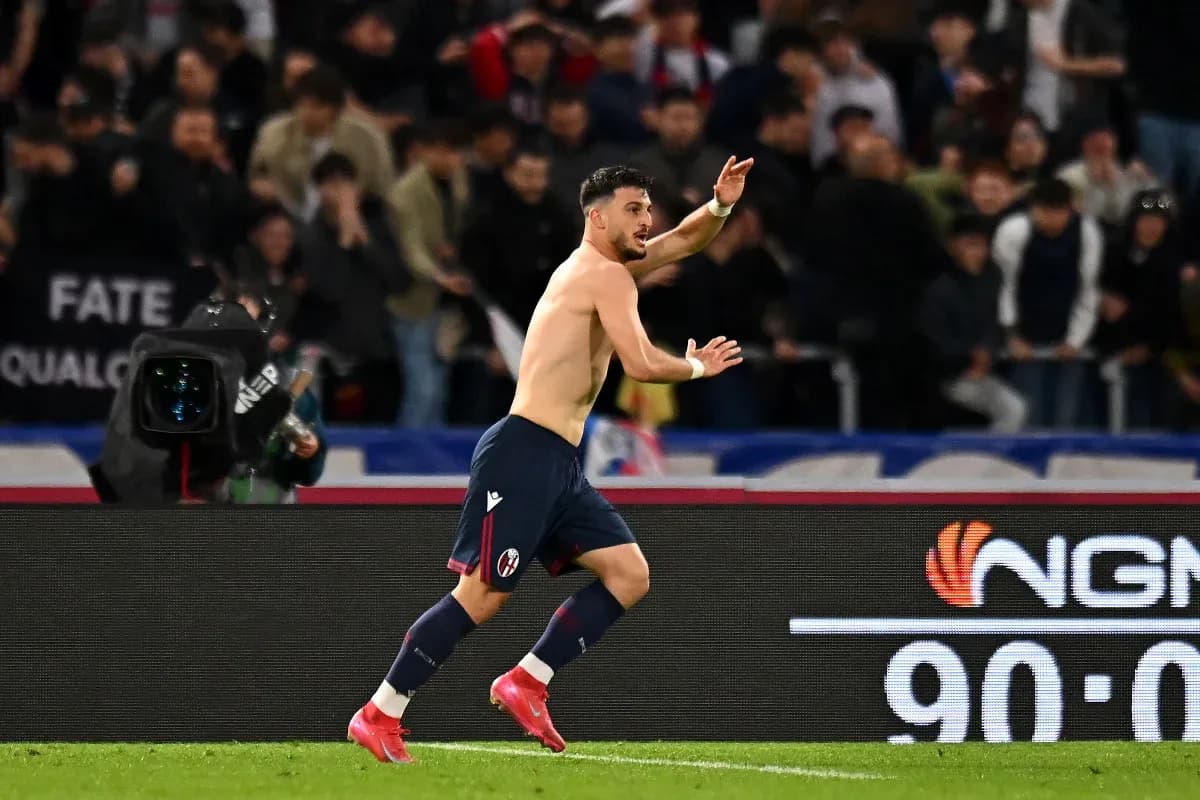
The late spring light over Stadio Renato Dall’Ara framed a finale that felt more like a tactical exhibition than a dead‑rubber. Bologna and Inter closed their Serie A campaigns with a 3‑3 draw, a result that neatly reflected their seasonal identities: Bologna’s volatility and courage, Inter’s overwhelming firepower and occasional defensive looseness.
I. The Big Picture – Context and Seasonal DNA
Following this result, the table locks in Bologna in 8th on 56 points, Inter as champions on 87. Over the season, Bologna’s overall goal difference of 3 (49 scored, 46 conceded) tells of a side that lived on fine margins. Inter’s overall goal difference of 54 (89 for, 35 against) is the profile of a dominant champion whose attacking ceiling was simply higher than anyone else’s.
Bologna’s split between home and away is revealing. At home they averaged 1.0 goals scored and 1.2 conceded, winning only 6 of 19 and losing 9. On their travels, they were far more ruthless: 10 wins, 1.6 goals scored on average and 1.2 conceded. This is a team that often felt more comfortable counter‑punching than dictating at Dall’Ara.
Inter, by contrast, travelled like a machine. Away from home they averaged 2.1 goals scored and 1.0 conceded, winning 13 of 19. At San Siro the numbers were even more imposing (2.6 scored, 0.8 conceded), but the away record is what framed this fixture: Bologna were facing the league’s most efficient road team.
On the day, the formations crystallised those identities. Vincenzo Italiano went with a 4‑3‑3, leaning into verticality and wide threat. Cristian Chivu, faithful to Inter’s season‑long blueprint, stayed in a 3‑5‑2, trusting his wing‑backs and central overloads.
II. Tactical Voids – Absences and Discipline
Both managers had to redraw their plans around notable absentees.
Bologna were stripped of some of their usual structure and spark. K. Bonifazi and M. Vitik were both out, limiting options in central defence and perhaps nudging Italiano toward the back four of L. De Silvestri, E. Fauske Helland, J. Lucumi and J. Miranda. Higher up, the loss of N. Cambiaghi and, crucially, R. Orsolini (10 league goals, 4 penalties scored but 2 missed overall this season) robbed Bologna of their most proven end‑product from wide areas. Without Orsolini’s left‑footed threat, the responsibility shifted to F. Bernardeschi and J. Rowe to stretch and create, while S. Castro had to shoulder more of the penalty‑box burden.
Inter’s voids were more about rotation and risk‑management. M. Akanji and D. Dumfries were both rested, removing a familiar right‑side dynamic. More significant was the absence of H. Calhanoglu, whose season included 9 league goals and 4 assists, plus a penalty record that featured 4 scored but 1 missed – a reminder that even elite takers carry some risk. Without him, Inter’s control and set‑piece precision dipped, forcing N. Barella and P. Zielinski to assume more of the creative load. M. Thuram’s rest altered the front line too, pushing F. Esposito alongside Lautaro Martínez rather than the usual, more complementary duo.
Across the season, disciplinary trends hinted at how this match might burn. Bologna’s yellow cards peak between 61‑75 minutes (26.87%) and 76‑90 (25.37%), a clear pattern of late‑game aggression when legs and patience fade. Inter’s profile is similar but even sharper in the closing stretch: 31.25% of their yellows arrive between 76‑90 minutes, another late‑game surge of fouls. In a contest that ended 3‑3, it is no surprise that the final quarter likely became a fractured, stop‑start phase as both sides chased a decisive moment and paid for it with cards.
III. Key Matchups – Hunter vs Shield, Engine Room Battles
The headline duel was always going to be Lautaro Martínez against Bologna’s back line. Lautaro arrived as Serie A’s top scorer with 17 goals and 6 assists in 30 appearances, built on 69 shots (39 on target) and a work‑rate that saw him engage in 253 duels, winning 115. He is not just a finisher; he is a pressing trigger and link man.
Bologna’s “shield” was less about individual stardom and more about collective organisation. Their overall average of 1.2 goals conceded both at home and away suggests a mid‑block that is usually hard to shred completely, but not impermeable. With E. Fauske Helland and J. Lucumi anchoring the centre and De Silvestri and Miranda tasked with containing the wide supply lines, the challenge was to manage Lautaro’s movement between the lines and prevent F. Dimarco’s service.
Dimarco, Serie A’s top assist provider with 16, is the league’s most dangerous crosser from deep and wide. His 96 key passes and 1454 total passes at 83% accuracy underline how often Inter’s attacks are funnelled through his left boot. Here, he started as a left midfielder in the 3‑5‑2, pinning Bologna’s right‑back and right‑sided central midfielder, L. De Silvestri and L. Ferguson, into a constant decision: step out to the crosser or protect the half‑space.
In the engine room, R. Freuler and T. Pobega had to cope with Inter’s central trio of Barella, P. Sucic and Zielinski. Barella’s season – 3 goals, 8 assists, 72 key passes – speaks to a midfielder who can both break lines with the ball and hunt it without. His 53 tackles and 231 duels (113 won) show why this was as much about containment as creativity. Freuler’s role as Bologna’s organiser was to slow Barella’s rhythm and protect the spaces in front of the centre‑backs, while Pobega and Ferguson tried to carry Bologna up the pitch.
Up front for Bologna, Castro, Bernardeschi and Rowe formed a fluid trio. With Orsolini absent, Bernardeschi’s left‑footed craft and Rowe’s directness were meant to target the channels either side of Inter’s central defenders, especially behind F. Dimarco and A. Diouf when they advanced. The plan: drag S. de Vrij and Y. Bisseck into wide duels they did not want, then attack the box with late midfield runs.
IV. Statistical Prognosis – xG Logic and Defensive Solidity
Even without explicit xG numbers, the season’s data points to a predictable pattern. Heading into this game, Inter’s overall scoring average of 2.3 goals per match against Bologna’s 1.2 conceded suggested the champions were likely to generate a high‑quality shot volume. Conversely, Bologna’s overall 1.3 goals scored against Inter’s 0.9 conceded hinted at a tougher path to chances, but not an impossible one – especially given Inter’s slightly looser away figure of 1.0 goal conceded on their travels.
The 3‑3 final score therefore reads as a match where Bologna exceeded their usual attacking output at home, while Inter hit roughly their expected offensive level but under‑performed defensively. The absence of Calhanoglu and Thuram likely shifted Inter’s xG profile from central shots and cut‑backs to more crossing‑heavy patterns, which in turn gave Bologna more opportunities to clear, counter and create their own chances in transition.
From a tactical lens, the draw feels like the statistical midpoint of two clear narratives: Bologna, an away‑leaning side, finally turning Dall’Ara into a stage for bold, front‑foot football; Inter, an all‑conquering champion whose attacking structure remained devastating, but whose rotated and slightly diluted defensive unit could be dragged into chaos by a fearless opponent.
In total this campaign, Bologna’s 16 wins and Inter’s 27 form a gap that the table will always remember. Yet in this 90‑minute snapshot, the squads and systems converged into something more balanced – a six‑goal thriller that, if plotted on an xG graph, would almost certainly show two attacking lines rising and falling in parallel, meeting at the point where neither side quite had enough defensive solidity to close the curtain on the other.
Related News

David Alaba Poised for Surprising Move to Udinese in Serie A
Milan Dominates Lecce: Tactical Analysis of a 3-0 Victory
Juventus Defeats Atalanta 2-0: Tactical Insights and Key Matchups
Frosinone's Tactical Mastery Shines in 2–0 Victory Over Como
Fiorentina and Napoli Share Points in Serie A Clash
AS Roma vs Inter: Tactical Insights from Serie A Clash