
Burnley vs Aston Villa: Tactical Insights from a 2–2 Draw
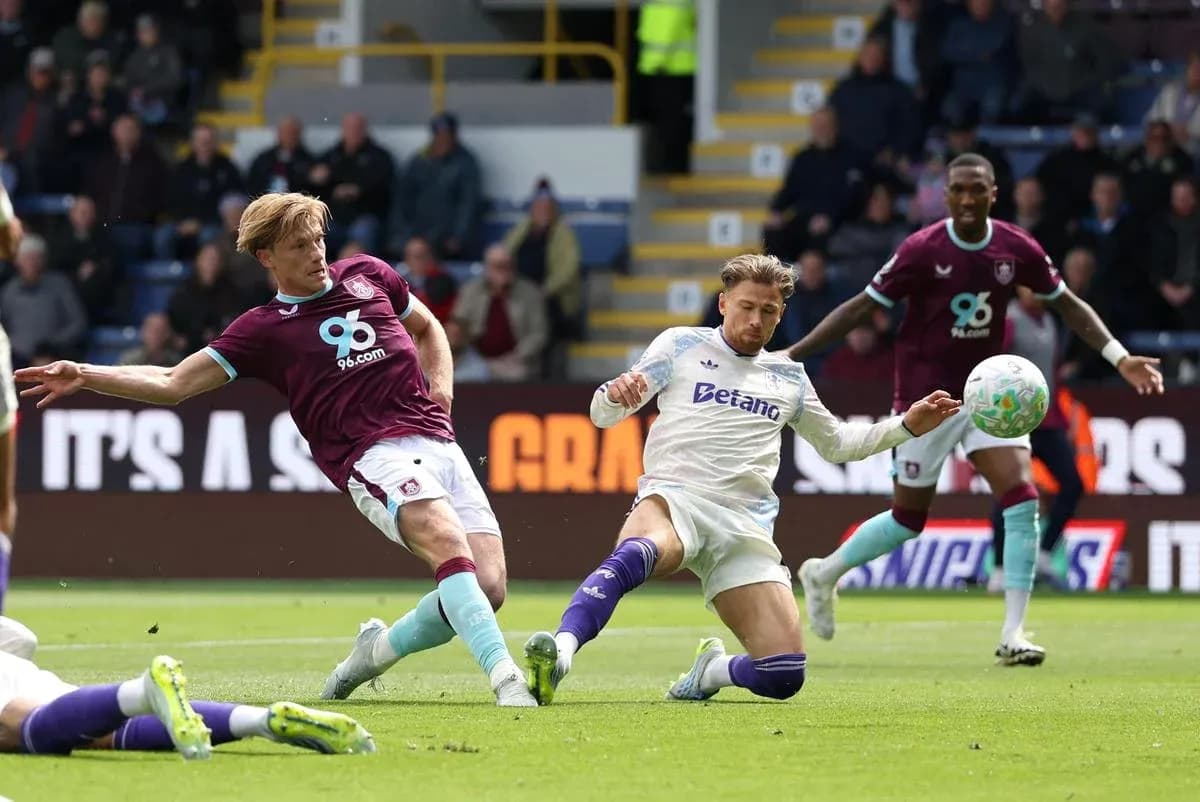
Turf Moor closed on a draw, but the story of Burnley 2–2 Aston Villa is written in the contrasts between a side fighting gravity at the bottom and another straining for altitude near the top. In the 2025–26 Premier League, this was 19th against 5th, a relegation-threatened Burnley with 21 points and a goal difference of -36 hosting an Aston Villa team on 59 points and a goal difference of 4. Over 36 league matches, Burnley had scored 37 and conceded 73; Villa had 50 for and 46 against. The numbers suggested a mismatch. The pitch refused to cooperate.
Both managers mirrored each other in shape, sending out 4-2-3-1 systems that told different tactical tales. Mike Jackson’s Burnley leaned into compactness and vertical transitions, with M. Weiss behind a back four of K. Walker, A. Tuanzebe, M. Esteve and Lucas Pires. In front, Florentino and L. Ugochukwu formed the screen, while L. Tchaouna, H. Mejbri and J. Anthony floated behind lone forward Z. Flemming. Unai Emery answered in kind: E. Martinez in goal, a back line of M. Cash, E. Konsa, T. Mings and I. Maatsen; a double pivot of V. Lindelof and Y. Tielemans; J. McGinn, R. Barkley and M. Rogers supporting O. Watkins.
First Half
The first act was defined by Burnley’s refusal to play the role their league position suggested. At home this season they had averaged 0.9 goals for and 1.6 against, winning only 2 of 18 and losing 10, yet the structure here was assertive. Walker pushed high from right-back, often creating a back three in possession as Lucas Pires tucked in, allowing Anthony to hold advanced, chalk-on-boots positions. With Florentino dropping between centre-backs to help build, Mejbri became the connector, drifting into half-spaces to receive on the half-turn.
Aston Villa, whose season-long identity has been shaped by control and vertical surges – 1.6 goals for at home and 1.2 on their travels – initially struggled to impose their usual rhythm. The double pivot was designed to give them security, but the absence of B. Kamara and A. Onana, both missing with knee and calf injuries respectively, subtly altered the balance. Lindelof, listed as a midfielder here, played more like a conservative holder, leaving Tielemans to shoulder progression duties alone when pressed.
The 1–1 scoreline at half-time reflected a half of traded punches rather than one-way traffic. Burnley, who have failed to score at home in 9 of 18 league fixtures, leaned heavily on the individual quality of Flemming. The Dutchman, with 10 league goals in total and 2 penalties scored this season, operated less as a fixed striker and more as a roaming focal point, dropping into pockets to link with Mejbri and Tchaouna. His duels output across the season – 251 contested, 102 won – underpinned Burnley’s willingness to play into him under pressure and build from his lay-offs.
On the other side, Villa’s response came through their own talismanic axis. Watkins, with 12 league goals and 2 assists, is the “Hunter” in this narrative, constantly testing a Burnley defence that, overall, concedes 2.0 goals per game and 2.5 on their travels. His movement across the line created channels for M. Rogers, who has 9 goals and 5 assists and sits among the league’s top creators with 43 key passes and 117 dribble attempts. Rogers’ tendency to drift inside from the left forced Walker into uncomfortable central zones, opening the flank for Maatsen’s overlaps.
Second Half
The tactical voids on both sides shaped the contest’s texture. Burnley were without J. Beyer, J. Cullen and C. Roberts, removing a key centre-back option, a midfield organiser and a natural right-back. That absence partly explains Walker’s role: his 34 league appearances and 53 tackles, plus 10 blocked shots, made him the obvious defensive leader, but it also meant Burnley lacked a more natural rotation option out wide. Higher up, Jackson’s bench carried interesting profiles – J. Ward-Prowse as a set-piece specialist, J. Laurent as a combative presence, and forwards like A. Broja, L. Foster and Z. Amdouni – but the starting XI was clearly built to survive first, then gamble later.
Villa’s missing list, beyond Kamara and Onana, included Alysson, trimming Emery’s options for rotation in wide and midfield roles. Yet the bench still bristled with attacking possibilities: L. Bailey, T. Abraham and J. Sancho were all available to flip the game’s tempo, while Douglas Luiz and P. Torres offered alternative control and ball progression paths if Villa needed to chase or protect a result.
Discipline and edge ran like a sub-plot beneath the football. Heading into this game, Burnley’s yellow-card distribution showed hot spots between 16–30 minutes and 76–90 minutes, each accounting for 19.67% of their cautions. Their reds were spread evenly across 31–45, 76–90 and 91–105 minutes at 33.33% each. That pattern speaks of emotional spikes at the end of halves and in late chaos, something Jackson had to manage with players like Laurent, who has 7 yellows and 1 red this season, and Walker, who leads the league’s card charts with 9 yellows.
Villa’s discipline profile is different: 29.09% of their yellows arrive between 46–60 minutes, and 18.18% between 91–105, suggesting that their aggression spikes immediately after half-time and in added time. Their lone red card came in the 61–75 window, a reminder that Emery’s side can overreach when chasing momentum. In a match that finished 2–2, the threat of a late card-induced swing always hovered.
Within that framework, the key matchups told the story. The “Hunter vs Shield” battle pitted Watkins against a Burnley back line that has conceded 28 at home and 45 on their travels. Tuanzebe and Esteve were tasked with tracking his constant channel runs; any hesitation and Villa’s top scorer could exploit Burnley’s season-long vulnerability to quick, vertical attacks. Conversely, Flemming’s duel with Konsa and Mings was just as decisive: the Villa pair, part of a defence that concedes 1.3 goals per game overall and 1.4 away, had to manage a forward who is as much a second striker as a 10, arriving late and shooting early. His 37 shots with 20 on target underline the danger when he finds a yard on the edge of the box.
In the “Engine Room”, Rogers and Tielemans squared off, indirectly, with Florentino and Ugochukwu. Rogers’ 1033 completed passes at 74% accuracy and 40 tackles make him Villa’s all-phase conduit: he progresses, he presses, he recovers. Against Burnley’s double pivot – one sitter, one shuttler – he repeatedly sought to overload the right half-space with McGinn and Cash, forcing Burnley’s midfield to decide between protecting the central lane or tracking wide runners. Tielemans, meanwhile, was the metronome, trying to draw Burnley out of their block with tempo shifts and diagonals.
For Burnley, Mejbri’s role as the creative agitator was crucial. Dropping into pockets behind Lindelof, he looked to turn Villa’s single true holding presence into a pressure point. When he combined with Anthony and Tchaouna, Burnley produced some of their best sequences, hinting at why their biggest home win this season is a 2–0 and why, despite their struggles, they have found the net 17 times at Turf Moor.
From a statistical prognosis standpoint, the 2–2 scoreline feels like the meeting point of two opposing curves. Burnley, with only 4 wins overall and 4 clean sheets, are a team whose margin for error is almost non-existent. Their penalty record – 2 taken, 2 scored, 100.00% conversion – shows composure from the spot, but open play remains a grind. Villa, by contrast, carry the profile of a side that should have edged this: 17 wins, 9 clean sheets, and a highest winning streak of 8. Their away averages of 1.2 goals for and 1.4 against suggest tight margins, and that is exactly what unfolded.
Following this result, the tactical takeaway is clear. Burnley’s 4-2-3-1, with Flemming as a roaming spear and Mejbri as the connector, can trouble stronger sides when the press is synchronised and the full-backs brave. Villa’s structure remains robust, powered by the Rogers–Watkins axis and underpinned by a defensive unit that, while not impermeable, is usually good enough to give their attack a platform.
On another day, with a little more defensive solidity from either side, the underlying xG profiles and season-long trends might have tilted this in Villa’s favour. Instead, Turf Moor delivered a narrative that defied the table: the relegation battlers went toe-to-toe with Champions League chasers, and the numbers – and the scoreboard – had to bend to the contest’s stubborn, compelling reality.
Related News

Premier League Managers Facing Potential Sackings During International Break
Arsenal's Myles Lewis-Skelly Names Unexpected Tottenham Rival as Toughest Premier League Opponent

Three Premier League Players Shining Early This Season

Premier League Early Season Reactions: Man City’s Strength, Arsenal’s Flaws, United’s Struggles

Premier League Returns October 10 After Extended September-October International Break

Fulham and Manchester United Share Points in 1-1 Draw