
Carlos Cordeiro Resigns from FIFA Amidst Conflict with Infantino
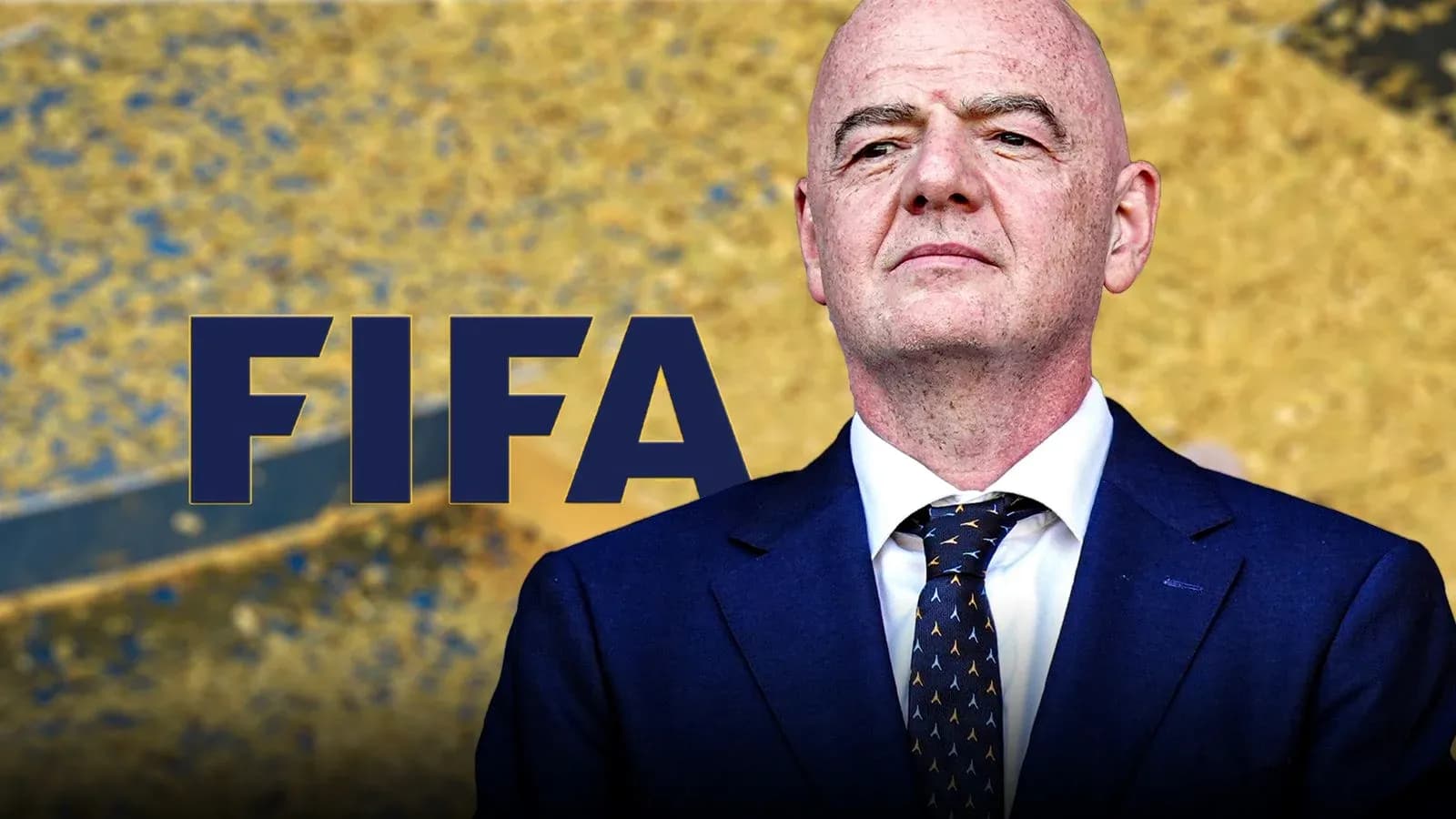
Carlos Cordeiro has walked away from FIFA – and straight into open conflict with its president.
The senior advisor to Gianni Infantino, a former banker and one-time head of U.S. Soccer, resigned in protest over plans to consult on selling a stake in a new World Cup commercial vehicle to private investors. He did not go quietly.
“As a senior advisor to the FIFA president, a former banker, and a lifelong football fan, I cannot stand by while FIFA considers selling a stake in the World Cup,” Cordeiro said in a statement to Sky News. “Let me be clear: I had no involvement in this proposal, and I oppose it unequivocally. It is a bad deal for FIFA's Member Associations, a bad deal for football, and a bad deal for the long-term future of the game.”
On a day when FIFA tried to calm the storm, Cordeiro’s exit only deepened the crisis.
FIFA digs in as revolt spreads
In the early hours of Friday morning, FIFA released a lengthy defence of its proposal to create FIFA Forward Enterprise (FFE), a commercial entity that could see a minority stake sold to private investors. The governing body insisted “nobody is selling football” and stressed that no final decision had been taken, only a consultation.
What it did not do was pull the plan.
“We have heard the feedback provided by the respective confederations in relation to the proposed establishment of FIFA Forward Enterprise (FFE),” the statement read, before promising an “open and democratic consultation” and blaming “incorrect media reports” for disrupting the process.
FIFA underlined its argument: FFE, it said, is designed to give all 211 member associations “meaningful ownership of the commercial opportunity of football” in their countries without compromising the “spirit or the governance of FIFA or football itself”.
“Nobody is selling football. This is not something FIFA would ever entertain,” the statement insisted.
The words landed in a world that had already moved against Infantino.
Europe, CONCACAF and Asia line up against Infantino
By Thursday, UEFA’s 55 member associations had drawn a hard line. Their stance: total opposition and a boycott threat.
UEFA called its resistance “unanimous and unequivocal” and delivered the most serious warning yet to a sitting FIFA president.
“No UEFA national teams will participate in any FIFA competition for so long as these proposals remain alive, unless this proposal has been abandoned in its entirety and binding assurances have been given that FIFA will never again open its governance or competitions to private ownership,” the European body declared.
CONCACAF followed, saying it “rejected the proposal”. The Asian Football Confederation, traditionally a strong backer of Infantino, then broke ranks as well, urging an “urgent review” of FIFA governance and decision-making.
With UEFA (55 members), CONCACAF (41) and the AFC (47) aligned, confederations representing 143 of FIFA’s 211 member associations now stand against the plan. That is not a minor technical dispute. It is a full-scale political rebellion.
The AFC’s language was particularly stark, and for a confederation that has often been in Infantino’s corner, deeply significant.
“The AFC believes this moment must become a catalyst for strengthening institutional reform,” its statement read. It stressed that “meaningful democracy is not measured solely by the opportunity to vote” and called for “transparent governance, timely consultation, informed deliberation and genuine participation throughout the decision-making process”.
The conclusion was blunt: FIFA must urgently review its governance and ensure proposals “of global significance” are developed with “proper consultation, meaningful engagement and appropriate oversight”.
In diplomatic terms, it was close to a demand for a reset at the very top.
Private money, public outrage
At the centre of the storm sits the proposed investor group led by Thrive Eternal, founded by Joshua Kushner, brother of Jared Kushner, son-in-law of former U.S. President Donald Trump. The group is waiting to take a minority stake in FFE if the project goes through.
Infantino has publicly backed the plan, and FIFA has dangled the promise of huge returns for national associations. But that promise now collides with a brutal reality: any commercial model built on the men’s and women’s World Cups becomes far less attractive if European teams are not there.
Even if Infantino musters a numerical majority among the 211 associations, a World Cup without UEFA – and with major leagues and clubs also opposed – would shred the very value private investors are being invited to buy.
Domestic and international leagues fear exactly that dynamic. They see commercial imperatives driving FIFA towards bigger, more frequent tournaments, pushing further into already congested calendars and eroding the primacy of domestic competitions.
The question hanging over Zurich is simple: who really benefits from this deal, and at what cost to the structure of the game?
‘He’s in a hole and he needs to stop digging’
Inside FIFA, the official line is that this is a democratic process. Outside, the tone is very different.
Sky Sports News’ Kaveh Solhekol described FIFA’s late-night statement as “desperate” and “tone-deaf”, noting that it did not mention Infantino by name.
“The way I read this is that this is a statement from Gianni Infantino; it's not necessarily a FIFA statement,” he said. “How many people inside FIFA actually agree with what he is doing?
“He's in a hole and he needs to stop digging. He needs to start reading the room. He needs to start accepting the fact his power is starting to ebb away and he needs to start by apologising to football, to football fans all around the world – and he also needs to start apologising and explain himself to the confederations and the presidents of the 211 member associations.”
Solhekol also attacked Infantino’s repeated attempts to blame the media.
“What is this crazy obsession he's got? He seems to have picked it up from President Donald Trump, where he thinks it's a good idea to keep lashing out at the media. He seems to somehow think that is going to help him.
“The reporting that has been done this week, which was led by The Times and the Financial Times has been completely and utterly accurate. And if it wasn't for this reporting, there wouldn't be this furore that we have now and we wouldn't know the facts we know now.
“I suggest Infantino needs to change course. He needs to wake up and fully understand the mess he has created for himself and he needs to start saying sorry because I think that's the only way he's going to be able to save himself.”
Biggest crisis of Infantino’s reign
Infantino has survived trouble before. Ethics questions, political battles, rows over expanded World Cups and new tournaments – none of it has dislodged him.
This feels different.
“Infantino has been in plenty of tight spots and he has managed to extricate from them. But I think he's in big, big trouble now. I think this is the biggest crisis he's faced – and it's all of his own making,” Solhekol said.
The FIFA president appears determined to frame the situation as a simple consultation: 211 associations will vote, the majority will decide, and if the plan fails, it will be dismissed as a “storm in a teacup”.
Others see a much narrower path to survival.
“Other people, I think, would advise him to come out and say sorry, then lie low for a while, maybe ride it out and maybe he could be re-elected as FIFA president unopposed next March, but that doesn't seem to be what he's doing,” Solhekol added.
“I'm not sure he can carry on down this road of blaming the media and carrying on with the consultation process. I'm not sure he understands the strength of feeling against him – not just over this, but over lots of things he's done since he's been FIFA president.”
Cordeiro’s resignation has now put a face and a name to that resistance from within. UEFA, CONCACAF and the AFC have drawn their line. Leagues and clubs are watching the calendar. Investors are watching the numbers.
Infantino insists “nobody is selling football”. The next few months will show whether world football still believes him – or whether the game decides it is time to sell a different idea: that FIFA itself must change.
Related News
Carlos Alcaraz Calls for Change After Laver Cup Court Conditions
Alexander Zverev Secures Laver Cup Victory for Team Europe with Straight-Set Win Over Learner Tien
Novak Djokovic Shares Fitness Update Before China Open Return After US Open Upset
Shubman Gill's Captaincy Record Across All Formats: Tests, ODIs, T20Is, and IPL
Kuldeep Yadav Named Player of the Match Over Virat Kohli Despite Century in IND vs WI 1st ODI
India Advances to Asian Games 2026 Cricket Semi-Finals After Rain Washout Against Afghanistan