
Crystal Palace vs Everton: A Tactical Analysis of the 2-2 Draw
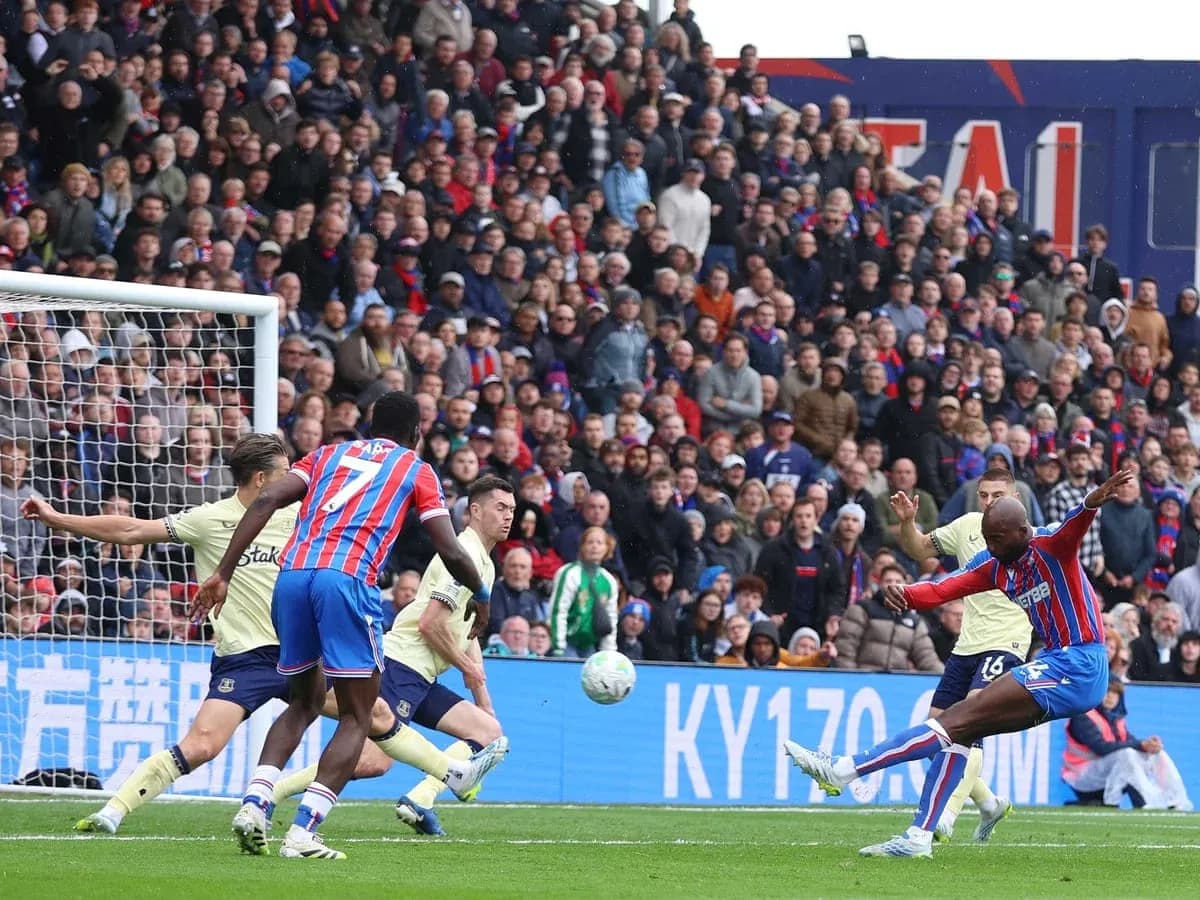
Selhurst Park had the feel of a crossroads fixture: Round 36 of the Premier League, a mid‑table Everton side arriving in London to face a Crystal Palace team still glancing over their shoulder. By full time, the 2‑2 draw felt about right – a meeting of two flawed but competitive sides whose seasonal identities were written all over the scoreline.
Heading into this game, Palace sat 15th with 44 points, their goal difference at -6, the product of 38 goals scored and 44 conceded overall. The numbers painted a cautious, often reactive team: only 18 goals at home, an average of 1.0 per game at Selhurst Park, against 21 conceded at 1.2 per home match. Everton, by contrast, arrived in 10th on 49 points with a perfectly balanced goal difference of 0 – 46 scored and 46 conceded overall – a mid‑table equilibrium that hinted at both resilience and limitation. On their travels they had 21 away goals at an average of 1.2, conceding 22 away at 1.2, almost mathematically mid‑pack.
I. The Big Picture – Structures and Intent
Oliver Glasner doubled down on Palace’s seasonal DNA, rolling out the familiar 3‑4‑2‑1. D. Henderson anchored the back, with a back three of C. Richards, M. Lacroix and J. Canvot. In front of them, the wing‑back and midfield band of four – D. Munoz, A. Wharton, D. Kamada and T. Mitchell – formed the structural hinge of the system. High and narrow, I. Sarr and B. Johnson operated as dual tens behind the lone striker J. S. Larsen.
This shape aligned with Palace’s broader pattern: a side that has leaned on structural repetition (31 league games in a 3‑4‑2‑1) to compensate for modest attacking output. The three centre‑backs, especially Lacroix, are tasked with aggressive stepping out; his season profile – 56 tackles, 17 blocked shots and 42 interceptions – underlines how much defensive burden he carries as the central “stopper” in the block.
Everton, listed without an explicit formation in the match data, nonetheless clearly leaned into their season template. Across the campaign they have primarily used a 4‑2‑3‑1, and the personnel told the story: J. Pickford in goal; a back four of J. O’Brien, J. Tarkowski, M. Keane and V. Mykolenko; T. Iroegbunam and J. Garner as the double pivot; M. Rohl, K. Dewsbury‑Hall and I. Ndiaye supporting Beto up front. It is a structure built for compactness and second‑ball control, with Garner as the metronome and destroyer rolled into one.
II. Tactical Voids – Absences and Discipline
Both managers had to navigate significant absences. Palace were without C. Doucoure, E. Guessand, E. Nketiah and B. Sosa – a cluster that particularly thinned out their central and left‑side options. Doucoure’s absence removed a natural ball‑winning screen in front of the back three, placing more defensive responsibility on Wharton and Kamada. Without Nketiah, Glasner’s ability to rotate the No. 9 role and add penalty‑box punch from the bench was also diminished.
Everton’s missing trio was arguably even more structurally disruptive: J. Branthwaite, J. Grealish and I. Gueye. Branthwaite’s hamstring injury forced a more conservative centre‑back pairing of Tarkowski and Keane, removing a more mobile left‑sided defender from the build‑up. The loss of Gueye robbed the midfield of its most natural ball‑winner, increasing the defensive load on Iroegbunam. Grealish’s absence hurt creativity between the lines; his 6 assists and 40 key passes this season normally tilt Everton’s 4‑2‑3‑1 into a more progressive 4‑2‑1‑3 in possession.
On the disciplinary front, both sides came into the contest with combustible profiles. Palace’s yellow cards are heavily concentrated between 31‑60 minutes, with 14 yellows from 31‑45 (19.72%) and 13 from 46‑60 (18.31%). Everton, by contrast, tend to ignite late: 15 yellows between 76‑90 (21.74%) and 11 between 91‑105 (15.94%). That temporal split framed the narrative: Palace risking mid‑game bookings as they try to wrest control, Everton’s aggression spiking as games stretch and transitions open.
III. Key Matchups – Hunter vs Shield, Engine Room
Hunter vs Shield centred on J. Mateta versus the Everton back line, even though the French striker started on the bench. With 11 league goals from 29 appearances, Mateta is Palace’s primary penalty‑box threat, and his underlying numbers – 55 shots, 31 on target – show a striker who reliably works the frame. His presence in reserve meant Glasner could alter the game’s verticality: Mateta’s aerial profile and duel volume (279 duels, 105 won) offer a more direct reference point than Larsen.
Against him stood an Everton defence that has conceded 46 goals overall at 1.3 per game, but with a solid away record of just 22 conceded on their travels at 1.2 per match. J. Tarkowski and M. Keane, flanked by O’Brien and Mykolenko, formed a physically imposing unit. O’Brien in particular brings a rugged edge – 301 duels with 186 won, plus 16 blocked shots – and his red card earlier in the season underlines his willingness to step into risky challenges. For Palace, the question was whether Sarr and Johnson could drag these defenders into wide, uncomfortable channels and create interior space for Larsen and, later, Mateta.
The “Engine Room” duel was even more decisive: A. Wharton and D. Kamada versus J. Garner and T. Iroegbunam. Garner has been Everton’s tactical fulcrum all season. Listed as a defender in the data but used as a deep midfielder, he has 1665 completed passes with 52 key passes and an 86% accuracy. Add 115 tackles, 9 blocked shots and 54 interceptions, and you get a complete two‑way midfielder. His 11 yellow cards, though, underline the fine line he walks between control and over‑commitment.
For Palace, Wharton’s job was to keep tempo and connect the back three to the front line, while Kamada offered the vertical passing and late‑run threat. Without Doucoure behind them, both had to balance progression with protection. Whenever Palace’s wing‑backs pushed on, this central pairing risked being exposed to Everton’s transitional surges led by Dewsbury‑Hall and Ndiaye.
IV. Statistical Prognosis – Styles, xG Logic and the Draw
The 2‑2 outcome mirrored the statistical profiles. Palace, with 1.0 goals for and 1.2 against at home, are a low‑margin team; Everton, with 1.2 goals for and 1.2 against away, live in tight, often one‑goal or drawn contests. Neither side has a penalty‑box edge from the spot in terms of reliability: Palace have taken 7 penalties in total this campaign and scored all 7, while Everton have converted both of their 2. There were no missed penalties in either record, so any spot‑kick on the day would have tilted expected goals sharply.
From an xG‑style perspective, Palace’s three‑centre‑back structure and 12 clean sheets overall suggest a side that tries to depress chance quality and volume, then strike in moments. Everton’s balanced 46‑46 goal line, plus 11 clean sheets, reflects a team that is structurally sound but not dominant in either box. The absence of Grealish likely lowered Everton’s creative ceiling, pushing more responsibility onto Garner’s delivery and Dewsbury‑Hall’s late runs.
In the end, a shared four‑goal haul at Selhurst Park felt like both an outlier and an inevitability: outlier, because both defences are usually more parsimonious; inevitability, because the tactical voids and disciplinary profiles hinted at a game that would loosen as it wore on. For Palace, the point nudged them a little further from danger; for Everton, it maintained their mid‑table plateau. For the analysts, it was a confirmation of what the numbers had been whispering all along: two sides built on structure, colliding in a match where structure frayed just enough to let chaos in.
Related News

Premier League Managers Facing Potential Sackings During International Break
Arsenal's Myles Lewis-Skelly Names Unexpected Tottenham Rival as Toughest Premier League Opponent

Three Premier League Players Shining Early This Season
Premier League Early Season Reactions: Man City’s Strength, Arsenal’s Flaws, United’s Struggles

Premier League Returns October 10 After Extended September-October International Break

Fulham and Manchester United Share Points in 1-1 Draw