
Elliot Anderson: From School Fields to World Cup Stardom
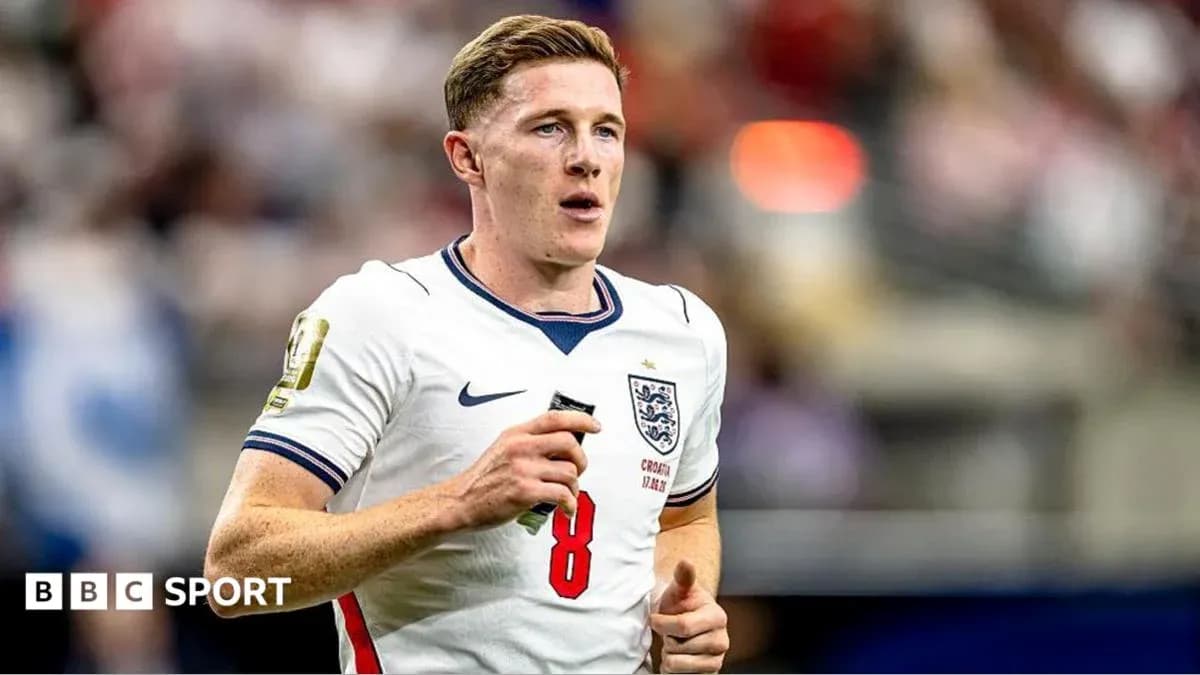
Elliot Anderson used to terrorise school fields, not World Cups.
Back then, at Valley Gardens Middle School in North Shields, the talk in the staff room was whether they should stick a tenner on the quiet lad from a great family one day playing for England. The bet never went on. The prediction did.
Now Thomas Tuchel is backing him not just to play at a World Cup, but to shape it – and quite possibly to become the most expensive British footballer of all time.
On Tuesday in Boston, when England face Ghana, the boy who once squeezed homework around academy sessions at Newcastle United will stride out as a central pillar of Tuchel’s plans. Manchester City are circling, Nottingham Forest have already turned down a bid in the region of £120m, and the numbers suggest City will have to go beyond the £125m that took Alexander Isak from Newcastle to Liverpool last summer.
From Valley Gardens to a world record fee. From the school cage to the sport’s highest court.
The one that got away
In Newcastle, Anderson is the success story that still stings.
He was supposed to be the local lad who lit up St James’ Park for a decade, the latest in a line that runs through Alan Shearer, Peter Beardsley and Michael Carrick, all honed at Wallsend Boys’ Club. Instead, he is the £30m sale Eddie Howe never wanted to make, the deal the Newcastle manager called “the most reluctant in my career”.
Newcastle’s fear of breaching profit and sustainability rules forced their hand in July 2024. Points deductions loomed, trading had been lopsided for years, and Anderson became collateral damage. He left having played 55 times in all competitions, his debut coming in an FA Cup tie at Arsenal in January 2021.
Every time he now glides through a World Cup midfield in England white, that decision feels more painful on Tyneside.
It hurts in Scotland too. Anderson, eligible through a Scottish grandmother, came through their youth system, playing at under-21 and junior level. He was called into the senior squad for a Euro 2024 qualifier in Cyprus and a friendly against England in September 2023, only to withdraw injured. The next time the question arose, he chose England.
For Scotland, it is a case of what might have been. For England, it is a coup.
Built on school fields and back streets
The story starts far from the glare of transfer fees and World Cup lights.
Anderson grew up kicking a ball around with his two elder brothers, Louie and Wil, the latter later appearing on reality TV show Love Island. At Valley Gardens Middle School, his English and PE teacher – and head of year – Jonathan Roys had already played against Anderson’s dad and taught his brothers.
They were good. The youngest was different.
“He’d get stuck right in,” Roys recalled to BBC Sport. Anderson was standard size, not especially big for his age, but he dominated anyway. Captain, leader, standout. In 2014 he scored a hat-trick in a 3-0 win as Valley Gardens won the English leg of the Danone Nations Cup, a prestigious global youth tournament. It felt like a marker laid down.
At school he was quiet, self-effacing, no trouble. His parents, Iain and Helen, insisted his studies came first, even as Newcastle’s academy called. Lessons were arranged around training. Reports glowed from both classroom and club.
He excelled at everything. Athletics. Cross country. Indoor events. Cricket. Put a ball near him and he bent the game to his will. Put him in midfield and he ran it. Once, against Wallsend Boys’ Club, he even played in goal.
He did it all without noise. No swagger. No drama. Just a relentless, almost stubborn determination to improve.
When the England call eventually came, ahead of his debut against Andorra in September 2025, his mum Helen framed it simply: it would be a day they would never forget or take for granted. To watch their son walk out to represent his country, she said, would be “nothing short of incredible”.
The teachers who once joked about a bet simply nodded. They had seen it coming.
Bristol, bull by the horns
If Newcastle’s academy shaped him, Bristol Rovers hardened him.
In January 2022, Anderson dropped into League Two on loan and walked into a dressing room that included Glenn Whelan, the former Republic of Ireland international acting as player-coach. Whelan had seen talented kids before. This one, he said, “was different”.
Anderson arrived and immediately looked like he belonged. Nothing fazed him. Whelan tried to turn the screw in training, to see how the youngster coped when the temperature rose. Some kids step back. Anderson stepped in. Front foot, chest out, demanding the ball.
The turning point came on 5 February 2022, away at Sutton United. Sutton were flying, a rugged, uncompromising side. Some on the Rovers staff wondered if it was the right game to throw Anderson into.
They were losing at half-time. Whelan pushed his case: get him on, he’s a game-changer.
On he came. Penalty won. Game drawn. From that moment, he barely missed a minute.
He played off the left, but never hugged the touchline and waited. If the ball didn’t find him, he went hunting for it. He didn’t care who marked him. He took it under pressure, turned, drove, made things happen. Training finished, he stayed out. Extras. Repetitions. More work.
He loved it. Not the trappings, not the noise. The football.
The season climaxed in chaos and history. Rovers went into the final day needing to better Northampton’s result or win by five goals more to snatch promotion to League One. They won 7-0. Anderson scored the seventh with five minutes left, the strike that sealed promotion and detonated celebrations at the Memorial Stadium.
He left the pitch that day on the shoulders of jubilant supporters, a teenager carried aloft after one of the greatest afternoons in the club’s history.
It felt like a farewell to lower-league football. It also felt like a preview of what was coming.
The full package
Fast-forward to this World Cup cycle and Anderson has become integral to Tuchel’s England. The head coach calls him “the full package” and the data backs it up.
Last season he had more touches than any other player in the Premier League – 3,300 of them. He won possession more than anyone else, 306 times. He topped the charts for duels won with 297, and for fouls drawn with 80.
These are not the numbers of a luxury playmaker who flits in and out of games. They are the numbers of a midfielder who lives in the heart of the contest, who demands the ball, wins it back, and then dares opponents to take it off him again.
Little wonder Manchester City are pushing so hard. Their first offer, worth around £120m, has already been rejected by Nottingham Forest. The expectation is that City will come back, likely under the incoming leadership of Enzo Maresca, and that Anderson will start next season at the Etihad Stadium.
Forest, of course, do not want to lose him. But when the market starts talking in those numbers, few clubs can ignore the conversation.
Roots that don’t wash off
For all the noise, those who know Anderson best insist he has not changed.
Roys bumped into him in a local shop a couple of years ago. Anderson’s greeting was simple: “All right sir.” No entourage, no distance. Just the same polite kid from Valley Gardens.
“He’s a real inspiration to the new generation,” Roys said. The boys and girls now running around those same school pitches know one of their own has made it. Properly made it.
Whelan sees the same traits that once lit up the training ground at Bristol Rovers.
“The sky’s the limit,” he said. “I don’t think it will faze him at all. He just loves playing football. I think if he wasn’t playing for Nottingham Forest or England at the World Cup, he’d be playing grassroots with his mates.”
That might be the most telling line of all. Strip away the headlines about record fees, the tug-of-war between nations, the regret on Tyneside, the calculations in Manchester, and you are left with a simple truth.
Elliot Anderson just wants the ball at his feet.
On Tuesday in Boston, against Ghana, he will get it on the biggest stage of his life so far. The boy they once thought about backing to play for England now stands on the brink of becoming the standard-bearer of a new generation – and perhaps the benchmark for what a British midfielder can be worth in the modern game.
The next question is not whether he can handle it. It is how far, and how fast, he intends to run with it.
Related News

Anthony Joshua Names Murat Gassiev as Next Opponent if He Defeats Tyson Fury

UFC 332: Start Time and Fight Highlights for Natalia Silva vs. Wang Cong

Court McGee Opens Up About Choosing UFC 332 as His Final MMA Fight
WBC Orders Lightweight Title Unification: William Zepeda vs Jadier Herrera
BCCI Pension List: Monthly Payments to Retired Indian Cricketers in 2025

Why Fury vs Joshua Is Set for Cardiff, and Dua Lipa’s Unexpected Role