
Fifa's New Sales Strategy: More Tournaments and Higher Profits
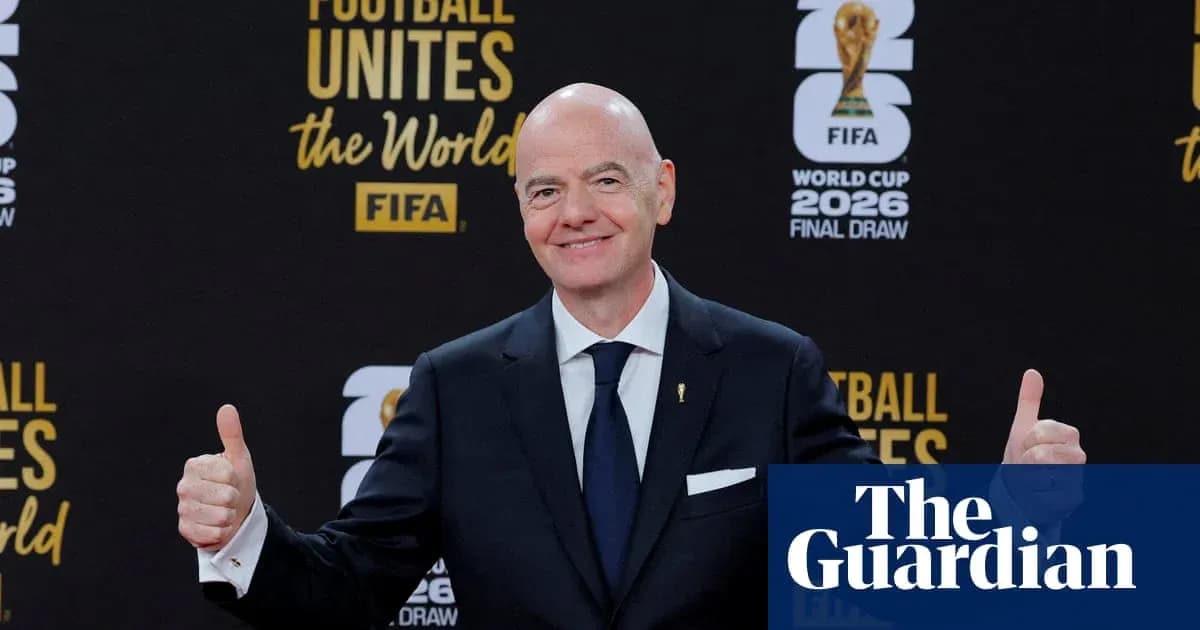
Fifa’s bold new sales pitch to its own members strips away any pretence: the road to bigger profits runs through more tournaments, higher ticket prices and taking on debt.
A 25-page presentation, titled “Fifa Forward Enterprise Member Materials” and seen by the Guardian, lays out the governing body’s plan to spin off its commercial arm into a new company – and sell 20% of it to US investor Joshua Kushner, brother of Jared Kushner, Donald Trump’s son-in-law.
The prospectus has been assembled by JP Morgan, the same US bank that stood behind the doomed European Super League project five years ago. This time the target is not a handful of elite clubs but all 211 Fifa member associations, who received the document on Wednesday night. The reaction was instant – and sharply sceptical.
More tournaments, more strain
At the heart of JP Morgan’s pitch is a blunt message: Fifa is “undermonetized”. The solution, in the bank’s eyes, is to dramatically expand the organisation’s event calendar and its appetite for outside capital.
The deck talks of “a growing tournament portfolio” and “third party sources of capital and debt financing”. It highlights a plan to more than double the number of global tournaments each year, from 200 to 450. For players already stretched by congested calendars, that kind of expansion would mean a punishing increase in workload.
The World Cup itself sits squarely in the crosshairs. Staging it more often is presented as the most obvious way to squeeze out extra revenue, echoing Gianni Infantino’s previous push for a biennial World Cup, floated five years ago and widely criticised at the time.
The financial carrots dangled in front of member associations are sizeable. Beyond the already reported $20m sign‑up payment on offer to each of the 211 members – money that could start flowing as early as January – the document projects that Fifa Forward payments over a four‑year cycle would rise to $24m per member by 2035–39.
The message is clear: sign off on this structure now, and the cheques will get bigger later.
Debt, paywalls and a comparison game
The route to those richer payouts runs not just through more matches, but through more aggressive monetisation. JP Morgan’s deck leans heavily on comparisons with US major leagues, pointing out that Fifa’s stated annual revenue of $3.6bn lags far behind the NFL’s $21.2bn, Major League Baseball’s $13.1bn and the NBA’s $12.5bn.
Crucially, those are club and franchise revenues, not the income of equivalent governing bodies. That contrast jarred with at least one senior figure, who questioned why a global regulator was being measured against private, member‑run leagues.
Another concern cuts even deeper: why would Fifa, sitting on cash reserves of around $4bn and having generated $15bn in revenue over the current four‑year cycle, need to lean on debt at all?
Yet the document is explicit. Growth, it says, will be driven by “high yield” partnerships and events, backed by debt financing and external capital. That strategy extends to the way fans watch football’s biggest showpiece. The deck speaks of plans to “expand and optimize media rights monetization”, language that points towards pushing more World Cup coverage behind subscription paywalls or into the hands of streaming giants.
For supporters used to watching the tournament on free‑to‑air television in many parts of the world, that would mark a fundamental shift in how the World Cup is consumed.
A rushed timeline and a silent partner
The timeline set out by JP Morgan has also raised eyebrows. According to the document, “Investors will be given access to a term sheet and select materials” in August – before Fifa’s own members have voted on whether the deal should go ahead.
The investor group itself is barely sketched in. Aside from the headline detail that 20% of the new commercial company would be sold to Kushner, there is scant information on who else is involved, what returns they are targeting or how and when they might exit.
For an organisation still trying to convince the world it has moved on from a decade of scandal and secrecy, that lack of transparency will not go unnoticed.
The missing half of the game
One omission in the 25-page deck stands out more than any financial projection. Across the entire document, there is not a single mention of women’s football.
At a time when the women’s game is growing rapidly, with record attendances, broadcast deals and global interest, its absence from a blueprint for Fifa’s commercial future is striking. It suggests that, in this vision at least, the biggest growth story in football is treated as an afterthought.
Fifa was approached for comment.
Related News
Carlos Alcaraz Calls for Change After Laver Cup Court Conditions
Alexander Zverev Secures Laver Cup Victory for Team Europe with Straight-Set Win Over Learner Tien
Novak Djokovic Shares Fitness Update Before China Open Return After US Open Upset

Shubman Gill's Captaincy Record Across All Formats: Tests, ODIs, T20Is, and IPL
Kuldeep Yadav Named Player of the Match Over Virat Kohli Despite Century in IND vs WI 1st ODI
India Advances to Asian Games 2026 Cricket Semi-Finals After Rain Washout Against Afghanistan