
Iran's World Cup Journey: A Struggle Amid Chaos
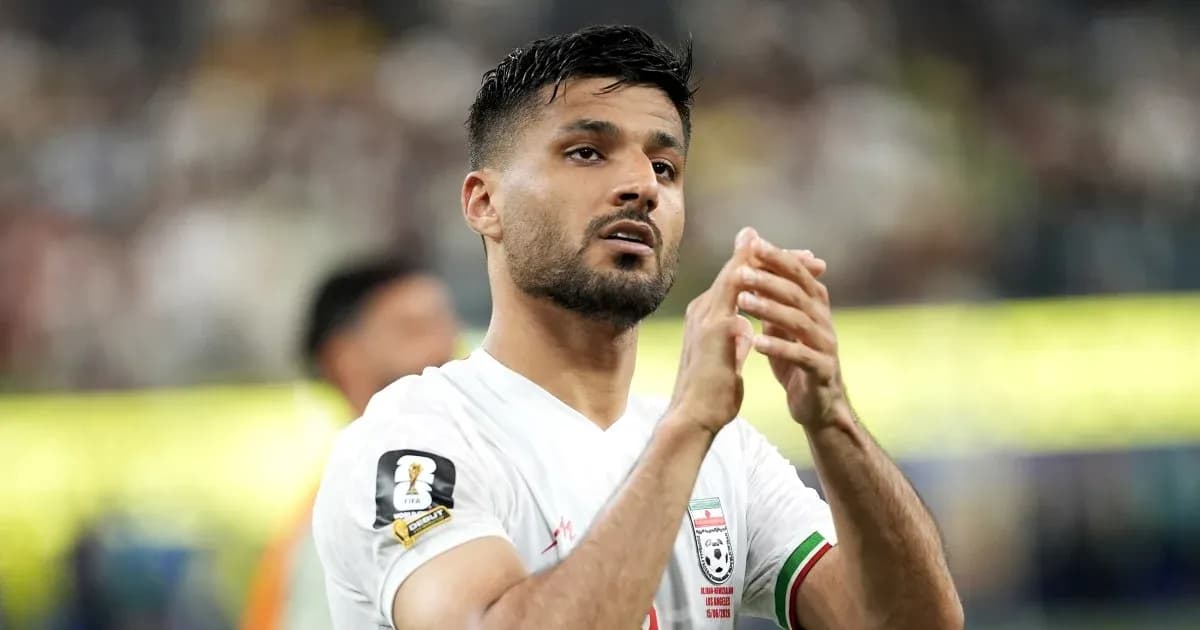
Iran’s World Cup already felt like a storm. On Monday night in Los Angeles, the wind changed again.
Barely hours after a draining, politically charged 2-2 draw with New Zealand at SoFi Stadium, Iran’s players were told to get out of the United States and back to their training base in Mexico. No recovery session. No night in the hotel. Straight to the airport.
Coach Amir Ghalenoei didn’t name who issued the order. He didn’t need to. The frustration in his voice told its own story.
“They didn’t even give us time to recover,” he said through an interpreter. “After the game today, they said to us, ‘You have to leave immediately.’ … We are asked to get on a plane and return to our camp in Tijuana, and we are really troubled by that.”
The plan had been simple: arrive in California two nights before the opener, stay over after the game, and fly back at lunchtime on Tuesday. Instead, Iran’s World Cup squad found itself hustled onto a plane for the short 140-mile hop to Tijuana in the middle of the night, with bodies already aching from a match that had demanded everything.
A World Cup under siege
Nothing about this World Cup has been normal for Iran.
Their entire cycle has been thrown into upheaval since the war launched by the U.S. and Israel against Iran on Feb. 28. The federation asked FIFA to move their three group-stage matches out of the U.S.; the request was rejected. The team came anyway.
Captain Mehdi Taremi described the grind even before a ball was kicked. What should have been a routine trip from Tijuana to the Los Angeles area on Sunday turned into five hours of travel and security checks.
“We don’t know why they are returning us, to be honest,” Ghalenoei said. “It seems like others are doing the planning for us. The decision-making for us is being made elsewhere.”
Key staff didn’t even make it. The president of Iran’s football federation, several coaching support staff and media officials were all denied U.S. visas, stripping the team of vital off-field support at the very moment they needed stability.
“We have to leave Los Angeles right now, and it’s not good for us,” Taremi said about an hour after the final whistle. “I think FIFA have to help us more than this. ... Everything is like a disaster, actually, for us.”
Ghalenoei went further.
“I think our team is perhaps the most oppressed in the World Cup,” he said.
Cramped preparation, cramping players
On the pitch, the impact of that chaos showed.
The game was played in mild conditions, but several Iranian players went down with cramps. Substitutions came not as tactical tweaks, but as damage control.
“Before the game, I said we haven’t had time to adjust because of the travel,” Ghalenoei explained. “Many of our players, they had cramps, and that’s why we had to substitute them. So it wasn’t for technical reasons. It was because of the injury and because of the cramp.”
They will be assessed by the technical staff on Tuesday, assuming the team can carve out any meaningful rest amid the enforced shuttling between countries.
The coach made no attempt to hide his anger at the cumulative effect: delayed arrivals, disrupted plans, and now an early forced departure, all eroding the recovery windows that elite football demands.
“They are forcing us to go back early without time for recovery,” he said. “They are making the situation more difficult.”
A draw that felt like a fight
All of this framed what unfolded at SoFi Stadium, where Iran opened its campaign against a New Zealand side ranked 65 places lower in FIFA’s standings.
On paper, a 2-2 draw was a disappointment. On the night, it felt like a small act of defiance.
Elijah Just struck early in each half for New Zealand, twice silencing a stadium that had roared Iran’s players onto the pitch. Twice, Iran clawed their way back, producing two goals of real quality.
Ramin Rezaeian lit up the first half with a clever finish off the side of his boot. Then, in the 64th minute, Mohammad Mohebi met a perfect cross with a thumping header, sending the ball flashing past the goalkeeper and the crowd into a frenzy.
The celebration that followed stirred its own storm. Mohebi appeared to mime the shooting of a gun, drawing criticism online, before switching to the now-familiar “ice in my veins” gesture made famous locally by Los Angeles Lakers guard D’Angelo Russell, and finally forming a heart with his hands toward the stands.
“The Iranians who live in Los Angeles, they make a great atmosphere,” Mohebi said. “That celebration, it comes in the mind, and I did like this … for all the fans. Just a celebration.”
A divided crowd, united for 90 minutes
The atmosphere around the game was as complex as Iran’s World Cup itself.
Outside SoFi, several hundred Iranian Americans protested against the Iranian government. Inside, many fans from the diaspora turned their backs and jeered during the national anthem, a stark visual of anger and disillusionment.
Once the match began, something shifted. The vast majority of the crowd roared for the players in red, white and green, separating the team from the politics that swirl around it.
“It was an incredible atmosphere in the game, all 90 minutes,” Taremi said. “It was like at home for us.”
SoFi, sitting in the heart of the world’s largest Iranian community outside Iran, shook to the sound of drums, horns and chants. This was a conflicted fan base, but not a quiet one.
At the final whistle, players from both sides embraced, swapped shirts and shared handshakes. Ghalenoei sat alone in the dugout, watching as his squad formed a line and walked the perimeter of the pitch, applauding thousands of flag-waving fans who refused to leave.
Tougher tests ahead
The draw leaves Group standings finely poised: Iran, Belgium, Egypt and New Zealand all sit on one point after the opening round. The problem for Iran is what comes next.
On Sunday, they face Belgium in Inglewood, a step up in quality and intensity. After that comes a trip north to Seattle to meet Egypt. Both fixtures look heavier, more unforgiving, than a New Zealand side they were expected to beat.
On paper, Iran’s chances of finally escaping a World Cup group for the first time already look under threat. Off the pitch, the obstacles are multiplying.
“We’re facing more hurdles, but we’re not going to let that stop us from doing our best,” Ghalenoei said. “I think today was one of the best games in the World Cup so far, and I think the fans really enjoyed it inside the stadium and outside the stadium.”
The performance suggested a team willing to fight back, twice, against the run of events. The question now is whether, amid wars, visa denials, forced flights and fraying muscles, that resilience will be enough to carry them beyond the group line that has always held firm.
Related News

Anthony Joshua Names Murat Gassiev as Next Opponent if He Defeats Tyson Fury

UFC 332: Start Time and Fight Highlights for Natalia Silva vs. Wang Cong
Court McGee Opens Up About Choosing UFC 332 as His Final MMA Fight
WBC Orders Lightweight Title Unification: William Zepeda vs Jadier Herrera
BCCI Pension List: Monthly Payments to Retired Indian Cricketers in 2025

Why Fury vs Joshua Is Set for Cardiff, and Dua Lipa’s Unexpected Role