
Julian Álvarez's Path to Barcelona: A Tactical Shift
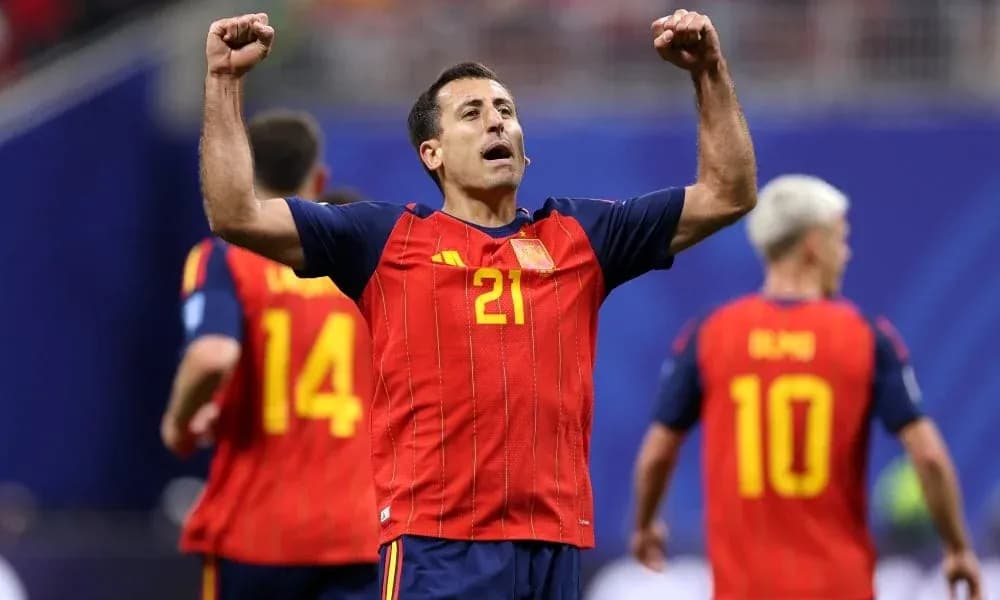
Julian Álvarez has made up his mind. If he leaves Atlético Madrid, the path he wants runs straight to Barcelona and Spotify Camp Nou – even with Arsenal and Paris Saint-Germain hovering in the background.
This is not just another big-name forward chasing a glamorous move. According to reporting in Spain, Álvarez sees Barça as the place where he can recover his best version, the player who once looked ready to dominate Europe rather than the one now grinding through games in Diego Simeone’s system.
From chasing shadows to chasing goals
Álvarez’s season sums up the contradiction at Atlético. A Champions League semi-final in 2025/26 on one hand; deep frustration in La Liga on the other. Atlético finished fourth, a full 25 points behind champions Barcelona. For a striker of his ambition, that gap is not just a number. It’s a warning sign.
The Argentine has yet to lift a trophy since arriving in Madrid. The wait is wearing thin, but it is the way he is being used that really bites.
Under Simeone, Álvarez has often spent matches hunting the ball rather than hunting goals. He has been asked to chase possession, cover huge swathes of grass, and manufacture chances on his own instead of living in the penalty area, where his instincts are most lethal. Too many sprints into channels. Not enough touches in the box.
Barcelona offer the opposite picture.
At Camp Nou, the ball does the running. The structure is built around possession, angles, and constant support. For Álvarez, that means less firefighting in midfield and more freedom to operate where it matters: in the final third, arriving between defenders, linking with midfielders, finishing moves instead of starting them from 40 yards out.
That stylistic clash sits at the heart of his preference. It is not simply a change of club he wants. It is a change of football.
Drawn to a different kind of dressing room
The attraction is not only tactical. It is also about the cast around him.
The idea of stepping into a Barcelona side loaded with creativity is a powerful pull. Pedri knitting play between the lines. Frenkie de Jong gliding past pressure. Fermin Lopez and Dani Olmo arriving from midfield. Behind them, a team drilled to keep the ball and move it quickly into dangerous areas.
For a forward like Álvarez, that is oxygen.
Then there is the frontline. Raphinha stretching defences wide. And, crucially, Lamine Yamal.
Yamal’s rise has become a decisive factor in Álvarez’s thinking. The teenager’s fearlessness, his ability to unbalance games from the right, offers something different – a partner who can draw defenders, create chaos, and open up the spaces that Álvarez loves to attack. He believes that playing alongside Yamal would not only sharpen his own game but also raise the ceiling of Barcelona’s attack.
The vision is clear in his mind: a front line built on movement, combinations, and constant threat, supported by a midfield that feeds chance after chance. For a striker stuck in a system that often leaves him isolated, it is an irresistible contrast.
Arsenal and PSG watch on – but Barça hold the edge
Arsenal and PSG have not walked away. Both clubs continue to monitor Álvarez’s situation, aware that a proven international forward, still in his prime, could reshape their attack.
Yet Barcelona hold a crucial advantage: the project fits him. The football, the role, the environment – it all aligns with what he wants at this stage of his career. He does not just see a big club. He sees a place where he can enjoy playing again.
That emotional component matters. After a draining domestic campaign, the promise of a style that plays to his strengths, rather than against them, carries more weight than any salary figure or marketing plan.
One obstacle that could break the move
There is, however, a hard reality in the middle of this story: Atlético Madrid.
The club are in no mood to strengthen a direct domestic rival. Selling Álvarez to Barcelona would mean handing a key asset to the team that just finished 25 points ahead of them in the league. From Atlético’s perspective, that is a risk bordering on reckless.
They continue to resist any idea of sitting down with Barça. The player’s preference is clear, but preference does not sign contracts or lower transfer fees. Right now, the operation is described as extremely complicated, and there is no expectation of a quick breakthrough.
Timing is another factor. With the World Cup looming, all sides know that any major movement is unlikely before the tournament ends. Performances on that stage could shift valuations, harden positions, or open new doors.
For the moment, Álvarez waits: caught between a system that no longer suits him and a club whose football seems tailor-made for his game, with a rival’s refusal to negotiate standing in the way.
If Atlético hold their line, the question is simple: how far will Barcelona – and Álvarez himself – be willing to push to force the move that both believe could redefine the next chapter of his career?
Related News

Anthony Joshua Names Murat Gassiev as Next Opponent if He Defeats Tyson Fury
UFC 332: Start Time and Fight Highlights for Natalia Silva vs. Wang Cong

Court McGee Opens Up About Choosing UFC 332 as His Final MMA Fight
WBC Orders Lightweight Title Unification: William Zepeda vs Jadier Herrera

BCCI Pension List: Monthly Payments to Retired Indian Cricketers in 2025

Why Fury vs Joshua Is Set for Cardiff, and Dua Lipa’s Unexpected Role