
Kenya's Women’s Team Faces Setback in Rabat: A Call for Calm
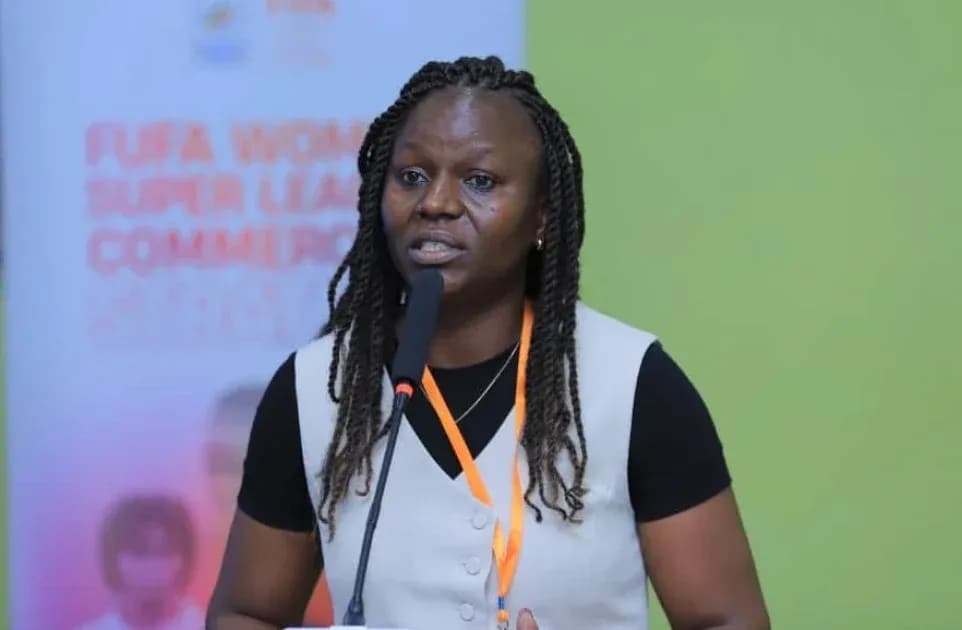
The scoreboard in Rabat was brutal: Morocco 4, Kenya 0. Yet in a quiet office in Salé, just across the Bouregreg River, one of Kenyan football’s most influential voices chose not to dwell on the damage, but on the response.
Former Harambee Starlets captain Doreen Nabwire has urged Kenyans to hold their nerve and back the national women’s team as they chase a place in the knockout rounds of the 2026 Women’s Africa Cup of Nations in Morocco.
Speaking to Kenyan journalists after the opening Group ‘A’ loss to the hosts, Nabwire refused to let one bad night define the campaign.
“I strongly believe we have a good chance against Senegal and Algeria, and we can still turn things around,” she said. “Morocco are a quality side. They have been intentional in their preparations, and they are among the top-ranked teams on the continent.”
Respect for Morocco, Belief in Kenya
The gulf in preparation was obvious. Morocco, semi-finalists at the last WAFCON and World Cup participants, looked every bit a team built with a global horizon.
“Their ambition goes beyond Africa,” Nabwire noted. “They are targeting the FIFA Women’s World Cup and striving to establish themselves on the global stage.”
Kenya, though, are not tourists at this tournament. Nabwire, who captained the side during its formative years, reminded critics that the Starlets earned their place.
“Kenya did not qualify for this tournament by chance; the players earned their place through hard work,” she said. “Although the opening result was disappointing, our focus now should be on the remaining two group matches. If we can collect maximum points, we still have a chance of progressing.”
Senegal and Algeria now stand between Kenya and the quarter-finals. Four goals down on goal difference, but not yet out of the fight.
A Game Growing Faster Than the Structures Around It
Nabwire’s perspective carries weight. She is no longer just a former captain or pioneer; she now works as a FIFA Women's Football Development expert, with a vantage point that stretches beyond one camp, one defeat, or one federation.
“We have reached a stage where women's football is growing at a remarkable pace, and we must dare to dream,” she said. “We should aim to qualify for the World Cup. However, success depends on much more than what happens on the pitch. Winning matches is only one part of the many other factors that contribute to success.”
It is a familiar Kenyan story: talent and desire sprinting ahead of infrastructure and planning. Nabwire, the first Kenyan woman to play professional football in Europe when she joined SV Werder Bremen in 2009, has lived that contradiction for more than 15 years.
“We must ensure that everything outside the pitch is taken care of before expecting players to deliver results,” she stressed. “We continue to face challenges with infrastructure, coaching and issues surrounding players' allowances. These are important factors because they directly affect motivation and performance.”
The message was clear. You cannot demand world-class results from players operating in second-rate conditions.
Fix the Environment, Then Judge the Players
From PEC Zwolle to the national team, Nabwire has seen how small details off the pitch decide big moments on it. Travel, training pitches, technical staff, timely allowances — they all show up in the 90th minute, when legs tire and minds wander.
“If we want to compete at the highest level, we must create the right environment for our players,” she said. “Everything has to be in place to enable them to step onto the pitch, compete effectively and represent the country with confidence.”
Kenya’s tactical errors against Morocco were obvious. The hosts pressed with structure, attacked with variety, and punished every lapse. Nabwire believes those issues can be fixed, but only if the players are given the space and support to focus solely on football.
She remains convinced a quarter-final spot is still within reach.
Social Media Heat and a Plea for Perspective
Off the pitch, the Starlets faced another storm. Social media turned unforgiving in the wake of the 4–0 defeat, with criticism flying at players who had barely had time to process the loss.
Nabwire stepped in to shield them.
“In football, there are three possible results; you win, draw or lose,” she reminded fans. “When we win, everyone celebrates, but when we lose, people should understand that it is part of the game. We must learn from our mistakes, identify what went wrong, work on those areas and come back stronger.”
It was a simple football truth, but one that often disappears in the noise after a heavy defeat. The former captain called for analysis, not abuse; patience, not panic.
A Defining Night Awaits
The calendar offers no time for self-pity. Kenya face Senegal at the Olympic Stadium on July 30, with kick-off at 8:00 PM Kenyan time. On the same night, Morocco meet Algeria at Moulay El Hassan Stadium at 11:00 PM Kenyan time.
By the end of that double-header, Group ‘A’ will look very different. Kenya will either be back in the conversation for the last eight, or staring at another early exit.
Nabwire has laid down the challenge — to the federation, to the players, and to the fans. The question now is whether the country can match the ambition of its women, before the window to join Africa’s elite quietly closes.
Related News

Carlos Alcaraz Calls for Change After Laver Cup Court Conditions

Alexander Zverev Secures Laver Cup Victory for Team Europe with Straight-Set Win Over Learner Tien

Novak Djokovic Shares Fitness Update Before China Open Return After US Open Upset

Shubman Gill's Captaincy Record Across All Formats: Tests, ODIs, T20Is, and IPL

Kuldeep Yadav Named Player of the Match Over Virat Kohli Despite Century in IND vs WI 1st ODI
India Advances to Asian Games 2026 Cricket Semi-Finals After Rain Washout Against Afghanistan