
Liverpool's American Tour: A New Era Begins
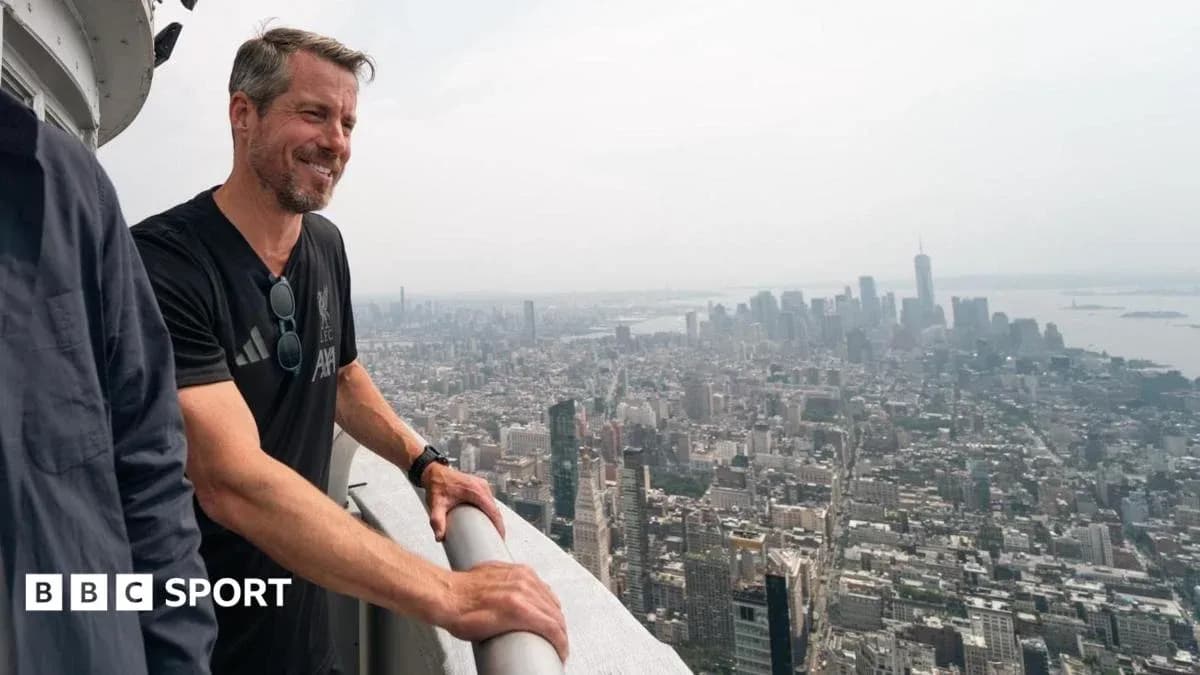
Liverpool land in America chasing calm after the storm. The club claim more than 26 million supporters in the United States, so the choice of a pre-season tour across the Atlantic is hardly a marketing mystery. But this summer is about more than shirts, selfies and stadium shows.
It is about proving that, after a bruising year, Liverpool still know exactly what they are.
Billy Hogan, Liverpool and Fenway Sports Group’s CEO, sits in New York and calls the past 12 months “a super difficult year… for lots of different reasons.” The backdrop is Yankee Stadium, where Andoni Iraola’s side face Wrexham on Wednesday evening. The setting screams spectacle. The agenda is more serious.
Investment, not exit
The headline away from the pitch is clear: FSG are in talks over fresh money coming into the club. Last week, the ownership group confirmed that a consortium led by British-Indian businessman Amit Bhatia is in discussions about a strategic minority investment. Those talks are ongoing and confidence is growing that an agreement will be reached.
Hogan’s message is blunt. This is not a sale. It is not a soft goodbye.
“John Henry and FSG have always said that if there was an interest in an investment that would help the football club, then they would consider it,” he tells BBC Sport. “That was said many years ago and that remains the case here.
“At this point, I wouldn't say anything different to the statement that a consortium led, managed and represented by Amit Bhatia has come forward and expressed an interest in a minority investment.”
According to the Financial Times, any deal would value Liverpool at more than £4.5bn. From £300m in 2010 to that figure now is a stark illustration of how far the club has travelled under FSG, and why they see no reason to step away.
“There's a huge opportunity still,” Hogan says. “This is the biggest and most popular sport in the world and we're one of the biggest clubs in the biggest league in the biggest sport in the world. So that's a great place for us to be. The Premier League has a tremendous amount of momentum behind it.
“We've definitely not peaked. We're in a good place to continue to grow and that's why everyone across both sides of the club, football and business and whether they kick a ball or not, is focused on driving the club forward and winning trophies.”
On one side of the balance sheet, Liverpool sit fifth in the Deloitte Football Money League and recorded the highest revenue in the Premier League at £702m. On the other, Hogan insists the model has not shifted.
“All of that investment, as has always been the case since 2010, goes back into the club. It's about running the club sustainably.”
A year of upheaval
Sustainability did not shield Liverpool from turbulence on the pitch. After a record £450m spend last summer, the team stumbled. Performances sagged, expectations were missed, and the season ended with Arne Slot being sacked.
The departures cut deep too. Senior figures Mohamed Salah, Andy Robertson and Ibrahima Konaté all left on free transfers, stripping the dressing room of experience and status in one swoop.
Behind the scenes, the picture has been just as restless. Michael Edwards stepped down as FSG’s CEO of football after plans for a multi-club ownership model were shelved. Sporting director Richard Hughes is being linked with a move to Al Hilal in Saudi Arabia. The word that keeps circling is “stability” – and whether Liverpool still have enough of it.
Hogan does not flinch.
“Transition and change is inevitable in football. In our case, with a new coach coming in, there's real excitement around Andoni's mindset and philosophy that supporters will really enjoy,” he says.
“That will take time but in terms of transition, I would send a message that we are in a very healthy place as a football club – the leadership from ownership is in a very steady place and we're looking forward to the next season and the season ahead.”
The recruitment approach under FSG, he insists, has not been torn up because of one bad year.
“It's important to keep in mind that last season, a considerable amount was invested but also generated in terms of sales of players going out,” Hogan says. “Over the course of FSG's stewardship, the investment has always been focused on doing what's best to put us in a place to win.
“Sometimes that means significant expense and other times it doesn't like in the summer of 2024 when there was only one addition (Federico Chiesa for £12.5m). It depends on where we are at the club and the improvements needed. Ultimately Mike Gordon, who is really our managing owner, will make those decisions.”
So the club arrive in the United States with a new head coach, a trimmed transfer window and a fanbase trying to work out whether this is a reset or a risk.
The women’s team back in focus
One area where Hogan is willing to admit fault is the women’s side. Liverpool finished 11th in the WSL last season and have not lifted the top-flight title since 2014. For a club that talks about being “one club”, the gap has become too obvious.
“To be self-critical, that is probably an area that we maybe took our eye off the ball several years ago but we've changed that,” Hogan says.
“We now have one of the best training centres at AXA Melwood, we are investing in the squad and we will approach the women's team the same way we approach the men's team – which is to run it sustainably. There's tremendous growth in the women's game and a huge opportunity going forward to really drive that.”
The language is familiar – sustainability, opportunity, long-term thinking – but the admission matters. Liverpool’s rivals have been aggressive in backing their women’s programmes. Catch-up is no longer optional.
From brink of bankruptcy to billion-pound heavyweight
To understand Hogan’s confidence, you have to rewind. In 2010, Liverpool were on the verge of administration. The club, weighed down by debt and chaos, stared at the possibility of collapse.
“It is still remarkable to think now that the club was literally on the brink of bankruptcy,” Hogan reflects. Under FSG, that picture has flipped.
Anfield has been reshaped, with two of the four stands redeveloped in the past decade. The stadium feels both bigger and, crucially, still like Anfield.
“Back when FSG acquired LFC, a number of similarities were drawn with Boston Red Sox and Liverpool and one of them was this idea of an iconic venue that truly sits in the community,” Hogan says. “One of the things we're focused on now is making improvements in the footprint around Anfield the neighbourhood whether that's infrastructure or transport and getting people in on non-match days. We're proud of how we've expanded while keeping the soul but also modernising it in the way that's befitting of the football club.”
Not every decision has landed well. Earlier this year, Hogan wrote to fans to explain ticket price increases. Protests followed. The club scaled back the planned rises for the next couple of seasons. The tension between commercial growth and supporter sentiment remains a live issue.
Yet Hogan keeps coming back to the bigger picture.
“Football doesn't give you much time to sit back and reflect. What I would say I am most proud of is that the club is in such a positive and good financial position. If you go back to that point in 2010, the club was literally on the brink of bankruptcy. Now it has the right foundations underneath it. There's improvements across the infrastructure, the ability to stay at Anfield for the long-term and the stuff that doesn't always get headlines but are super important for the health of the club.
“Ultimately, it's about winning trophies and I wish we could win more but we've been fortunate to win a few.”
The memories come quickly – Champions League finals, fan parks, nights when Liverpool felt like the centre of the football world.
“I think our supporters have had a great time and I often think about the fan parks at the Champions League finals – we lost a couple but just that joy and the memories and frankly the fun of it is what I look back from time to time. And it's something that everyone associated with Liverpool should be proud of because it happens together and we all want this club to be the best in the world.”
New York, new questions
So Liverpool step out in New York with a new coach, a potential new investor and a fanbase that has seen both the brink of ruin and the heights of Europe under the same ownership.
On the pitch, the target is unchanged: trophies. Off it, the mission is to keep driving revenues, to grow the brand, to strengthen the women’s side, to finish the work around Anfield. Hogan insists the club are “really happy with the trajectory and direction” and that “we've definitely not peaked.”
The city of dreams has heard bold promises before. The real test comes when Iraola’s Liverpool leave the lights of Yankee Stadium behind and try to turn all this talk of foundations, philosophy and opportunity into something more tangible: a season that proves the worst of the turbulence is behind them, not a warning of what is still to come.
Related News
Carlos Alcaraz Calls for Change After Laver Cup Court Conditions
Alexander Zverev Secures Laver Cup Victory for Team Europe with Straight-Set Win Over Learner Tien
Novak Djokovic Shares Fitness Update Before China Open Return After US Open Upset
Shubman Gill's Captaincy Record Across All Formats: Tests, ODIs, T20Is, and IPL
Kuldeep Yadav Named Player of the Match Over Virat Kohli Despite Century in IND vs WI 1st ODI
India Advances to Asian Games 2026 Cricket Semi-Finals After Rain Washout Against Afghanistan