
Julen Lopetegui's Focus Amidst Qatar's Challenges
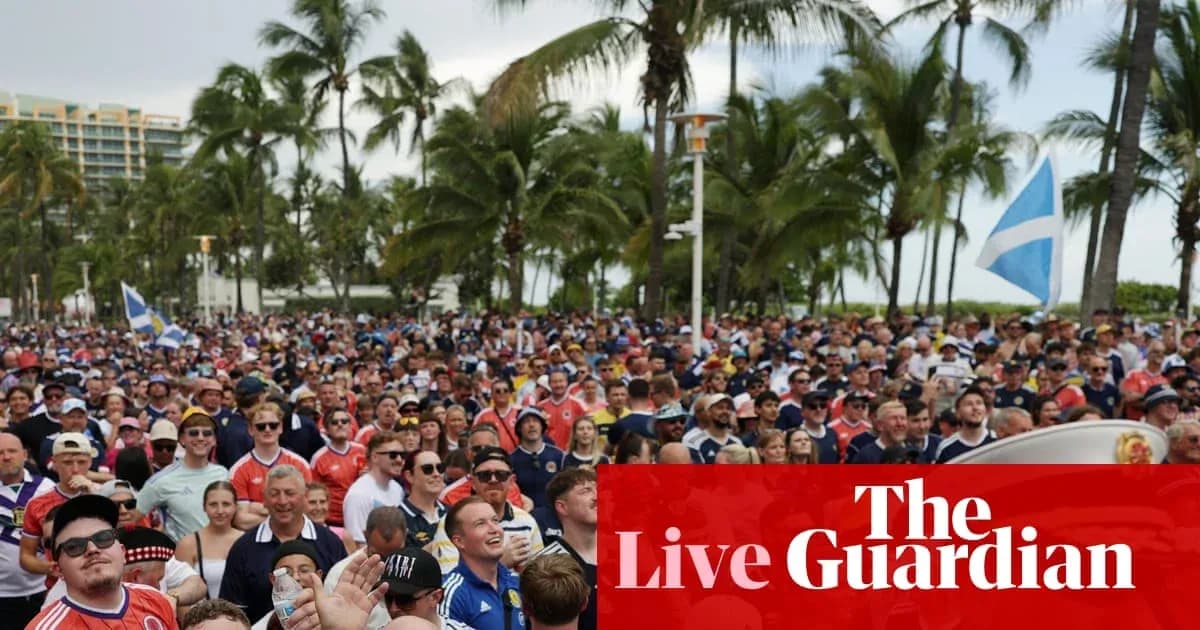
Julen Lopetegui did not bother with the usual pre‑match platitudes. On the eve of Qatar’s final Group A game, his focus was 2,300km away in Vancouver, where one of his players was trying to make peace with the worst moment of his career.
Assim Madibo, sent off after the tackle that broke Ismael Kone’s leg in Qatar’s 6-0 defeat by Canada last week, spent Tuesday with the midfielder he accidentally injured. Kone has since undergone successful surgery and faces at least five months out. Madibo, devastated in the immediate aftermath, has carried the weight of that incident ever since.
“It has been very tough for him,” Lopetegui said on Tuesday. “We wish him [Kone] all the best to recover as soon as possible. Now in the current moment Madibo is in Vancouver visiting Kone because he was very, very affected by this injury – it was never his intention. It was a very clear accident. We wish him all the best.”
Madibo will watch Qatar’s meeting with Bosnia and Herzegovina in Seattle from afar, suspended after that red card. Homam Ahmed is also banned after his own dismissal in the same bruising defeat. For Lopetegui, the final group game comes shorn of two starters and framed by an act of contrition rather than a chase for headlines.
While Qatar deal with the fallout of one tackle, Iran are using their final Group G fixture to highlight an atrocity of a very different scale.
Iran’s silent protest: #168
At their training base in Tijuana on Tuesday evening, Iran’s players went through their final session before facing Egypt with black corner flags planted around the pitch. Each carried a stark white message: “#168”.
The number is not random. It refers to the at least 168 people, mostly schoolchildren, killed in a US strike on an elementary school in Minab, southern Iran, on 28 February – the opening day of what has become known as the US-Israel war on Iran. The attack was attributed to the US military. Donald Trump, speaking last week, said: “Nobody did that on purpose. Mistakes are made. The war is nasty.”
Iran’s squad have made #168 part of their identity at this World Cup. When they first arrived in Mexico after a training camp in Turkey, players stepped off the plane wearing pin badges on their lapels bearing the same hashtag. On Tuesday, they folded it into the fabric of their training ground.
Fifa’s regulations are clear: “Equipment must not have any political, religious or personal slogans, statements or images,” or teams risk sanctions. Whether the governing body chooses to act over Iran’s #168 flags is another matter. Fifa has been contacted for comment, but for now the images stand: black flags, white numbers, a message that needs no translation.
Logistics have become another battleground. Iran will not arrive in Seattle from Tijuana until 11.30am local time on Wednesday, just two days before they face Egypt on Friday, after being granted special permission to enter the US later than usual. For their earlier matches in Los Angeles against New Zealand and Belgium, they were only allowed to land 24 hours before kick-off, prompting head coach Amir Ghalenoei to describe Iran as the “most oppressed” team at the tournament.
The friction with organisers does not end there. Friday’s game in Seattle has been designated the World Cup’s Pride Match, timed to coincide with the city’s Pride weekend. Both Iran and Egypt have complained to Fifa about the planned celebrations around the fixture. The match will go ahead under that banner regardless, pitting a politically charged Iranian squad against a backdrop that already divides opinion within both camps.
A note in Los Angeles, a message to the world
After Sunday’s draw with Belgium, Iran left Los Angeles with more than a point. In the dressing room at Los Angeles Stadium, they taped a handwritten note to the wall and walked away, leaving behind another carefully chosen set of words.
“From the ancient Persia of thousands of years ago to the civilised Iran of today, the spirit of Iran remains alive and steadfast. We came to Los Angeles with pride, competed with honour, and leave with dignity.
“Thank you Los Angeles for your hospitality. And thank you to every Iranian who gave their heart, voice and soul for Iran throughout these 180 minutes. May peace, respect and friendship prevail among all nations.”
The message, again marked with #168, stitched together history, politics and sport in a way that will make Fifa’s compliance officers wince. For the players and staff, it was a statement of identity as much as a farewell to the city.
On the training pitch in Tijuana on Tuesday, the mood was lighter for at least one member of the squad. Alireza Jahanbakhsh, the former Brighton winger, received a commemorative Iran shirt to mark his 100th cap, reached in the draw against Belgium. In a camp fighting battles on multiple fronts, it was a rare moment of uncomplicated celebration.
From Madibo’s quiet visit in Vancouver to black flags in Mexico and a Pride Match in Seattle, this World Cup is being shaped as much by what happens around the pitch as on it. The football will decide who stays and who goes. The gestures may linger far longer.
Related News
Anthony Joshua Names Murat Gassiev as Next Opponent if He Defeats Tyson Fury
UFC 332: Start Time and Fight Highlights for Natalia Silva vs. Wang Cong
Court McGee Opens Up About Choosing UFC 332 as His Final MMA Fight
WBC Orders Lightweight Title Unification: William Zepeda vs Jadier Herrera
BCCI Pension List: Monthly Payments to Retired Indian Cricketers in 2025
Why Fury vs Joshua Is Set for Cardiff, and Dua Lipa’s Unexpected Role