
Luca Zidane: A Legacy in Green
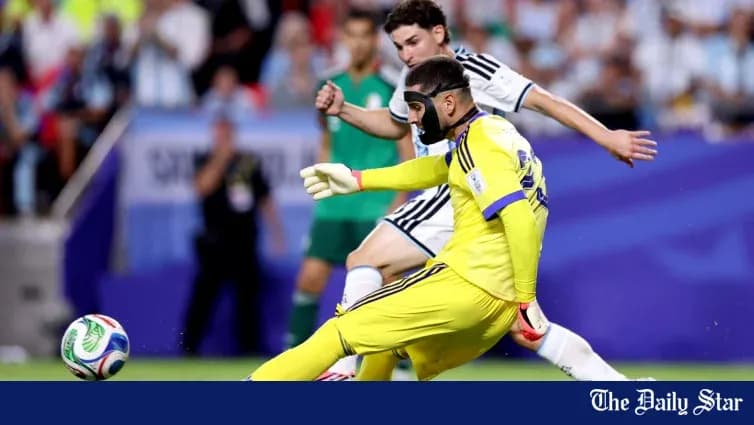
The name on the back of the green shirt did what names sometimes do in football. It stopped people in their tracks.
Zidane.
For a moment, memories rushed back: the balletic volley in 2002, the night in Paris in 1998, the walk past the World Cup trophy in Berlin. But this was not Zinedine gliding through a midfield. This was Luca Zidane, 28 years old, standing in Algeria’s goal, face hidden behind a black protective mask, staring down Lionel Messi and the defending world champions.
A different stage. A different role. The same surname, heavy with history.
A famous name, a different flag
Luca Zidane was born in France and grew up largely in Spain, in the long shadow of his father’s reign at Real Madrid as both player and coach. Training grounds, dressing rooms, and the Bernabéu’s bright lights formed the backdrop to his childhood.
Yet when his World Cup moment finally arrived, he did not wear blue. He wore green and white.
Through his paternal roots, Zidane chose Algeria, the country of his grandparents and the culture that shaped the family long before Zinedine became a global icon. It was not a late marketing twist or a convenient sporting decision. It was something he has spoken about openly and often.
“We’ve lived in an Algerian culture since we were small,” he said in an earlier interview. “It’s an honour to play for Algeria.”
Those words landed with even more weight as he walked out to face Argentina. This was the choice made real: a Zidane at a World Cup, but aligned with the country that once existed only as a powerful presence at home, in stories, food, and family rituals.
A mask, a scar, and a race against time
If the name drew the first glance, the mask kept it.
Zidane’s black facial protector gave him a striking, almost gladiatorial look. It was not a fashion statement. It was the visible reminder of how close he came to missing this World Cup altogether.
In April, playing for Granada in Spain, he suffered a brutal collision that left him with a fractured jaw, injuries to his chin, and a severe concussion. For a goalkeeper, that kind of trauma does more than threaten a tournament; it questions a career. There were genuine doubts he would be fit in time, doubts about whether Algeria’s new number one would even board the plane.
He did more than board it. He claimed the shirt.
By the time Algeria returned to football’s biggest stage, Luca Zidane had fought his way back, medically cleared but still protected, the mask serving as both shield and symbol. It told the story of a player who had taken the hard road to the World Cup, not the easy inheritance route many assumed came with his surname.
Baptism of fire against Messi
There are gentler ways to ease into a World Cup. Facing Lionel Messi and Argentina is not one of them.
Algeria’s opener ended in a 3–0 defeat, Messi helping himself to a hat-trick and reminding the world why he still bends games to his will. For any goalkeeper, it is a brutal welcome. For a debutant carrying one of the sport’s most mythic surnames, it is something else entirely.
Zidane stood there, behind that mask, trying to hold back a tide that so many before him have failed to stem. The scoreline will live in the record books; the context will not. But anyone who watched understood: this was not a soft landing. It was a test of resilience, of nerve, of how a player responds when the dream collides with the harshest reality international football can offer.
The Zidane legacy, rewritten
For older fans, the image of a Zidane at a World Cup still belongs to Zinedine — arms raised in Paris, head bowed in Berlin. Those pictures are etched into the sport’s collective memory.
Now, two decades on, the surname has returned to the tournament in a different form. No longer orchestrating games from midfield, but guarding a goal for Algeria. No longer draped in France’s blue, but in the colours of the country that first shaped the Zidane story.
There were no grand gestures from Luca, no theatrical claims to a legacy. Just a masked goalkeeper, finally on the stage every professional dreams of, trying to write his own chapter under a name the world already knows.
The question now is not whether he can escape that name. It is what he can add to it.
Related News
Anthony Joshua Names Murat Gassiev as Next Opponent if He Defeats Tyson Fury
UFC 332: Start Time and Fight Highlights for Natalia Silva vs. Wang Cong
Court McGee Opens Up About Choosing UFC 332 as His Final MMA Fight
WBC Orders Lightweight Title Unification: William Zepeda vs Jadier Herrera

BCCI Pension List: Monthly Payments to Retired Indian Cricketers in 2025
Why Fury vs Joshua Is Set for Cardiff, and Dua Lipa’s Unexpected Role