
Mikel Merino Reflects on Mourning After Spain's Draw in Tennessee
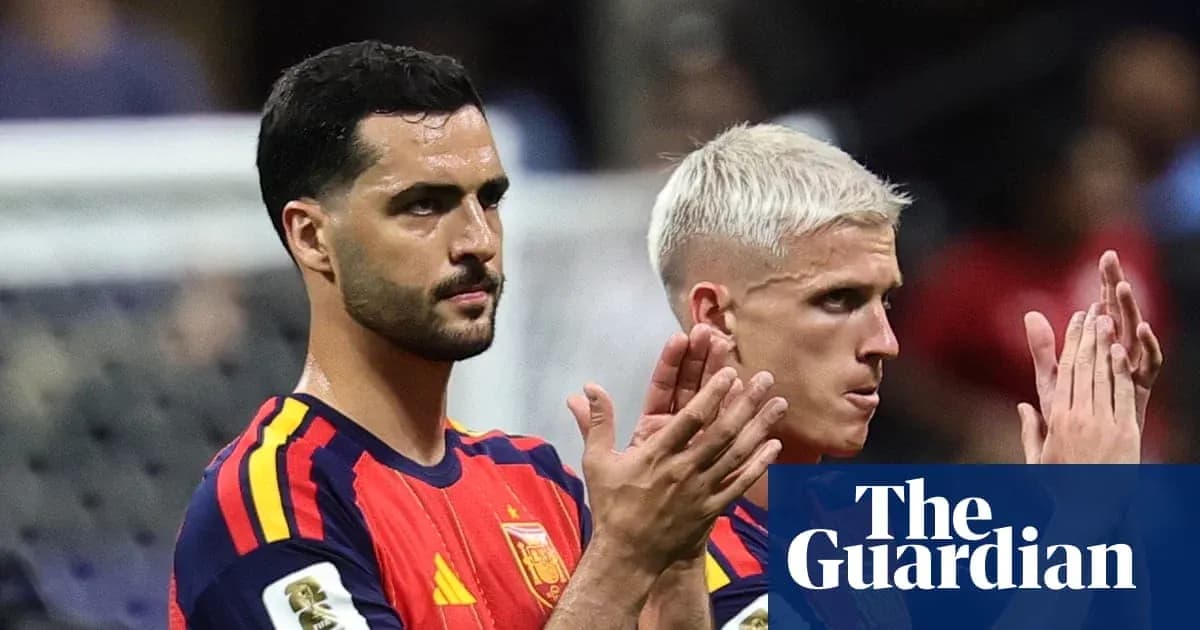
Mikel Merino walked into the press room alone, the only Spain player not out on the training pitch on a heavy Tennessee morning, and chose a word that hung in the air long after he said it.
“Mourning.”
Not the kind that follows death, he stressed, but the kind that follows a game that feels like it has taken something from you. A 0-0 draw with Cape Verde in a World Cup opener is not a catastrophe on paper. It felt like one inside the camp.
“No one died, it’s not a mourning exactly, but at times defeats can feel like that,” the Arsenal midfielder said. This, technically, was not even a defeat. It still carried the same weight.
Six long days now stretch between that flat night in Atlanta and Spain’s next chance to put things right. Six days to sit with it. Six days to hear the noise.
A Spanish inquisition in Tennessee
The morning after, the scene belonged to Merino. Seven long desks of journalists faced him, the questions as relentless as the southern heat outside. He called it “part of the game”. It is, but it is also part of the test.
“If there’s one thing that’s not good for us, it is for there to be panic,” he said. No slogans, no empty comfort. Just a clear attempt to steady the room and, by extension, the country watching from afar.
For 30 minutes he handled it: clear, composed, occasionally reflective, never evasive. He talked about the draw, about what comes next, about the psychology of a group that has just taken a hit. He even reached back to 2010, when Spain lost their first game and still went on to lift the World Cup. Back then he had just turned 14, a teenager watching the team that would shape his generation’s dreams.
Now he is inside the story, not watching it.
“Like every game that doesn’t go as you’d like, every player lives with that mourning,” he said. “Some like to watch the game back straight away, some like to disconnect and think about other things instead. You have to swallow the disappointment. We have to recover as soon as we can.”
Luis de la Fuente’s message, Merino explained, never really changes: be better tomorrow, even when you win. When you don’t, the scrutiny sharpens. The self-criticism does too.
“Personally, I am not one to send messages [to fans]; I think the best message is the next game, turning it around with a win.”
Family, ego and the ‘circus’
That “next game” will arrive soon enough. The noise around it is already here.
Merino kept coming back to one word Spain like to use around this squad: family. It is easy to say when you are winning, harder when you are not. That, he argued, is when you discover whether it is real.
“It is easy to talk of ‘family’ but when things don’t go well, when they are difficult, is when you truly see that ‘family’ – and I see unity, enthusiasm and a will to play well,” he said.
He then dug into something players often feel but rarely articulate so bluntly: ego.
“It is important to have ego; as a footballer, with all the criticism from outside you need it to feel good on the pitch. But you also need the humility to know that this belongs to everyone. Players come to the national team because they are important [at their clubs] and find a new reality where only a few can play.”
That is where the tension lives. Stars at their clubs, substitutes or rotation options with the selección. A 0-0 like the one in Atlanta only tightens the screws.
“That’s what the word ‘family’ is,” Merino said. “We have to be united, support each other in every moment. You can be annoyed, angry, but that energy has to be positive.”
The “mourning” line was quickly seized upon. He knew it would be.
“Maybe I didn’t express myself well,” he offered at one point, before circling back to the same idea anyway. It was not a slip; it was a deliberate metaphor.
“It was an attempt at a metaphor, a comparison. You’re so competitive that when it doesn’t go well, sometimes you go home and don’t even want to talk to your family. That’s why I say it’s like a mourning. Everyone deals with it differently. I like to face it and watch [games back] as soon as possible but that doesn’t mean it’s the best approach for everyone.”
And all of this unfolds under the lights.
“That’s a reality; it’s part of the business, the reason we earn what we earn, why football is so big, so important: because you’re here to cover it, to create stories through which we explain things to fans,” he said, glancing across at the packed room. “There are players who like it more, or like it less, but it’s part of the ‘circus’ and we have to accept it and live with it.”
Time to think, time to turn it
If there is one thing players hate after a bad game, it is exactly what Spain have now: time.
“What you want after a bad game is to play again straight away to get the bad taste out of your mouth,” Merino admitted. The expanded World Cup format, with its longer gaps, offers something else instead: days to replay missed chances in your head, days for doubts to grow.
“The risk is you have lots of time to go over it; it’s a mental challenge to deal with that, evade all that and be as free as you can mentally.”
He spoke about his own evolution. Early in his career, a bad result would sit on his chest for too long. Now he tries to confront it quickly.
“Everyone handles these moments their own personal way. I’m one of those that finds it hard to swallow a bad result but with time I’ve realised that it is best to [confront it] and start trying to turn it around as soon as possible. Four, five hours and you realise that this [World Cup] has just started, that there is time to fix it.”
That is when the focus shifts from the self to the group.
“Then you can focus on the group, on what helps them. Put a hand on the shoulder of whoever is hurt because they didn’t play, or missed a chance. Or know who needs space for that mourning.”
Inside a squad, that knowledge matters as much as any tactical tweak.
Echoes of 2010 and a reset
Spain’s draw with Cape Verde did not happen in a vacuum. Merino admitted that when he saw Saudi Arabia and Uruguay also draw, he felt a kind of release. The group, in his words, “starts over”.
“I like to see the positive side,” he said. He reached again for history. “The last world champion started by losing to Saudi Arabia. In 2010 Spain lost the first game and there was lots of criticism and they turned it around; that is an example to follow from people who were idols.”
Those idols are now the reference point, the standard that stalks every Spain generation that follows. For Merino, they are not just memories; they are a template.
“I often take inspiration from athletes who have lived my dreams before I did. That generation means so much for this one: we want to emulate them.”
The mourning, then, is not an ending. It is a phase. What Spain do with it over these six long days in Tennessee will say far more about this team than one sterile night in Atlanta ever could.
Related News

Anthony Joshua Names Murat Gassiev as Next Opponent if He Defeats Tyson Fury
UFC 332: Start Time and Fight Highlights for Natalia Silva vs. Wang Cong
Court McGee Opens Up About Choosing UFC 332 as His Final MMA Fight
WBC Orders Lightweight Title Unification: William Zepeda vs Jadier Herrera
BCCI Pension List: Monthly Payments to Retired Indian Cricketers in 2025

Why Fury vs Joshua Is Set for Cardiff, and Dua Lipa’s Unexpected Role