
Netherlands vs Japan World Cup Opener: Tactical Insights and Key Matchups
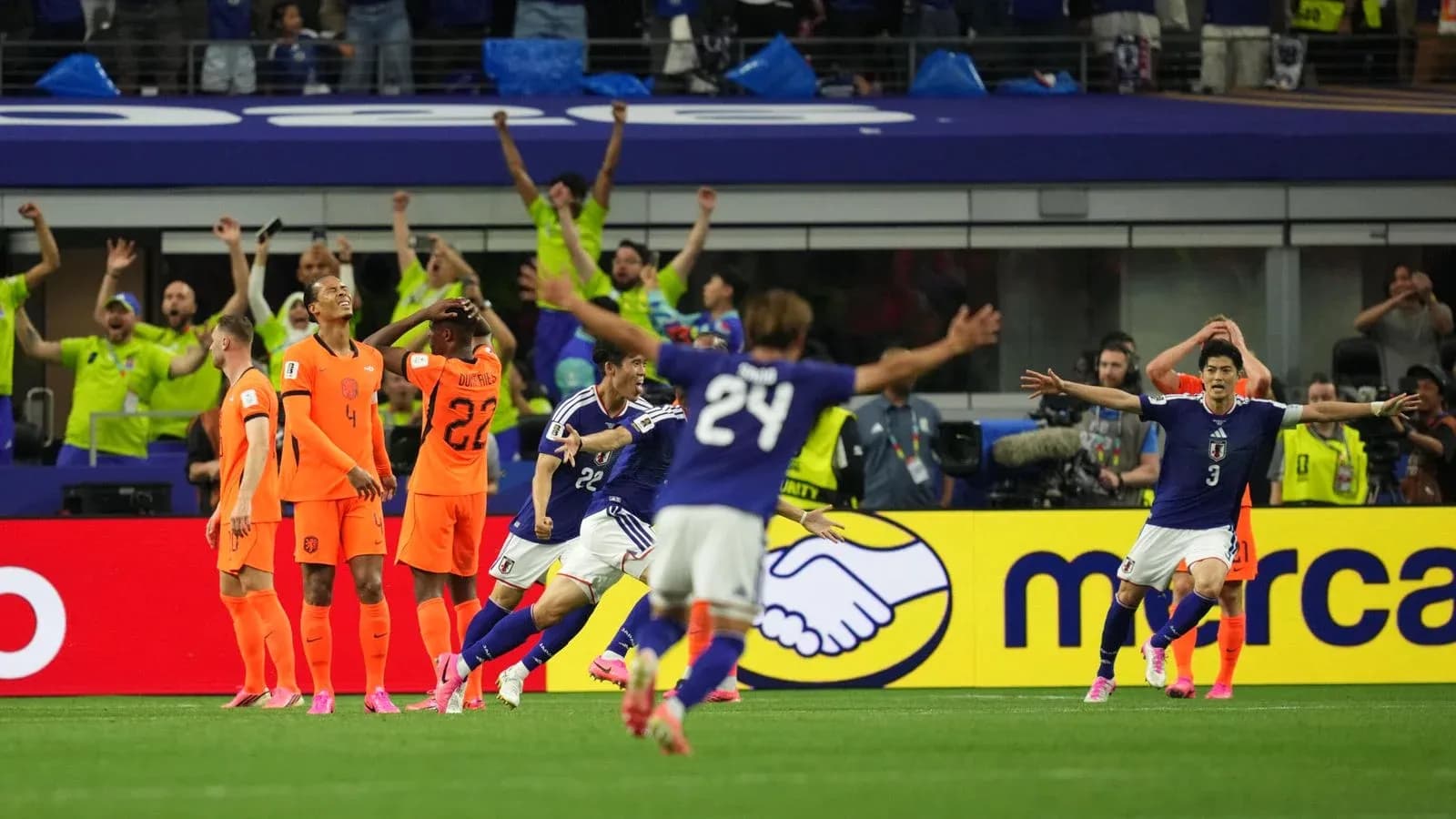
AT&T Stadium in Arlington hosted a World Cup opener that felt less like a gentle introduction and more like a tactical stress test. Netherlands and Japan shared a 2–2 draw, a result that leaves Group F finely poised and both coaches with as many questions as answers heading into the rest of the group stage.
I. The Big Picture – Structures and Early Identities
Following this result, Netherlands sit on 1 point with a goal difference of 0, having scored 2 and conceded 2 in total this campaign. Japan mirror that same statistical profile: 1 point, total 2 goals for and 2 against, total goal difference 0. The standings data lists Netherlands in different rank lines (1 and 3) across group descriptors, but the underlying truth is that both sides have started with parity rather than control.
Ronald Koeman’s 4-3-3 was textbook Dutch on paper: B. Verbruggen in goal behind a back four of D. Dumfries, J. P. van Hecke, V. van Dijk and M. van de Ven; a midfield trio of R. Gravenberch, F. de Jong and T. Reijnders; and a front line of C. Summerville, D. Malen and C. Gakpo. The shape promised width, ball circulation and aggressive half-space occupation.
Hajime Moriyasu countered with a 3-4-2-1 that leaned into Japan’s traditional strengths in mobility and combination play. Z. Suzuki was protected by a back three of T. Watanabe, S. Taniguchi and H. Ito, with a flexible midfield four of R. Doan, K. Sano, D. Kamada and K. Nakamura. Ahead of them, T. Kubo and D. Maeda floated behind central forward A. Ueda. On their travels so far, Japan’s attacking output is clear: 2 away goals, an away average of 2.0 goals for and 2.0 goals against.
II. Tactical Voids and Discipline – Where the Game Frayed
Neither side reported confirmed absences in the data, so the “voids” were more structural than personnel-based.
For Netherlands, the biggest gap was between the theoretical control of the 4-3-3 and the reality of a side that has yet to keep a clean sheet. At home they have played 1 match, scored 2 and conceded 2, with a home average of 2.0 goals for and 2.0 goals against. The back line led by V. van Dijk still looks in the process of calibrating distances with the midfield, particularly when full-backs push high and F. de Jong drops to build.
Discipline is already a storyline. In total this campaign, Netherlands have 3 yellow cards, and the timing distribution is revealing: 1 card in the 61–75 minute window, 1 in 76–90, and 1 between 91–105. That late-game surge of cautions (each 33.33% of their yellows) hints at a team that tightens under pressure as legs tire and lines stretch. C. Summerville and M. Depay both feature among the top yellow carded players, underlining that Koeman’s attacking options are not shy of the darker arts.
Japan, by contrast, emerge from this fixture without recorded yellow or red cards in the competition so far. That clean disciplinary slate fits with Moriyasu’s preference for collective pressing over individual lunges, but it also hints at a possible edge Netherlands can exploit: a Japan side that may hesitate to break rhythm with tactical fouls if the stakes rise later in the group.
III. Key Matchups – Hunter vs Shield, Engine Room vs Enforcer
Hunter vs Shield
C. Summerville has instantly announced himself as Netherlands’ sharpest blade. With 1 goal from 1 shot on target, an 8.3 rating and 29 passes at 86% accuracy, he offers both end product and reliable link play. His 7 duels contested and 5 won show a winger willing to fight for territory, not just receive it. He also drew 3 fouls, an indicator that defenders are already struggling to contain his changes of direction.
His “shield” is not one man but Japan’s back three, with S. Taniguchi at its heart. The structure is designed to crowd the wide channels that Netherlands’ 4-3-3 wants to exploit. However, Japan’s total defensive record so far – 2 away goals conceded, away average 2.0 goals against – suggests that while they can compress space, they are vulnerable when dragged laterally and forced to defend cut-backs and late runs from midfield.
If Koeman keeps Summerville wide and isolates him against T. Watanabe or H. Ito, Japan’s back three may be forced to tilt, opening seams for D. Malen’s central runs and C. Gakpo’s drifting movements inside.
Engine Room – Gravenberch vs Japan’s Midfield Web
In the middle, R. Gravenberch has quietly become the tournament’s early creative metronome. With 2 assists in total this campaign, 25 passes at 88% accuracy and 2 key passes, he embodies the vertical thrust Koeman wants from the right half-space. He also attempted 3 dribbles, succeeding with 2, showing a willingness to break lines off the dribble, not just with the pass.
Japan’s response comes from a collective rather than a single “enforcer.” D. Kamada offers positional intelligence, while K. Sano and K. Nakamura shuttle to close lanes. Further forward, T. Kubo has already contributed 1 assist, 16 passes at 75% accuracy and 1 interception, dropping in to help when Japan defend deeper. Koki Ogawa, with 1 assist from the bench, adds another creative thread in late-game scenarios, particularly when Moriyasu shifts to a more direct or crossing-heavy approach.
The critical intersection lies in how Gravenberch and F. de Jong handle Japan’s layered press. If they can turn through the first line and find Summerville or Gakpo early, Netherlands’ total average of 2.0 goals for per match feels sustainable. If Japan’s midfield web slows those progressions, the Dutch can be forced into sterile possession, exposing their own total average of 2.0 goals against.
IV. Statistical Prognosis – Margins, xG Logic and Defensive Solids
There is no explicit xG data in the snapshot, but the patterns are clear. Both teams have produced 2 goals in total from their first 90 minutes, with neither keeping a clean sheet and neither failing to score. Offensively, they are on similar trajectories; defensively, both are conceding at the same clip.
Penalty data reinforces the fine margins: in total this campaign, both sides have 0 penalties taken, 0 scored and 0 missed. There is no hidden efficiency edge from the spot to tilt tight games.
Defensive solidity, then, becomes the decisive lens. Netherlands’ home profile – 1 home match, 2 goals conceded, 0 clean sheets – suggests a side still searching for compactness behind an adventurous midfield. Japan’s away profile – 1 away match, 2 goals conceded, 0 clean sheets – mirrors that fragility.
Following this result, any tactical preview of their remaining group fixtures must assume high-event football. The data points toward matches where the first goal will not be decisive, and where late-game discipline could separate qualification from disappointment. With Netherlands’ yellow cards clustering from 61 minutes onward and Japan’s bench featuring impact creators like Kubo and Ogawa, expect closing stretches in which Koeman’s back line is repeatedly asked to defend the box under stress.
On balance, the statistical prognosis tilts only slightly toward Netherlands, thanks to the emergent synergy between Gravenberch’s supply and Summerville’s cutting edge. But until either side lowers that total average of 2.0 goals against, this World Cup story at AT&T Stadium feels like the opening chapter of a group defined more by attacking ambition than defensive control.
Related News

The Rose Bowl Southampton Pitch Analysis for ICC Women's T20 World Cup 2026

Inter's Josep Martinez Confident in Italy’s Potential to Bounce Back After World Cup Setbacks

Dean Huijsen Reflects on World Cup Snub After Spain’s 4-1 Win Over Croatia

Ivan Rakitic Reveals He Still Avoids Watching Croatia’s 2018 World Cup Final Loss to France

Francesco Totti Claims Italy's 2006 World Cup Win Owed to Him

Brazil's First Post-World Cup Friendly: What Should the Lineup Be?