
Philadelphia Union II vs Columbus Crew II: A Penalty Shootout Thriller
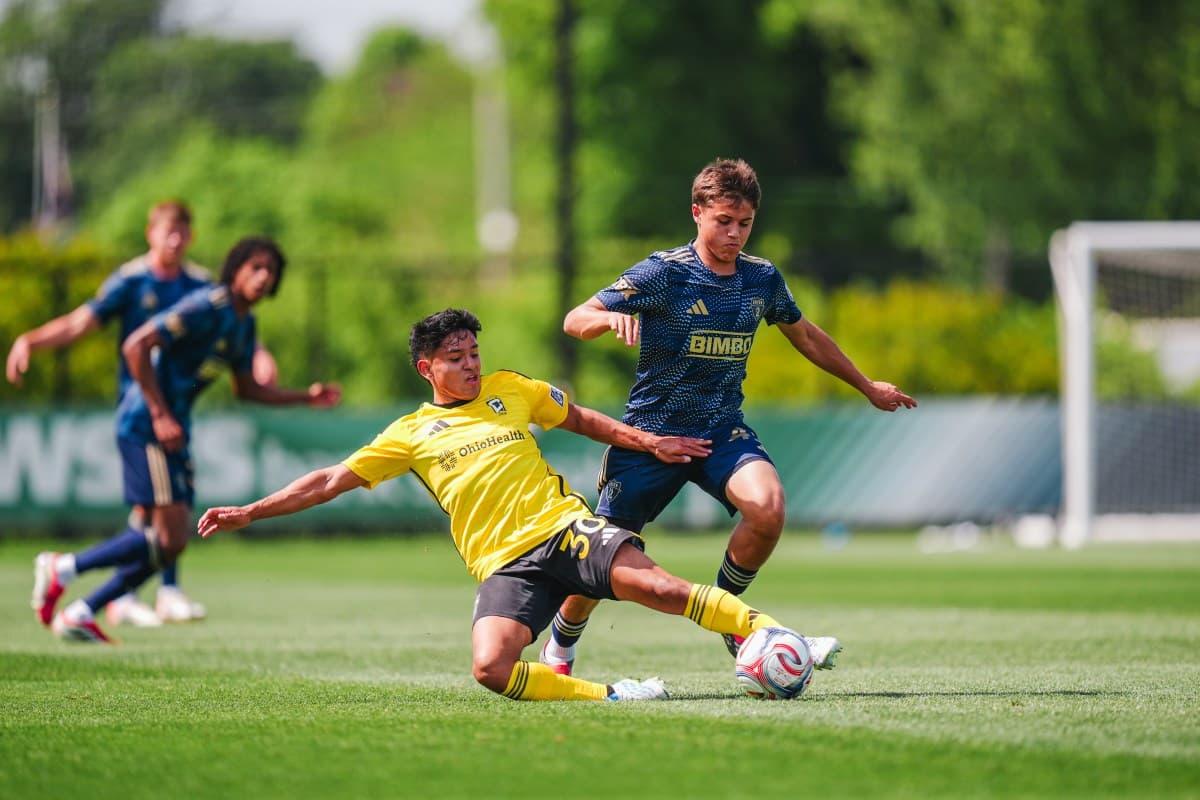
Subaru Park under the lights, 120 minutes in the legs, and a penalty shootout that finished 7–8: this was MLS Next Pro at its most unforgiving. Philadelphia Union II and Columbus Crew II, both carved from development-first philosophies, produced a 1–1 draw over regulation and extra time before Columbus’ deeper nerve from the spot decided it.
Following this result, the league table underlines how fine the margins were. In the Northeast Division, Philadelphia Union II sit 4th with 15 points from 10 matches, a perfectly symmetrical campaign overall: 5 wins, 5 losses, 0 draws, 12 goals for and 10 against, a goal difference of +2. Columbus Crew II, by contrast, occupy 3rd with 19 points from 11 games, built on 7 wins and 4 defeats, 18 scored and 18 conceded, goal difference exactly 0. One side slightly more secure, the other more explosive yet volatile.
I. The Big Picture: Clashing Identities
Philadelphia’s seasonal DNA is defined by knife‑edge football. Overall they average 1.3 goals for and 1.1 goals against per match, suggesting a side that plays on the margins but rarely collapses. At home, that profile barely shifts: 1.3 goals scored and 1.1 conceded per game at Subaru Park, with 3 wins and 4 losses from 7. This is a team that either edges you or is edged; the absence of any draws in total underlines a mentality that plays for decisive outcomes.
Columbus Crew II arrive as a more extreme organism. Overall they score 1.8 goals per match and concede 1.6, a high‑variance outfit whose matches tilt toward chaos. At home they are perfect — 5 wins from 5, 2.2 goals for and only 0.8 against — but on their travels the mask slips: away they still score 1.5 per game, yet ship 2.3, with 2 wins and 4 defeats from 6. The away version of Columbus is bold, often brilliant going forward, but structurally open.
The 1–1 in regulation, then, felt like a compromise between these identities: Philadelphia dragged the game toward their narrow margins; Columbus eventually imposed their knack for living on the edge in the shootout.
II. Tactical Voids and Discipline: Edges Lost, Edges Found
With no formal injury list provided, both coaches leaned into their full squads. Ryan Richter’s Philadelphia XI was young and flexible: A. Rick, G. Sequera, F. Sundstrom, R. Uzcategui and J. Griffin formed the defensive and first‑phase spine, while K. LeBlanc, O. Benitez, M. De Paula, N. Hasan, S. Korzeniowski and M. Jakupovic offered fluidity between midfield and attack. The bench — P. Holbrook, K. Moore, A. Craig, O. Pratt, J. Ruf, L. Harrington, T. Gladstone, M. Berthe and A. Diop — gave Richter options in every line, crucial in a 120‑minute contest.
Federico Higuain’s Columbus side mirrored that depth. L. Pruter anchored them in goal; B. Adu‑Gyamfi, Q. Elliot, R. Aoki and I. Heffess gave structure at the back. T. Brown, K. Gbamble and N. Rincon formed the engine room, with J. Chirinos, Z. Zengue and C. Adams providing the attacking thrust. From the bench, S. Lapkes, G. De Libera, I. Ewing, M. Nyeman, P. Forfor, G. Di Noto, Z. Lloyd, J. Danjaji and T. Karumanchi offered an almost complete second XI.
Disciplinary tendencies shaped the undercurrent of the match. Heading into this game, Philadelphia’s yellow‑card distribution was spread but with notable spikes: 19.35% of their yellows came between 16–30 minutes, and 16.13% each in the 31–45, 61–75 and 91–105 ranges. That pattern suggests a side that often struggles to manage emotional peaks just before half‑time and late in games. More concerning are their reds: 50.00% of their red cards arrive between 31–45 minutes and 50.00% between 61–75, pointing to potential implosions in transition phases on either side of the break.
Columbus’ yellow profile is even more telling. Only 9.52% of their yellows land in the opening 15 minutes, but 23.81% come between 31–45, and a hefty 28.57% between 61–75. They build intensity as halves progress, often walking the line of aggression. Their solitary red card this season arrived in the opening 0–15 minutes — a sign that their pressing triggers can occasionally spill into reckless early challenges.
Over 120 minutes, both benches became tools for managing that emotional and physical load. Every substitution — [IN] replaced [OUT] — was a recalibration of risk: fresh legs to sustain pressing, fresh minds to avoid the second yellow that never shows in the stats but often changes the story.
III. Key Matchups: Hunter vs Shield, Engine Room vs Engine Room
Without explicit individual scoring charts, the “Hunter vs Shield” narrative becomes collective. Columbus as a unit are the hunter: on their travels they average 1.5 goals for per match, built on a front line of J. Chirinos, Z. Zengue and C. Adams, supported by late‑arriving midfielders like T. Brown and K. Gbamble. Their biggest away win, 1–3, underlines how ruthlessly they can exploit space when the game opens up.
The Shield is Philadelphia’s collective defensive record at home: only 8 goals conceded in 7 matches, an average of 1.1 per game, with 2 clean sheets. F. Sundstrom and R. Uzcategui, flanked by the likes of G. Sequera and J. Griffin, form a back line that is rarely blown away; their biggest home defeat is only 1–2. They bend but seldom break.
In the “Engine Room” duel, the contrast is philosophical. Philadelphia’s midfield — shaped by K. LeBlanc, O. Benitez, M. De Paula, N. Hasan and S. Korzeniowski — is designed for control and compactness. Their overall goals‑against average of 1.1 and just 11 conceded in total across 10 fixtures show a unit that values structure, even at the cost of some attacking risk.
Columbus’ central trio of T. Brown, K. Gbamble and N. Rincon, by contrast, is built for verticality. The team’s 20 goals overall in 11 matches, combined with 18 conceded, tells you they are comfortable in end‑to‑end rhythms. Brown’s ability to step into higher lines, Gbamble’s energy between boxes and Rincon’s connective passing all contribute to a side that wants chaos in midfield, not calm.
IV. Statistical Prognosis: Why the Shootout Felt Inevitable
From a numbers perspective, this fixture always leaned toward a narrow, high‑tension outcome rather than a blowout. Philadelphia’s overall goal difference of +2 (12 scored, 10 conceded) and Columbus’ 0 (18 scored, 18 conceded) suggest that, on balance, both teams tend to live within a single‑goal margin. Neither side has a penalty narrative this season — both have taken 0 penalties, with 0 scored and 0 missed — so the shootout became a fresh psychological frontier rather than an extension of existing trends.
If we layer expected goals logic onto the raw scoring rates, Philadelphia’s 1.3 goals for and 1.1 against overall imply a typical xG profile of tight, low‑to‑mid‑range contests. Columbus’ 1.8 for and 1.6 against overall hint at higher xG swings, especially away where they concede 2.3 per match. Yet Philadelphia’s home resilience dragged Columbus’ traveling volatility back toward equilibrium.
Defensively, Columbus’ away record of 14 goals conceded in 6 matches — more than 2 per game — usually signals structural issues: gaps between lines, full‑backs exposed, or a press that is broken too easily. But Philadelphia, with just 13 goals scored in total this campaign, do not profile as a side that routinely punishes such weaknesses. Their biggest home win, 4‑1, is an outlier rather than the norm.
The 1–1 over 120 minutes, therefore, was the statistical midpoint of these competing tendencies. Columbus’ attack could not fully overwhelm Philadelphia’s compact home shape; Philadelphia’s measured offense could not fully exploit Columbus’ away frailties. In that stalemate, the match was always likely to be decided by the thinnest of margins — a single mistake, a single save, a single missed or converted kick.
In the end, Columbus Crew II’s season‑long comfort with volatility translated into composure from the spot. Philadelphia Union II, so often living on a knife‑edge in regulation, found that in a shootout there is no room left on the blade.
Related News

MLS Winners and Losers: Cavan Sullivan’s USMNT Rise, St. Louis City SC’s Smart Moves, and Chicago Fire’s Hugo Cuypers Gap

MLS Winners and Losers: Portland Timbers' Historic Hat-Trick, Josh Sargent Shines, and Cavan Sullivan's Rising Star
Tacoma Defiance Injury List: Players Out and Return Dates vs Colorado Rapids II
Carolina Core injury list: Players out, potential return dates
Tacoma Defiance vs Colorado Rapids II Predicted Lineups and Team News
Orlando City II vs Huntsville City Predicted Lineups and Team News