
Portugal vs Croatia: World Cup Round of 32 Clash
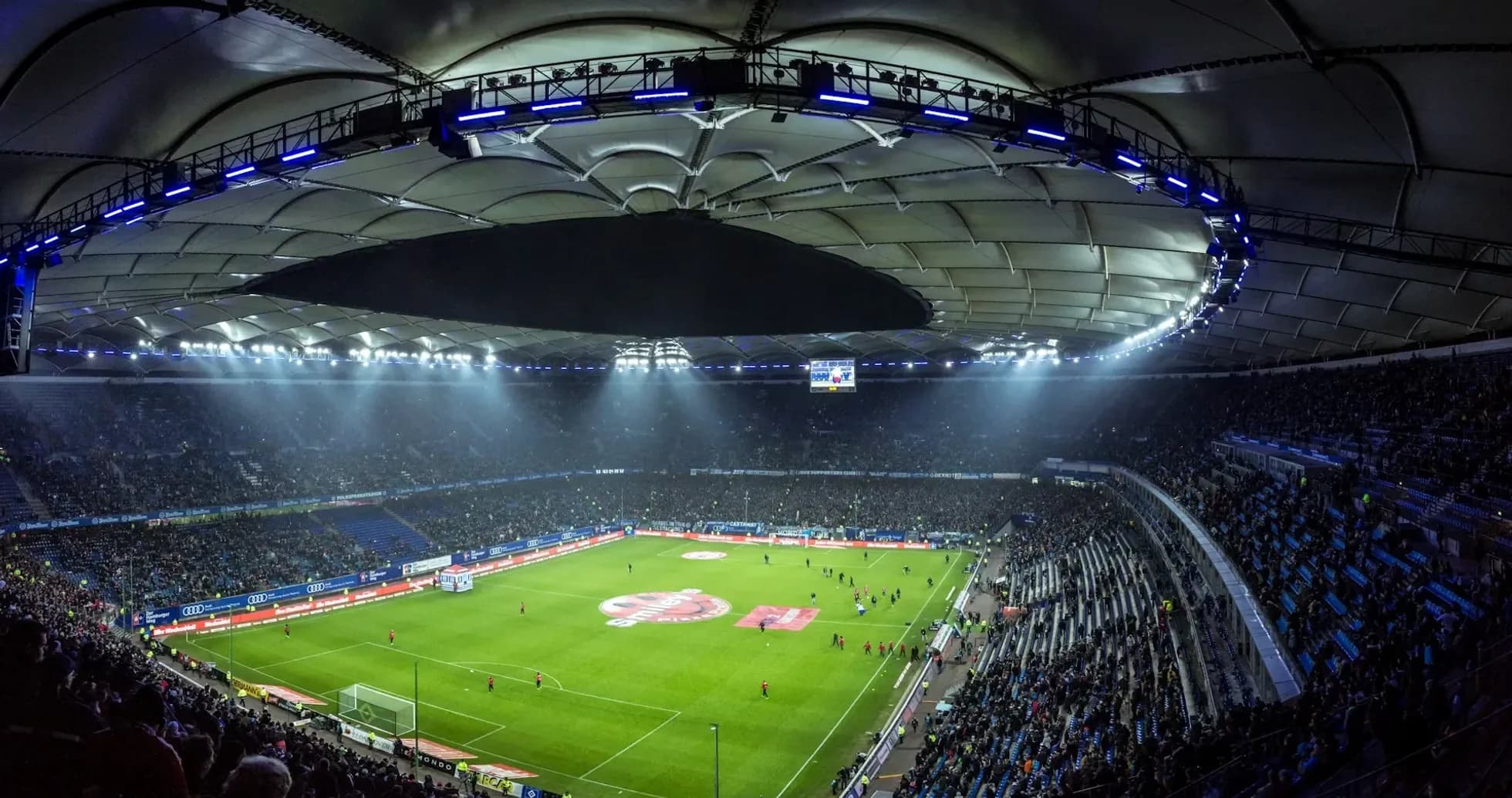
Portugal face Croatia at BMO Field in Toronto in a high-stakes World Cup Round of 32 tie. Both sides advanced as group runners-up in 2026, with Portugal finishing 2nd in Group K on 5 points and Croatia 2nd in Group L on 6 points. With no second leg, this is a straight knockout that will define whether either team can realistically target a deep run towards the quarter-finals and beyond, or see their World Cup campaign end before the real business end of the tournament.
Head-to-Head Tactical Summary
The recent head-to-head record is dense and competitive, with five meetings between 2020 and 2024.
- On 18 November 2024 in Split (Stadion Poljud) in the UEFA Nations League (League A - 6), Croatia drew 1-1 at home with Portugal. The half-time score was 0-1 before Croatia levelled after the break.
- On 5 September 2024 in Lisbon (Estádio da Luz) in the UEFA Nations League (League A - 1), Portugal beat Croatia 2-1. The half-time score was 2-1 and Portugal managed the second half without further scoring.
- On 8 June 2024 at Estádio Nacional in Jamor, Oeiras in an international friendly, Croatia won 2-1 away to Portugal. The half-time score was 0-1 and Croatia held their lead despite Portugal responding after the interval.
- On 17 November 2020 in Split (Stadion Poljud) in the UEFA Nations League (League A - 6), Portugal won 3-2 away to Croatia. The half-time score was 1-0 to Croatia before Portugal turned the game around in a high-variance second half.
- On 5 September 2020 in Porto (Estádio Do Dragão) in the UEFA Nations League (League A - 1), Portugal beat Croatia 4-1 at home. The half-time score was 1-0 before Portugal accelerated after the break.
Tactically, these games show Portugal often comfortable imposing themselves at home, with 4-1 and 2-1 wins in Porto and Lisbon, while Croatia have proved capable of striking away, notably the 2-1 friendly win in Jamor. The Nations League fixtures in Split (3-2 to Portugal in 2020 and 1-1 in 2024) underline how open and momentum-driven this match-up can become once the first goal goes in.
Global Season Picture
- League Phase Performance:
In the group stage, Portugal finished 2nd in Group K with 5 points from 3 matches (1 win, 2 draws, 0 defeats), scoring 6 goals and conceding 1 (goal difference +5). Croatia finished 2nd in Group L with 6 points from 3 matches (2 wins, 0 draws, 1 defeat), scoring 5 goals and conceding 5 (goal difference 0). Portugal’s profile is that of a solid, controlled side with a strong defense (1 goal against in 3 games), while Croatia’s group stage was more volatile, with similar goals for but far more goals conceded. - Season Metrics:
In the league phase, Portugal’s attacking output has been efficient: 6 goals in 3 matches (2.0 per game) with all 6 scored in their two “home” fixtures (3.0 per home game) and none in their single away outing. Defensively, they have allowed just 1 goal across 3 games (0.3 per match), reflecting a compact structure and effective game management. Their clean sheet count stands at 2 from 3 games, with only 1 match in which they failed to score. Card discipline is acceptable but not negligible, with yellow cards spread across early and late phases of games (notably in the 0–15, 61–75, 76–90, and 91–105 minute ranges). Their most used system is a 4-2-3-1, deployed in all 3 fixtures, signalling tactical continuity.
In the league phase, Croatia have scored 5 goals in 3 matches (1.7 per game), split between 2 at “home” (2.0 per game) and 3 away (1.5 per game). Defensively, they have conceded 5 (1.7 per match), with 4 of those away from home, highlighting a more open, risk-accepting approach when not in their nominal home environment. They have 1 clean sheet in 3 games and have scored in every match so far. Their yellow cards cluster mainly in the 61–75 and 91–105 minute ranges, suggesting late-game physicality and pressure. Croatia have alternated between 4-2-3-1 (2 matches) and 3-4-2-1 (1 match), which gives them flexibility but also indicates some tactical searching. - Form Trajectory:
Portugal’s form string in the group stage is “DWD”: draw, win, draw. This points to an unbeaten but slightly conservative trajectory, where control and risk limitation have been prioritised over relentless attacking. They have been difficult to beat and have maintained a high defensive standard.
Croatia’s form is “WWL”: two wins followed by a defeat (or vice versa depending on ordering, but clearly two victories and one loss). This profile is more boom-or-bust: they have shown they can win games outright but also that they can be exposed, particularly defensively. Entering a knockout, this suggests higher variance in their match outcomes compared with Portugal’s steadier baseline.
Tactical Efficiency
In the league phase, Portugal’s underlying profile is that of a controlled, defensively efficient side. With 6 goals scored and only 1 conceded across 3 games, their goal difference of +5 is elite for this stage. Their preferred 4-2-3-1 supports a stable double pivot in front of the back line, which has translated into 2 clean sheets and an average of just 0.3 goals conceded per match. Offensively, averaging 2.0 goals per game without relying on penalties indicates a functional attack that converts a reasonable share of its chances, especially in more favourable (home-like) conditions.
Croatia’s efficiency is more mixed. Their 5 goals scored in 3 games (1.7 per match) show they can consistently create and finish opportunities, but the 5 goals conceded (1.7 per game) reveal a defense that allows more space and transitions. The fact that their heaviest defensive exposure has come away from home mirrors the head-to-head pattern where Portugal have been able to run up scores when Croatia open up. Their occasional switch to a 3-4-2-1 system can add an extra line of build-up and wing-back width, but it also risks leaving central spaces if the press is broken.
While we do not have explicit numerical “Attack/Defense Index” values from the comparison block, the structural indicators from the league phase are clear: Portugal project as having a higher defensive index (very low goals against, multiple clean sheets) and a solid attacking index (2.0 goals per game, a 5-0 peak win). Croatia’s attacking index is competitive but slightly lower in reliability, and their defensive index is clearly weaker due to the 5 goals conceded and lack of multiple clean sheets. In a knockout environment, this suggests Portugal’s season-long efficiency profile is better aligned with low-error, result-oriented football, while Croatia rely more on game-state swings and attacking surges.
The Verdict: Seasonal Impact
This Round of 32 clash is a pivotal hinge for both national teams’ 2026 narratives. For Portugal, who came through the group stage unbeaten with the best defensive numbers of the two, progression would validate their controlled, possession-based 4-2-3-1 approach and position them as credible contenders for at least the quarter-finals, with a title challenge still within realistic reach. An exit here, despite a +5 goal difference and strong group data, would frame the campaign as under-delivering relative to their underlying metrics and recent dominance in head-to-head meetings.
For Croatia, advancing would confirm that their higher-variance profile can scale into the knockouts: a side that concedes but finds ways to outscore opponents and manage tight moments, as seen in their two group wins and the recent 2-1 friendly victory in Portugal. It would re-energise the narrative of Croatia as a tournament team capable of punching above their pure statistical baseline. Conversely, elimination would reinforce concerns around their defensive fragility (5 goals conceded in 3 group matches) and suggest that, in 2026, their attacking quality has not been sufficient to offset structural vulnerabilities against top-tier opposition like Portugal.
In seasonal terms, this match is less about immediate title deciders and more about pathway definition. The winner moves into the last 16 with a performance profile strong enough to realistically target the quarter-finals; the loser faces a World Cup campaign that, judged against group-stage data and recent head-to-head history, will be interpreted as a missed opportunity to convert underlying quality into a deep run.
Related News
The Rose Bowl Southampton Pitch Analysis for ICC Women's T20 World Cup 2026
Inter's Josep Martinez Confident in Italy’s Potential to Bounce Back After World Cup Setbacks

Dean Huijsen Reflects on World Cup Snub After Spain’s 4-1 Win Over Croatia

Ivan Rakitic Reveals He Still Avoids Watching Croatia’s 2018 World Cup Final Loss to France

Francesco Totti Claims Italy's 2006 World Cup Win Owed to Him

Brazil's First Post-World Cup Friendly: What Should the Lineup Be?