
Protesters Occupy Dublin Sports Department Over Israel Clash
The Nations League meeting between Ireland and Israel in October has already become one of the most politically charged fixtures in recent Irish football history – and a ball has yet to be kicked.
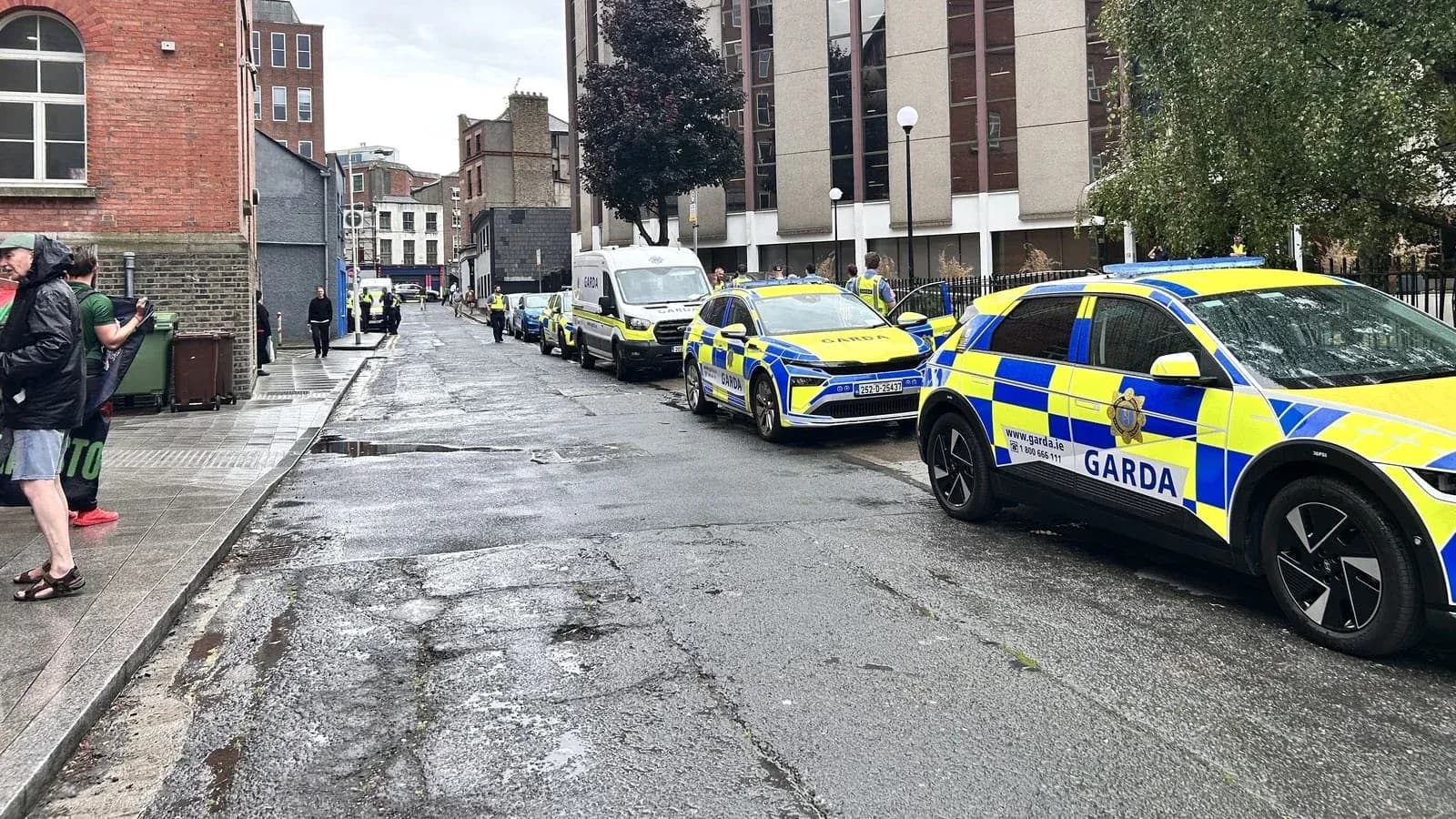
On Leeson Lane in Dublin, #StopTheGame activists forced the issue into the heart of government on Thursday, occupying the lobby of the Department of Culture, Communications and Sport before being removed from the building. Their target was clear: the upcoming Nations League double-header between the Republic of Ireland and Israel.
This was not a fleeting stunt. The group framed the sit-in as part of an escalating campaign that, they insist, will only grow louder as the fixtures draw closer.
In a statement, the activists accused the Irish Government and the FAI of complicity in “sportswashing” by allowing the games to proceed. They argued that, as a signatory to the International Criminal Court, Ireland “should not be engaging in sportswashing” and is “failing in our moral, humanitarian and legal obligations as a country in playing these games.”
The finger of blame did not stop at Abbottstown. The group directly named Taoiseach Micheál Martin, claiming he was “one of the first to demand that the FAI play these games,” and alleging that the Government had placed pressure on the association to fulfil the fixtures.
Independent Dublin City Councillor Cieran Perry, speaking for the protesters, drew a line around the players. The squad, he said, should be kept out of the political crossfire. Responsibility, in his view, lies with the FAI and the Government to take the decision to withdraw from the Nations League ties rather than leaving the burden on those on the pitch.
The controversy has been simmering for weeks. In August, the FAI confirmed that Ireland’s home Nations League game against Israel would not be staged on Irish soil. Instead, it has been moved to a neutral venue and will be played behind closed doors in Bačka Topola, Serbia, on Sunday 4 October.
That relocation was framed by the association as a logistical call rather than a political one. In its statement, the FAI said the Board had opted to move the fixture “due to operational challenges that could impact on the delivery of the game on home soil.”
The away leg remains set for the Nagyerdei Stadion in Debrecen, Hungary, on 27 September, a week before the relocated “home” match. Two games, neither in Ireland, yet the fallout is very much at home.
Inside government, the message is that the ball is not in their court. A spokeswoman for the Department of Sport underlined that bodies such as the FAI are “independent, autonomous bodies responsible for the governance of their own sports, including the organisation of sporting fixtures, whether in domestic or international competitions.”
Her conclusion was blunt: “The Government and Sport Ireland have no role in the organisation of such fixtures.”
So the lines are drawn. Activists demanding a stand. A government stressing distance. An association caught in the middle, already forced to move a home game abroad and behind closed doors.
The Nations League was designed to inject meaning into international football’s calendar. In Ireland, this particular tie now carries a weight far beyond points and permutations – and the real test may come not in Serbia or Hungary, but in how Irish sport chooses to live with the political noise that follows.
Related News
Carlos Alcaraz Calls for Change After Laver Cup Court Conditions

Alexander Zverev Secures Laver Cup Victory for Team Europe with Straight-Set Win Over Learner Tien

Novak Djokovic Shares Fitness Update Before China Open Return After US Open Upset

Shubman Gill's Captaincy Record Across All Formats: Tests, ODIs, T20Is, and IPL

Kuldeep Yadav Named Player of the Match Over Virat Kohli Despite Century in IND vs WI 1st ODI

India Advances to Asian Games 2026 Cricket Semi-Finals After Rain Washout Against Afghanistan