
Tottenham vs Leeds: Tactical Analysis of 1-1 Draw
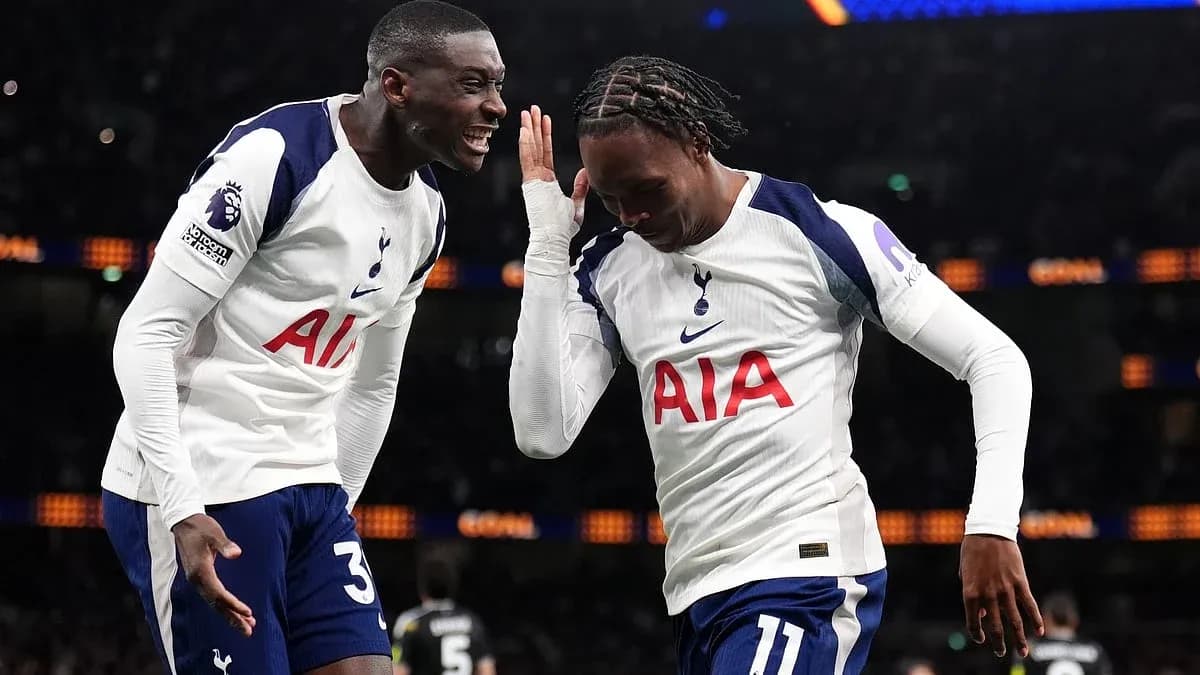
Tottenham and Leeds shared a 1-1 draw at Tottenham Hotspur Stadium in a match that neatly reflected both sides’ current identities. Tottenham, under Roberto De Zerbi, imposed themselves with 57% possession, a 4-2-3-1 structure and heavy territorial pressure, while Daniel Farke’s Leeds leaned into a compact 3-5-2, selective pressing and direct transitions. The scoreline matched the underlying numbers: Tottenham’s xG of 1.32 and Leeds’ 1.26 pointed to a finely balanced contest where neither side truly dominated the quality of chances, even if the hosts controlled the rhythm.
Discipline
In terms of discipline, the match was clear-cut. There were four yellow cards in total: Tottenham 3, Leeds 1, overall 4. Chronologically, the bookings unfolded as follows:
- 41' Kevin Danso (Tottenham) — Foul
- 66' João Palhinha (Tottenham) — Foul
- 79' Joe Rodon (Leeds) — Foul
- 82' Pedro Porro (Tottenham) — Foul
Scoring Sequence
The scoring sequence also followed a logical tactical arc. After a goalless first half, Tottenham’s pressure told early in the second period. At 50', Mathys Tel (Tottenham) struck with a Normal Goal (no assist), rewarding Spurs’ sustained occupation of the Leeds half and the fluidity of their attacking midfield line. Leeds’ response was rooted in their transitional threat and penalty-box presence. At 71', a VAR intervention saw a Penalty confirmed for Leeds, with Ethan Ampadu at the heart of the incident. Three minutes later, at 74', Dominic Calvert-Lewin (Leeds) converted the Penalty (no assist) to level the match at 1-1, a score that held to full time.
Tactical Analysis
Tactically, Tottenham’s 4-2-3-1 was built on structural dominance and width. A. Kinsky, with 3 Goalkeeper Saves and goals prevented of -0.49, had a relatively light but high-impact workload; the negative goals prevented figure indicates he marginally underperformed the post-shot xG he faced, essentially conceding close to what the chances against him merited. In front of him, the back four of Pedro Porro, Kevin Danso, Micky van de Ven and Destiny Udogie pushed high, with full-backs especially important in pinning Leeds’ wing-backs and sustaining 14 Corner Kicks.
The double pivot of João Palhinha and Rodrigo Bentancur anchored the structure. Palhinha’s yellow card for Foul at 66' reflected his role as the main disruptor against Leeds’ central counters, while Bentancur’s later substitution at 81' — L. Bergvall (IN) came on for R. Bentancur (OUT) — signaled a shift towards more vertical, risk-taking passing from midfield. Ahead of them, Randal Kolo Muani, Conor Gallagher and Mathys Tel operated as an aggressive, interchanging three behind Richarlison. Tel’s 50' opener was emblematic of De Zerbi’s plan: sustained pressure, second-ball dominance around the box, and numbers between the lines generating one of Tottenham’s 13 shots inside the box.
Despite that territorial control, Tottenham’s finishing and final-third clarity were imperfect: 16 Total Shots yielded only 3 Shots on Goal, underlining a tendency to shoot under pressure or from suboptimal angles. Their passing structure was solid — 426 passes, 341 accurate (80%) — but often recycled possession rather than slicing through Leeds’ last line. The late changes at 85' — J. Maddison (IN) came on for M. Tel (OUT), and D. Spence (IN) came on for D. Udogie (OUT) — were aimed at injecting creativity between lines and fresh width on the right, yet Leeds’ compact 5-3-2 defensive shell in the closing stages limited clear chances.
Leeds’ 3-5-2 was primarily about control of space rather than the ball. With 43% possession and only 11 Total Shots (4 on target), they focused on compressing central areas through the trio of A. Stach, Ethan Ampadu and Ao Tanaka, while Daniel James and James Justin provided the width and transitional outlets. The back three of Joe Rodon, Jaka Bijol and Pascal Struijk initially coped well with crosses, but as Tottenham’s corners mounted, Farke adjusted.
The substitutions were key to Leeds’ tactical evolution. At 56', S. Bornauw (IN) came on for P. Struijk (OUT), refreshing the back line and shoring up aerial presence. On 63', Farke altered his front line and right flank: L. Nmecha (IN) came on for B. Aaronson (OUT), and W. Gnonto (IN) came on for D. James (OUT). This introduced more direct running and penalty-box presence, setting the stage for the penalty incident. Later, at 90+3', S. Longstaff (IN) came on for A. Tanaka (OUT), adding fresh legs to protect the draw and contest second balls in midfield.
Attacking Pattern
Leeds’ attacking pattern was clear: fewer shots but higher concentration of threat in key moments. Six Shots inside the box from only 11 Total Shots underline their focus on working the ball into high-value zones, often via early deliveries into Calvert-Lewin or quick combinations after turnovers. The VAR-confirmed penalty at 71', with Ampadu central to the decision, was a product of this approach — committing numbers into the box when the opportunity arose, rather than sustaining long phases of possession.
Statistical Standpoint
From a statistical standpoint, the draw is well supported by the metrics. Tottenham’s xG of 1.32 versus Leeds’ 1.26 reflects near-parity in chance quality, even though the shot volume tilted heavily towards the hosts. Both goalkeepers registered identical goals prevented figures (-0.49), suggesting neither Kinsky nor K. Darlow dramatically outperformed expectation; Darlow, with 1 Goalkeeper Save, faced fewer on-target efforts but was beaten once by Tel’s finish, which aligned broadly with Tottenham’s chance profile.
Tottenham’s 14 Corner Kicks to Leeds’ 2 and their superior pass volume — 426 passes, 341 accurate (80%) against Leeds’ 335 passes, 240 accurate (72%) — highlight the home side’s territorial and possession control. Yet Leeds’ lower foul count (7 to Tottenham’s 12) and single yellow card, Joe Rodon’s Foul at 79', underline a disciplined defensive block that largely kept Tottenham’s structured pressure at arm’s length. In the end, the 1-1 scoreline, the balanced xG and the modest card total of four all point to a match where structural ideas on both sides were clear, but neither team found the extra layer of precision needed to tilt the contest decisively.
Related News
Premier League Managers Facing Potential Sackings During International Break

Arsenal's Myles Lewis-Skelly Names Unexpected Tottenham Rival as Toughest Premier League Opponent

Three Premier League Players Shining Early This Season

Premier League Early Season Reactions: Man City’s Strength, Arsenal’s Flaws, United’s Struggles

Premier League Returns October 10 After Extended September-October International Break

Fulham and Manchester United Share Points in 1-1 Draw