
Tottenham vs Leeds: A Tactical Stalemate in Premier League Clash
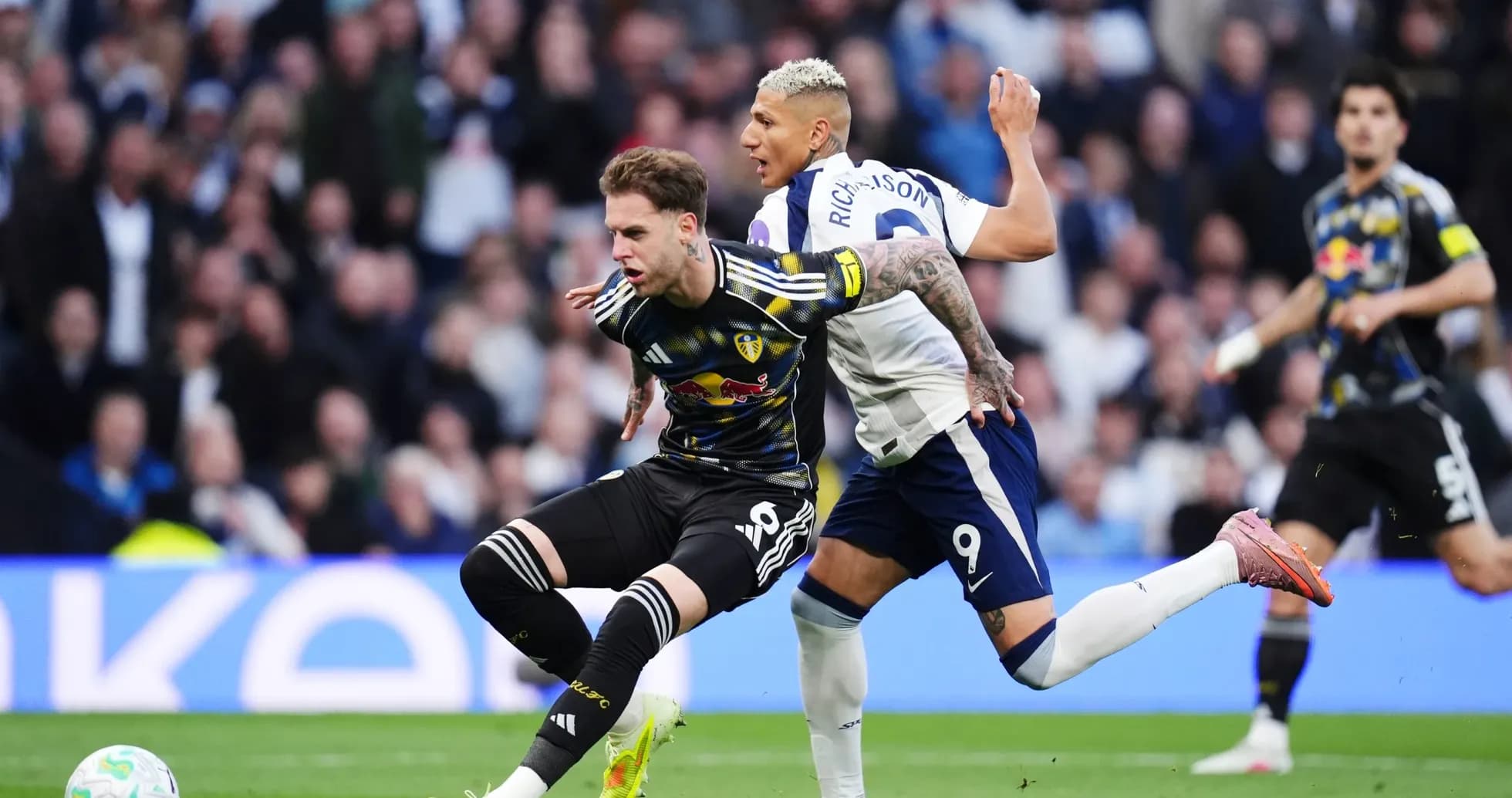
Under the London lights at Tottenham Hotspur Stadium, this was a meeting of two very different Premier League stories. Tottenham, 17th heading into this game with 38 points and a goal difference of -9 (46 scored, 55 conceded overall), were fighting to keep the relegation picture at arm’s length. Leeds arrived in 14th on 44 points, their own goal difference at -5 (48 for, 53 against overall), a side whose flaws have been balanced by resilience and a knack for staying in games.
The 1-1 draw in regular time fit the season-long profiles almost too neatly. Tottenham’s campaign has been defined by away competence and home fragility: on their travels they had 7 wins from 18, but at home just 2 wins in 18, with 21 goals for and 31 against. Leeds were the inverse travellers: solid at Elland Road, with 8 home wins and only 21 goals conceded there, but away from home just 2 wins in 18 and 32 goals shipped. A stalemate in north London was the statistical compromise between a side that cannot dominate at home and one that cannot impose itself away.
The tactical backdrop was shaped by absences. Roberto De Zerbi was stripped of almost an entire spine of alternative ideas: C. Romero, X. Simons, D. Kulusevski, M. Kudus, W. Odobert, D. Solanke, B. Davies and G. Vicario were all listed as Missing Fixture, most with knee, muscle or ankle issues. That forced continuity and a certain predictability: a 4-2-3-1 that Tottenham have leaned on all season, used 17 times in the league.
Daniel Farke had his own problems. Leeds were without J. Bogle, F. Buonanotte, I. Gruev, G. Gudmundsson and N. Okafor, thinning his options for rotation and late-game changes. Yet Leeds’ season-long flexibility has been one of their quiet strengths: they have deployed eight different formations, with 3-5-2 – the shape used here – already a familiar platform across 10 league matches.
Tottenham’s XI told a story of enforced evolution. A. Kinsky in goal underlined Vicario’s absence. In front of him, a back four of P. Porro, K. Danso, M. van de Ven and D. Udogie offered an aggressive, front-foot line. Van de Ven’s season has been defined by recovery pace and last-ditch interventions; his red card earlier in the campaign is a reminder of how thin the margin can be when you defend on the edge, but his 21 blocked shots in league play underline his value as a pure stopper.
Without Romero’s edge and leadership, De Zerbi leaned on structure. J. Palhinha and R. Bentancur formed the double pivot, tasked with both screening transitions and feeding a creative band of three: R. Kolo Muani drifting between the lines, C. Gallagher as the connective runner, and M. Tel as the wide threat attacking half-spaces. Ahead of them, Richarlison carried the burden of end product. Heading into this game he had 10 league goals and 4 assists in total, from 30 appearances, with 42 shots and 24 on target. He is not just a finisher but a disruptive forward: 294 total duels, 123 won, 30 fouls drawn and 21 committed. He gives Tottenham a focal point who can live in chaos as much as in structure.
Leeds’ 3-5-2 was built around two pillars. At the back, J. Rodon, J. Bijol and P. Struijk formed a trio designed to absorb Tottenham’s wide overloads and cope with Richarlison’s physicality. In midfield, the axis of E. Ampadu and A. Stach provided the platform for everything Leeds did without the ball. Ampadu’s numbers this season are those of a true enforcer-playmaker hybrid: 2943 minutes, 1628 passes at 85% accuracy, 78 tackles, 16 blocks and 50 interceptions. He is also a walking disciplinary risk: 9 yellow cards in the league and 46 fouls committed. That edge is part of Leeds’ identity; as a team they pick up yellow cards most heavily in the 61-75 minute window (23.33% of their cautions), often as they protect or chase a result.
Ahead of them, Leeds’ attacking threat was clearly defined. D. Calvert-Lewin led the line with B. Aaronson just off him. Calvert-Lewin, with 13 goals and 1 assist heading into this fixture, is Leeds’ top scorer and an archetypal “Hunter” in this contest. His profile is relentless: 444 total duels (174 won), 64 shots with 32 on target, and 37 fouls drawn. He has also missed a penalty this season, a reminder that even his ruthlessness has cracks. But within the box, few in this league attack space with the same conviction.
Aaronson, meanwhile, is Leeds’ creative compass. With 5 assists and 4 goals, plus 629 passes (32 key passes, 80% accuracy), he bridges midfield and attack. His 80 dribble attempts, 28 successful, show how often he is asked to carry Leeds up the pitch. He also works tirelessly against the ball – 50 tackles, 4 blocked shots, 15 interceptions – making him both creator and first presser.
The “Hunter vs Shield” duel here was Calvert-Lewin against a Tottenham defence that, heading into this game, had conceded 31 at home from 18 matches, an average of 1.7 goals against at home. That porous record framed every Leeds attack. Without Romero, the onus fell on Van de Ven and Danso to handle crosses and direct balls into the box, with Palhinha dropping in to form a situational back three. Calvert-Lewin’s aerial presence and second-ball threat were designed to test precisely the area where Tottenham have struggled: managing chaos in their own area.
The “Engine Room” confrontation was just as compelling. On one side, Ampadu as the Leeds metronome and destroyer; on the other, Palhinha and Bentancur trying to dictate tempo and protect Tottenham’s soft underbelly in transition. Ampadu’s appetite for contact, combined with Leeds’ card distribution peaking between 61-75 minutes, suggested that the middle third of the second half would be the game’s most combustible phase – exactly when tired legs and tactical tweaks collide.
From a disciplinary lens, Tottenham entered this fixture as one of the league’s more combustible sides. Their yellow cards are most concentrated in the 61-75 minute window too (25.26% of their cautions), with another spike in the 31-45 range (16.84%). Romero’s season – 10 yellows, 1 yellow-red and 1 straight red – encapsulated that volatility, even though he was missing here. Pedro Porro, also among the league’s leading card collectors with 9 yellows, started at right-back, a reminder that even without Romero, Tottenham’s defensive aggression can easily tip into risk.
Leeds, by contrast, have been more controlled but still prone to flashpoints. Their single red card this season came in the 46-60 minute range, underlining that early second halves can be dangerous for them when intensity spikes before rhythm returns.
Statistically, the draw mirrors the broader numbers. Overall, both teams had scored 1.3 goals per game heading into this match. Tottenham’s home attacking average of 1.2 goals for, set against Leeds’ away defensive average of 1.8 goals against, pointed to chances for the hosts – but their vulnerability at the back (1.7 goals against at home) was always going to offer Leeds a route back into the game. Leeds’ away attack, at 1.1 goals for per match, rarely explodes, but it is consistent enough to punish defensive lapses.
Following this result, the tactical verdict is of two sides whose structural flaws and individual qualities effectively cancelled each other out. Tottenham’s reliance on Richarlison as a lone spearhead, supported by the energy of Gallagher and the movement of Kolo Muani and Tel, produced moments but not dominance. Leeds’ back three, shielded by Ampadu and Stach, bent without breaking often enough.
At the other end, Calvert-Lewin and Aaronson posed the precise questions Tottenham least enjoy answering – direct balls, second phases, runners from midfield – yet De Zerbi’s makeshift back line, anchored by Van de Ven, survived enough of those storms to keep the game level.
In xG terms, this felt like a contest where both sides would have hovered around parity, each creating a handful of medium-quality chances rather than a barrage of clear ones. Tottenham’s defensive record at home and Leeds’ attacking profile away suggest neither side is built to run away with such a fixture; instead, they are constructed to trade blows and live with the consequences.
The 1-1 at Tottenham Hotspur Stadium therefore reads less like an isolated scoreline and more like a distilled version of their seasons: Tottenham, nervy and uneven at home but always capable of a punch; Leeds, flawed travellers but stubborn, organised and buoyed by a centre-forward in Calvert-Lewin who ensures that, almost regardless of venue, they are never entirely out of the hunt.
Related News

Premier League Managers Facing Potential Sackings During International Break

Arsenal's Myles Lewis-Skelly Names Unexpected Tottenham Rival as Toughest Premier League Opponent

Three Premier League Players Shining Early This Season

Premier League Early Season Reactions: Man City’s Strength, Arsenal’s Flaws, United’s Struggles

Premier League Returns October 10 After Extended September-October International Break

Fulham and Manchester United Share Points in 1-1 Draw