
USA Dominates Paraguay in 4-1 Victory at SoFi Stadium
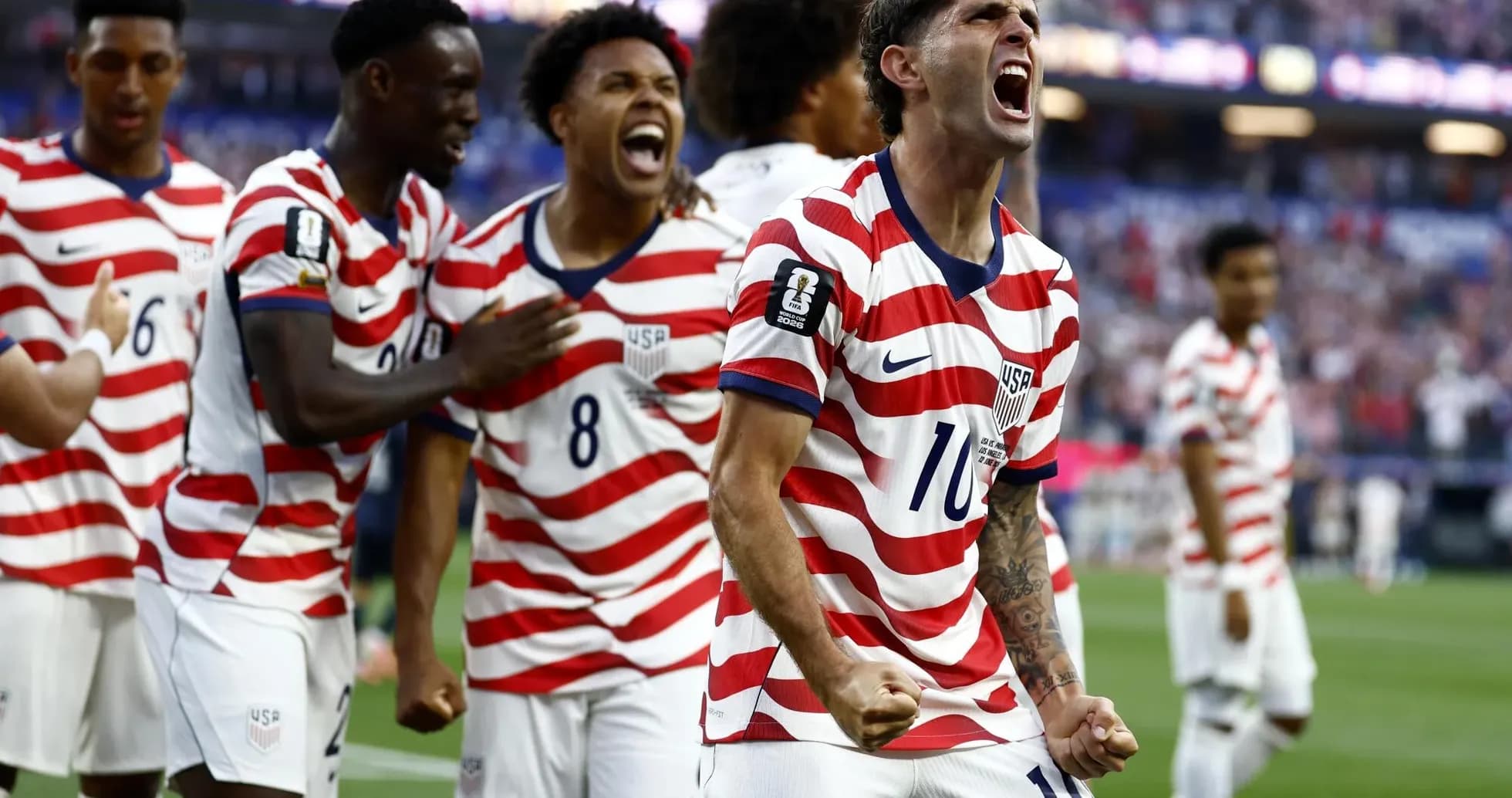
USA’s 4-1 win over Paraguay at SoFi Stadium was built on a clear structural superiority and a well-drilled game plan rather than just moments of individual brilliance. Mauricio Pochettino’s side translated a 65% share of possession and a 596–320 passing advantage into sustained territorial control, while Paraguay’s 4-4-2 under Gustavo Alfaro never consistently solved the USA’s press or the overloads between the lines. The 3-0 half-time scoreline reflected not only attacking sharpness but also a repeated exploitation of Paraguay’s defensive spacing.
Formation and Strategy
USA lined up in a 4-2-3-1 that behaved like a 2-3-5 in settled possession. Full-backs Alexander Freeman and Antonee Robinson pushed high and wide, with Tyler Adams and Malik Tillman forming the central platform in front of Chris Richards and Tim Ream. This structure allowed USA to pin Paraguay’s 4-4-2 block deep, stretch the back four horizontally and open inside channels for Weston McKennie and Christian Pulišić to receive between the lines.
The early own goal at 7' from Damián Bobadilla, under pressure inside his own box, was a direct product of that territorial squeeze: USA had already established a high starting position, forcing Paraguay to defend facing their own goal. From there, the pattern was set. With 13 of USA’s 16 shots coming from inside the box, the hosts repeatedly accessed central areas behind Paraguay’s midfield line. Pochettino’s use of Pulišić drifting infield from the left and Sergiño Dest stepping into the right half-space gave Folarin Balogun two close playmakers to combine with, effectively overloading the central defenders.
Paraguay’s 4-4-2 was reactive and often flat. Antonio Sanabria and Julio Enciso were asked to screen Adams and Tillman, but USA’s back line simply circulated around them, dragging the first line of pressure out and then punching passes into McKennie or Pulišić. When Paraguay tried to step up, the distances between their back four and midfield line grew, which is where Balogun’s movement was decisive. His disallowed goal at 28' showed the basic pattern: runs on the blind side of centre-backs, fed by vertical passes once USA had fixed Paraguay’s midfield.
Goals
The two Balogun goals that did count encapsulated the tactical plan. At 31', he finished after a combination with Pulišić, who had again drifted into the left half-space to receive and turn, taking advantage of Paraguay’s narrow midfield band. At 45+5', Balogun struck again from a Malik Tillman assist, with Tillman surging from deeper midfield into the pocket between Paraguay’s lines. In both cases, USA’s occupation of the five attacking lanes – both touchlines, both half-spaces and the central channel – stretched Paraguay’s back four to breaking point.
Defensive Strategy
Out of possession, USA were compact and disciplined in their mid-to-high press. With only 1 save required from Matthew Freese (USA), the defensive structure limited Paraguay to a single shot on goal and just 4 attempts inside the box. Adams anchored central protection, stepping out aggressively when Paraguay tried to progress through Diego Gómez or Andrés Cubas. When USA needed to break Paraguay’s rhythm, they did so with controlled fouling: 13 fouls to Paraguay’s 17, and only one yellow card, for Tyler Adams on 59' for “Roughing”, underlining that their aggression rarely tipped into recklessness.
Paraguay's Response
Paraguay’s main attacking hope lay in transition through Miguel Almirón and Enciso, but the structure did not support them. With full-backs pinned back by USA’s wingers and double pivot, Paraguay’s counterattacks often became isolated sprints rather than collective breaks. Their 9 total shots included 5 from outside the box, evidence of being forced into lower-quality attempts by USA’s compactness around the area. The 0.51 xG tally aligned with that picture: few touches in genuinely dangerous zones.
Gustavo Alfaro’s adjustments were largely reactive. Mauricio (IN) came on for Damián Bobadilla (OUT) at 46' to add more attacking thrust from midfield, and that did produce Paraguay’s best moment: Mauricio’s 73' goal from a Julio Enciso assist, a rare instance where USA’s rest defence was slow to close the top of the box. Later changes – Alex Arce for Sanabria, Ramón Sosa for Almirón, Gustavo Velázquez for Juan Cáceres, and Kaku for Diego Gómez – were attempts to refresh legs and add direct running, but they did not fundamentally alter the flow. Paraguay’s 5 yellow cards, all for specific infractions (Tripping, Diving, Holding, Roughing, Holding), reflected a team increasingly stretched and resorting to last-ditch interventions.
In-Game Management
Pochettino’s in-game management was more about energy conservation and structural continuity than tactical overhaul. Sebastian Berhalter (IN) for Pulišić (OUT) at 46' slightly rebalanced the midfield, with Berhalter helping Adams protect central spaces. Later, Tim Weah (IN) for Dest (OUT) and Ricardo Pepi (IN) for Balogun (OUT) at 72' maintained vertical threat in behind as Paraguay pushed more bodies forward. Giovanni Reyna (IN) for Tillman (OUT) at 82' added fresh creativity between the lines and culminated in Reyna’s 90+8' goal from Freeman’s assist – again a pattern of a full-back advanced high, feeding an attacking midfielder arriving in the box.
Statistical Profile
The statistical profile underlines how coherent USA’s performance was. Their 1.27 xG turned into 4 goals, a degree of overperformance aided by Paraguay’s defensive errors and negative goals prevented figure. With 6 shots on goal from 16 total, and 13 efforts inside the box, USA consistently generated high-quality looks. Paraguay, by contrast, married 35% possession with only 1 shot on goal and 4 inside the box, confirming that their 4-4-2 rarely broke USA’s compact block.
In passing terms, USA’s 596 passes, 508 accurate at 85%, speak to a side comfortable circulating the ball to move the block rather than forcing play. Paraguay’s 320 passes at 72% accuracy underline how often they were hurried into lower-quality distribution. The 3-0 half-time scoreline and eventual 4-1 result were therefore not simply about finishing; they were the logical output of a match where USA controlled structure, space and tempo from start to finish, and Paraguay’s adjustments never truly destabilized that control.
Related News

Mbappe Faces Questions Over Real Madrid Focus Amid World Cup Priorities
Saudi Arabia Suspends $2.5bn Neom Stadium Project Amid Economic Strains Ahead of 2034 World Cup
The Rose Bowl Southampton Pitch Analysis for ICC Women's T20 World Cup 2026
Inter's Josep Martinez Confident in Italy’s Potential to Bounce Back After World Cup Setbacks
Dean Huijsen Reflects on World Cup Snub After Spain’s 4-1 Win Over Croatia

Ivan Rakitic Reveals He Still Avoids Watching Croatia’s 2018 World Cup Final Loss to France