
VfL Wolfsburg's Dominance in 2. Bundesliga Spending
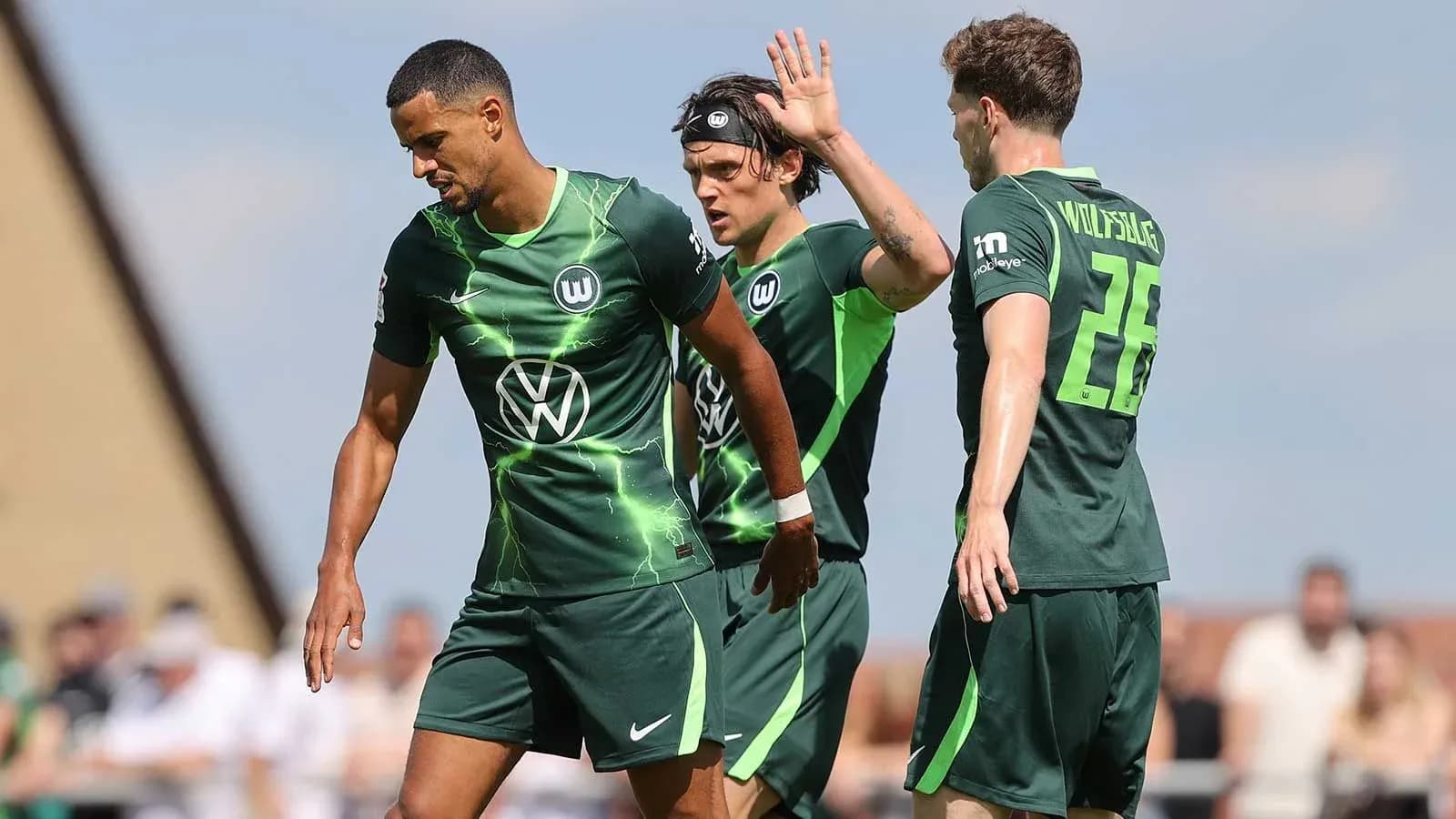
Relegation was supposed to shrink VfL Wolfsburg. Less TV money, tighter budgets, a reset in almost every department. Instead, the club has walked into the 2. Bundesliga and started behaving like a visiting heavyweight who has accidentally wandered into the wrong ring.
While most second-tier sides are counting every euro, Wolfsburg are throwing them around. So far this summer, the club have invested 22.7 million euros in new players. The rest of the league combined? Just under 19 million in disclosed fees. One club is outspending 17 rivals put together. That is not a gap. It is a chasm.
The question almost asks itself: is this still normal competition, or something else entirely?
Reese as the Symbol of a Power Imbalance
Nothing illustrates Wolfsburg’s special status more clearly than Fabian Reese.
Eight million euros for a player who was never supposed to leave. Eight million euros from a relegated club to a direct 2. Bundesliga rival. Eight million euros for the man Hertha BSC had turned into the face of their future.
Reese’s numbers speak for themselves: 91 competitive games for Hertha, 35 goals, 31 assists. One of the standout players in the league in recent years. Wolfsburg sporting director Pirmin Schwegler called him “one of the strongest players in the 2. Bundesliga” when he arrived. That assessment is not controversial.
The move was anything but straightforward for Reese. After signing, he spoke openly about how difficult the decision had been, pointing to the way Wolfsburg had pursued him, the professional environment, and “the values of the club, of Volkswagen and of the people around it” as decisive factors.
This is what makes the transfer cut so deep in Berlin. Reese was not just a good winger or a productive attacker. He had become a symbol. Hertha had used him to tell a story: of a new, more grounded club, closer to its city and its people after years of chaos.
Only last year, they staged his contract extension as a statement of intent. In November 2025, Reese signed early until 2030. Sporting director Benjamin Wieber underlined the message: Hertha absolutely wanted to tie him down long term; Reese identified “one hundred per cent” with the club. The campaign left little room for nuance. This was not just another deal. This was supposed to be a bond.
Reese himself called Hertha the club closest to his heart and spoke of big plans in Berlin. A contract to 2030 looked like a promise that would outlast the usual volatility of football.
Less than a year later, it is over. And not because a Champions League club came calling. A direct rival in the 2. Bundesliga paid eight million euros and took away the player Hertha had presented as their cornerstone.
For Hertha fans, this is more than losing a key performer. It is losing a figure of identification, someone whose personality, attachment to the city and public commitment had elevated him beyond the usual churn of transfers. Now he is wearing the colours of a club that, in many ways, stands for almost the opposite of what Hertha want to be.
On the pitch, Hertha lose one of their best. Off it, they lose a symbol. Wolfsburg gain both. And the price tag makes one thing brutally clear: when a relegated side can pay eight million euros for a second-division player from another major club in the same league, the financial conditions are no longer remotely comparable.
A Shopping Spree on a Different Scale
Reese is not an isolated case. He is part of a pattern.
Fraser Hornby has arrived from SV Darmstadt 98 for four million euros – once again, a key player taken from a direct rival. Muhammed Damar has joined from TSG Hoffenheim. Hauke Wahl has come in from another relegated Bundesliga club for 1.8 million euros.
Robert Glatzel cost “only” around 1.7 million euros, but his signing underlines another Wolfsburg advantage. They are not just paying fees that many second-division clubs cannot touch. They are offering wages that most of the league simply cannot match.
Glatzel brings more than 180 second-division appearances and a proven ability to hit double figures in this league. For many 2. Bundesliga sides, he would be the marquee signing of the summer. At Wolfsburg, he is one piece in a broad rebuild.
The pattern continues lower down the depth chart. Wolfsburg paid 700,000 euros to SC Freiburg for Swiss striker Alessio Besio, a 22-year-old who did not play a single professional game for Freiburg in three years and spent last season on loan in the third division with Verl. Timon Wellenreuther arrived from Feyenoord for around one million euros, only to be sidelined for weeks with a knee injury. Elvis Rexhbecaj joined on a free from FC Augsburg, but even that kind of deal would represent a completely different economic reality for many second-division clubs. Rexhbecaj has more than 150 Bundesliga games behind him.
This is not a scattergun youth project. Wolfsburg are targeting established professionals, players who have already proved they can perform either in the Bundesliga or at the sharp end of the 2. Bundesliga. It is a squad being built not to survive, but to dominate.
The scale becomes clearer when set against recent second-division benchmarks. Schalke 04, in the 2025/26 season, generated around 8.75 million euros from sales and spent only 3.4 million euros. Transfer surplus: 5.35 million euros. Their most expensive new signing, Christian Gomis, cost 1.5 million euros.
Reese alone has cost Wolfsburg more than twice Schalke’s entire transfer outlay that summer.
Hamburger SV, in their promotion season 2024/25, also operated on a far smaller scale despite lofty ambitions. They spent around nine million euros in total, with about three million coming in. Their priciest signing, Alexander Rossing-Lelesiit, cost roughly 2.8 million euros.
Hannover 96 offer another stark comparison. In 2025/26, they brought in 11 million euros and spent 4.33 million, ending with a surplus of around 6.68 million euros.
Against that backdrop, Wolfsburg’s current spending looks like something from another world.
Big Sales, Bigger Freedom
Yet this is not simply a case of a relegated club turning on the taps and flooding the market.
Wolfsburg have also sold well. Patrick Wimmer moved to TSG Hoffenheim for around ten million euros. Jakub Kamiński joined 1. FC Cologne for 5.5 million. Lovro Majer reportedly left for AEK Athens for six million. In total, the club have generated around 24 million euros in transfer income this summer.
On paper, they have even made a small surplus despite their aggressive recruitment.
That is the crucial nuance. Wolfsburg are not burning through money without restraint. They are financing their rebuild largely through their own sales. Their special status lies less in the balance of this particular window and more in the fact that they can immediately reinvest those millions into a squad designed for an instant return to the Bundesliga.
There is precedent. When VfB Stuttgart went down in 2019/20 and chased immediate promotion, they also invested heavily: around 25.4 million euros on new players. Silas alone cost eight million from Paris FC, Sasa Kalajdzic around six million from Admira Wacker.
Stuttgart were, in pure spending, operating on an even bigger scale than Wolfsburg are now. But there was one decisive difference: VfB sold players for a total of around 79.5 million euros that summer. Their window ended with a surplus of more than 54 million euros despite the outlay.
Wolfsburg’s story is different. This is not a one-off splurge. It is the continuation of a long-standing model.
Last season, while still in the Bundesliga, Wolfsburg generated around 37 million euros in sales and spent about 68 million on new arrivals. Transfer deficit: just under 31 million euros. Vinicius Souza alone cost around 15 million from Sheffield United. Mohamed Amoura, made permanent from Union Saint-Gilloise after a loan, came in at around 14.75 million.
For Wolfsburg, million-euro transfers are routine. What has changed is not the size of the numbers, but the environment in which they are being spent.
In the Bundesliga, Wolfsburg’s activity blended into a landscape dominated by Bayern Munich, Borussia Dortmund, Bayer Leverkusen, RB Leipzig and others who regularly move in double-digit millions. In the 2. Bundesliga, the same sums land very differently. Here, some clubs’ entire budgets are smaller than the fee Wolfsburg have just paid for Fabian Reese.
That shift in context is what makes this summer so explosive.
The Bayern of the Basement? Not Even Close
Look at the squad values and the imbalance becomes almost absurd.
Reese, Hornby, Glatzel, Wahl, Rexhbecaj, Wellenreuther – the names point to a clear strategy. Wolfsburg want their stay in the second tier to last exactly one season. If possible, less.
Key players such as Amoura have followed the club down. According to transfermarkt.de, Wolfsburg’s squad is valued at 194.15 million euros. That figure would place them ninth in the Bundesliga.
In the 2. Bundesliga, second place in squad value belongs to fellow relegated side FC St. Pauli at 45.93 million euros. That is roughly 4.5 times less than Wolfsburg.
To call Wolfsburg the “FC Bayern Munich of the lower house” almost undersells the situation. Bayern’s squad, at 1.07 billion euros, is not even worth twice as much as RB Leipzig’s (currently 604 million). Dortmund are still buying. The gap at the top of the Bundesliga is big, but it is not of the same order.
In the second division, Wolfsburg are operating on a level of financial strength that no one else can touch.
All this comes while main backer Volkswagen is wrestling with what has been described as an almost existential crisis, with up to 100,000 jobs potentially at risk. Yet for now, the club it supports can continue to spend like this.
That contrast will not be lost on anyone watching from the outside.
When the Ball Starts Rolling
Is this still fair competition, or already a distortion? The table will offer its own verdict.
If Wolfsburg’s spending power turns the promotion race into a procession, the debate will intensify. If they stumble despite this advantage, questions will shift from “Is this fair?” to “How is this possible?”
For the rest of the league, the reality is already clear. They are not just facing a relegated Bundesliga club. They are facing a club whose financial footprint belongs in the division above, and maybe even beyond that.
The transfer window has drawn the lines. Now the season will show whether anyone in the 2. Bundesliga can still stand in Wolfsburg’s way – or whether the league has just become the most expensive pit stop in German football.
Related News
Carlos Alcaraz Calls for Change After Laver Cup Court Conditions
Alexander Zverev Secures Laver Cup Victory for Team Europe with Straight-Set Win Over Learner Tien
Novak Djokovic Shares Fitness Update Before China Open Return After US Open Upset

Shubman Gill's Captaincy Record Across All Formats: Tests, ODIs, T20Is, and IPL
Kuldeep Yadav Named Player of the Match Over Virat Kohli Despite Century in IND vs WI 1st ODI

India Advances to Asian Games 2026 Cricket Semi-Finals After Rain Washout Against Afghanistan