
AS Roma vs Fiorentina: Tactical Analysis and Match Insights
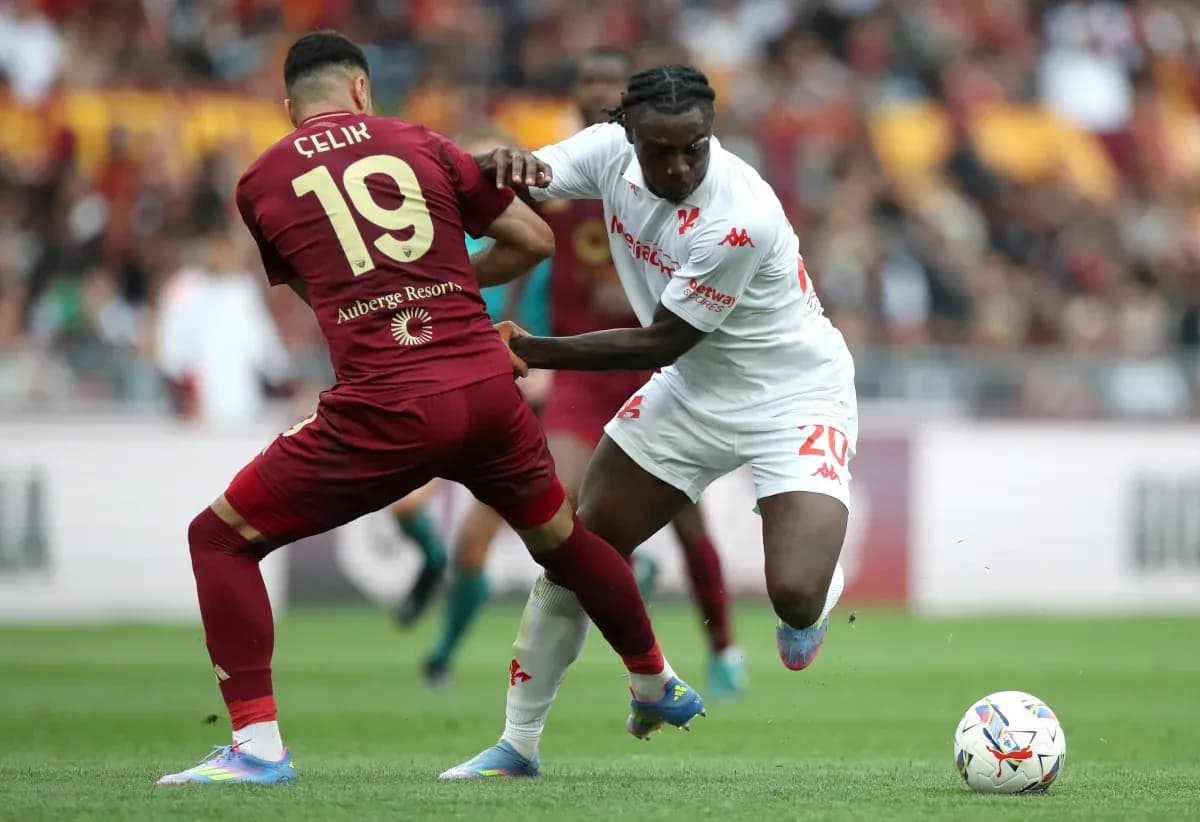
Under the lights of the Stadio Olimpico, this was billed as a clash of trajectories as much as a match: fifth‑placed AS Roma, chasing Europa League security, against a Fiorentina side hovering in 16th and still glancing nervously over their shoulder. Following this result, the table tells a clear story. Roma, with 64 points and a goal difference of 23 (52 scored, 29 conceded overall), look every inch a side moulded in their coach’s image. Fiorentina, on 37 points with a goal difference of -11 (38 for, 49 against overall), remain a puzzle that Paolo Vanoli has not yet solved.
Roma’s seasonal DNA is rooted in defensive control and structured aggression. Across the campaign they have played 35 matches, winning 20, drawing 4 and losing 11. At home they have been imposing: 18 games, 12 wins, 3 draws, 3 defeats, with 31 goals scored and only 10 conceded. An average of 1.7 goals for and 0.6 against at home underpins the authority they showed in this 4‑0 dismantling, a scoreline that also matches their biggest home win of the season.
Fiorentina’s profile is the mirror image: 35 games, just 8 wins, 13 draws, 14 losses overall. On their travels they have played 18 times, winning 4, drawing 6 and losing 8, with 18 goals for and 29 against. An away average of 1.0 goal scored and 1.6 conceded framed the risk of arriving in Rome with a back four that has too often been exposed.
I. The Big Picture: Shapes and Intentions
Roma lined up in their familiar 3‑4‑2‑1, a system they have used in 27 league matches this season. M. Svilar sat behind a back three of G. Mancini, E. Ndicka and M. Hermoso, with Z. Celik and Wesley Franca as wing‑backs and a central duo of N. Pisilli and M. Kone. Ahead of them, M. Soule and B. Cristante operated as dual “tens” behind lone striker D. Malen.
Fiorentina responded with a 4‑3‑3, one of their most-used structures this season (12 matches). D. de Gea anchored a back line of Dodo, M. Pongracic, L. Ranieri and R. Gosens. The midfield trio of M. Brescianini, N. Fagioli and C. Ndour sought to knit play, while J. Harrison, A. Gudmundsson and M. Solomon formed a fluid front three.
From the first whistle, Roma’s back three plus double pivot gave them a five‑man platform to build, while the wing‑backs pushed Fiorentina’s full‑backs deep. The 3‑4‑2‑1 morphed into a 3‑2‑5 in possession, with Soule and Cristante taking up half‑spaces that Fiorentina’s 4‑3‑3 struggled to track.
II. Tactical Voids: Absences and Discipline
Both benches were shaped by notable absences. Roma were without A. Dovbyk (groin), N. El Aynaoui (suspension for yellow cards), E. Ferguson (ankle), L. Pellegrini (thigh) and B. Zaragoza (knee). The absence of Pellegrini in particular removed a natural playmaker between the lines, forcing Piero Gasperini Gian to lean even more heavily on Soule’s creativity and Cristante’s timing.
Fiorentina’s attacking depth was blunted by injuries to L. Balbo, N. Fortini, M. Kean, T. Lamptey and R. Piccoli. Kean’s absence robbed them of their primary penalty‑box reference and top league scorer, forcing Gudmundsson to lead more of the line and reducing their threat on quick transitions.
Disciplinary trends framed the risk profiles. Heading into this game, Roma’s yellow cards were spread but peaked between 46‑60, 61‑75 and 76‑90 minutes, each window accounting for 23.08% of their bookings – a sign of a side that defends aggressively as fatigue sets in. Their reds were concentrated between 46‑60 and 61‑75 minutes (one in each range, 50.00% apiece), underlining a danger zone after half‑time.
Fiorentina’s yellow‑card curve was even more telling: 25.00% of their bookings arrived between 76‑90 minutes, with a further 15.00% between 91‑105. Crucially, 100.00% of their red cards this season came in the 76‑90 window. In a match where they were chasing shadows early, that late‑game volatility was always likely to be punished by a Roma side comfortable managing leads.
III. Key Matchups
Hunter vs Shield
D. Malen entered this fixture as Roma’s cutting edge in Serie A: 11 goals and 2 assists in 15 appearances, from 40 shots (24 on target). His movement across the front line was calibrated to attack the spaces around Fiorentina’s centre‑backs, particularly the channel between Pongracic and Ranieri.
Pongracic, for his part, is a pure shield: 29 tackles, 23 blocked shots and 34 interceptions this season, with 11 yellow cards reflecting his readiness to step into duels. His passing accuracy of 91% shows composure, but the volume of fouls committed (66) hints at a defender often left to extinguish fires alone. Against Roma’s 3‑4‑2‑1, he was repeatedly dragged into wide zones, where Malen’s acceleration and Soule’s underlaps stretched him beyond his comfort.
Engine Room
In midfield, the game hinged on whether Fiorentina’s trio could disrupt Roma’s structured platform. N. Fagioli and M. Brescianini tried to set the tempo, but Roma’s central pair of Pisilli and Kone, shielded by the aggressive stepping of Mancini from the back line, consistently won second balls.
Soule, Roma’s top assister with 5 assists and 6 goals, was the creative metronome. His 918 passes at 83% accuracy, plus 43 key passes and 89 dribble attempts (32 successful), illustrate a player who thrives in tight spaces. Operating between Fiorentina’s lines, he pulled C. Ndour and Fagioli out of shape, opening corridors for Cristante’s late runs and Malen’s diagonal darts.
On Fiorentina’s side, A. Gudmundsson carried the dual burden of creator and scorer. With 5 goals, 4 assists and 31 key passes, he is their most rounded forward, but his disciplinary record – 3 yellows and 1 red – mirrors the team’s emotional edge. Here, isolated against a back three that could always spare a cover defender, his touches were too often far from goal.
Defensive Anchors
For Roma, Mancini’s season profile explains much of their solidity. Across 33 appearances he has 50 tackles, 13 successful blocks and 44 interceptions, while also contributing 2 goals and 2 assists. He embodies Roma’s balance: aggressive front‑foot defending married to clean distribution (86% pass accuracy). Alongside Ndicka and Hermoso, he suffocated Fiorentina’s attempts to play through the middle, forcing hopeful crosses that Svilar handled comfortably.
On the flanks, Z. Celik’s presence added bite. With 57 tackles and 6 blocked shots this season, plus a red card in his record, he plays on the edge. Yet in this structure, his timing of when to press Dodo and Harrison high was crucial in pinning Fiorentina back and preventing them from building via the right.
For Fiorentina, Ranieri’s numbers – 34 tackles, 10 blocks, 21 interceptions – mark him as a reliable stopper, but the collective structure left both centre‑backs exposed. Gosens’ natural instinct to advance, combined with Roma’s wing‑backs pushing high, repeatedly forced Ranieri into wide duels he could not consistently win.
IV. Statistical Prognosis: xG Shadows and Defensive Solidity
Even without explicit xG figures, the season data sketches the expected balance of chances. Heading into this game, Roma’s overall scoring average of 1.5 goals per match, combined with Fiorentina’s overall concession rate of 1.4 and a particularly fragile away record (1.6 conceded on their travels), pointed toward a high‑probability multi‑goal output for the hosts.
Defensively, Roma’s overall average of 0.8 goals against – and just 0.6 at home – suggested that Fiorentina, who average only 1.0 goal scored away, would struggle to generate clear chances, especially without Kean as a central reference. Roma’s 16 clean sheets overall (10 at home) further underlined their capacity to shut games down once in front.
Overlay that with the disciplinary curves, and the pattern becomes sharper. A Fiorentina side prone to late yellow cards (25.00% in the 76‑90 window) and all of their reds in that same period were always vulnerable to Roma’s habit of maintaining intensity deep into matches, even as their own bookings spike after the interval.
The 4‑0 scoreline ultimately felt less like a surprise and more like the logical conclusion of these intersecting trends: a tactically coherent Roma, structurally secure and ruthlessly efficient, against a Fiorentina still searching for balance, stretched beyond breaking point by the hosts’ 3‑4‑2‑1 machine.
Related News

David Alaba Poised for Surprising Move to Udinese in Serie A
Milan Dominates Lecce: Tactical Analysis of a 3-0 Victory
Juventus Defeats Atalanta 2-0: Tactical Insights and Key Matchups
Frosinone's Tactical Mastery Shines in 2–0 Victory Over Como
Fiorentina and Napoli Share Points in Serie A Clash
AS Roma vs Inter: Tactical Insights from Serie A Clash