
Declan Rice: England's Dependable Midfield Machine

Aaron Cresswell calls Declan Rice “a freak of nature”. It sounds like a throwaway line from a former teammate, the kind of dressing-room compliment that gets recycled in interviews. It isn’t. Not when you look at the numbers.
Since the start of the 2020-21 season, Rice has played 360 games for club and country. West Ham, England, Arsenal. Europa League, Conference League, Champions League, deep tournament runs, title races, endless international windows. The meter has barely stopped ticking.
“He can play six or seven games a week,” Cresswell once said. For a long time, it felt like Rice was trying to prove him right.
A machine starting to creak
On Wednesday in Yokohama, the machine finally looked human. England’s 4-2 win over Croatia was wild, chaotic and, for Rice, deeply uncomfortable.
This was his 63rd appearance of the 2025-26 season. It showed. The legs still moved, the shirt still clung to that familiar broad frame, but the usual clarity in his game was missing. England’s midfield shape sagged. Too much space opened up between Rice and Elliot Anderson. Luka Modric, still scheming at 40, kept dragging Rice out of position, luring him deeper and deeper, away from the areas where he normally exerts control.
Thomas Tuchel’s side survived, but not because their midfield functioned. England led 3-2 when the moment came that nobody expected: the board went up in the 72nd minute and Rice’s number was on it.
In that scenario, Rice almost never leaves the pitch. Protect a lead? See out a game? He is usually the one England cling to. This time he trudged off, feeling discomfort in his lower back and upper hamstring, and the alarm bells started to ring.
Tuchel called the change “precautionary”. Rice insisted he will be ready for Ghana on Tuesday. England will cling to that too. Yet the image of their vice‑captain walking off with 18 minutes left, in a game that was still alive, cut through any bravado. It looked like a warning.
England’s dependence problem
The truth is brutal: England do not know themselves without Declan Rice.
They have rarely looked convincing in the past six years when he has been missing. Tuchel admitted Rice had “some unusual ball losses” against Croatia, a diplomatic way of saying his midfield anchor was nowhere near his usual level. Even then, the idea of taking him out of the team entirely feels like ripping out a structural beam.
There is no like-for-like replacement in this squad. Kobbie Mainoo is a joy on the ball, gliding through pressure and knitting attacks together, but he does not yet have Rice’s frame, his duels, his set-piece threat. Jordan Henderson remains an option, but at 36, and overlooked when England were chasing intensity against Croatia, he is no longer the automatic answer.
Tuchel tried the obvious reshuffle when Rice went off. Jude Bellingham dropped deeper. Within minutes, Croatia almost punished the experiment. England lost their grip in transition, the spaces grew, the back four looked exposed. Eight minutes later, Tuchel abandoned the idea.
Reece James, the unexpected 6
Djed Spence came on for Bellingham. Reece James stepped away from right-back and into a role that Chelsea fans now know well. The change steadied England. It also hinted at Tuchel’s emergency plan for life without Rice.
James is not a novelty in midfield. He played there on loan at Wigan in 2018-19 and, more significantly, he has been remodelled in that position at Chelsea under Enzo Maresca. What started as a bold tactical gamble has become a defining feature of Maresca’s tenure.
Initially, Tuchel himself was unconvinced. He coached James at Chelsea and, when he took the England job, made it clear he saw him as a right-back. But Maresca persisted. James moved inside. He learned the angles, the distances, the timing. The rewards came on the biggest stages.
James excelled in last year’s Club World Cup final, when Chelsea beat Paris Saint-Germain with him operating in midfield. He then partnered Moisés Caicedo in a 3-0 dismantling of Barcelona last November, dictating play and dominating Rice when Arsenal came to Stamford Bridge five days later.
Those performances changed perceptions. When Tuchel named his World Cup squad, he left out Adam Wharton and Alex Scott and pointed to James as cover in the 6 role. “Reece James can play in the 6 because he does on a high level for Chelsea,” he said then. It sounded like a theoretical option. Against Croatia, it became real.
James brings a defender’s aggression and a midfielder’s passing range. He reads danger, he tackles cleanly, he can hit diagonals and punch vertical passes through the lines. If Rice’s minutes must be rationed, James is the closest thing Tuchel has to a hybrid solution.
Versatility – and its limits
Tuchel has built this England squad around flexibility. If James moves into midfield, the right-back slot does not become a crisis point. Spence can play there. So can Ezri Konsa and Jarell Quansah. There is even scope for Konsa to tuck in as a third centre-back alongside John Stones and Marc Guéhi, turning the shape into something closer to a back three and freeing Nico O’Reilly to attack from left-back.
On the whiteboard, it all works. On the pitch, one concern keeps intruding: James’s body.
The Chelsea captain has a long, frustrating history with hamstring injuries. The latest layoff came in March and cost him almost two months of the season. Chelsea have had to manage his minutes with care. England will have to do the same.
That is where Tuchel’s puzzle becomes complicated. Tino Livramento’s calf injury removed one more option at right-back, forcing Trevoh Chalobah into the squad. James is first choice in that position, but he cannot start every game at full tilt. Asking him to shoulder a heavy midfield load on top of that, just as Rice begins to creak, feels like a gamble on a fragile limb.
This World Cup has already arrived at the end of a brutal campaign for so many of Tuchel’s players. The decision to fly early to Florida for a warm-weather camp was rooted in conditioning, in trying to squeeze a final peak out of tired legs. Rice joined late after Arsenal’s Champions League final. He barely paused for breath.
He always wants one more game. One more challenge. One more 90 minutes.
The bill coming due
If England go all the way in this tournament and Rice is not given a rest, he will finish the season on 70 appearances for club and country. Seventy. For a central midfielder who covers more grass than almost anyone else on the pitch.
The demands are extreme, even for a “freak of nature”.
Tuchel knows he cannot simply hope Rice’s body ignores the laws of fatigue. The Croatia scare – the off-colour performance, the unusual errors, the early exit – felt like a glimpse of what happens when the meter finally hits red.
England need Declan Rice. They also need a version of him that is not running on fumes. Somewhere between those two truths, Tuchel must find a way to keep his World Cup campaign standing upright.
Related News

Anthony Joshua Names Murat Gassiev as Next Opponent if He Defeats Tyson Fury

UFC 332: Start Time and Fight Highlights for Natalia Silva vs. Wang Cong

Court McGee Opens Up About Choosing UFC 332 as His Final MMA Fight
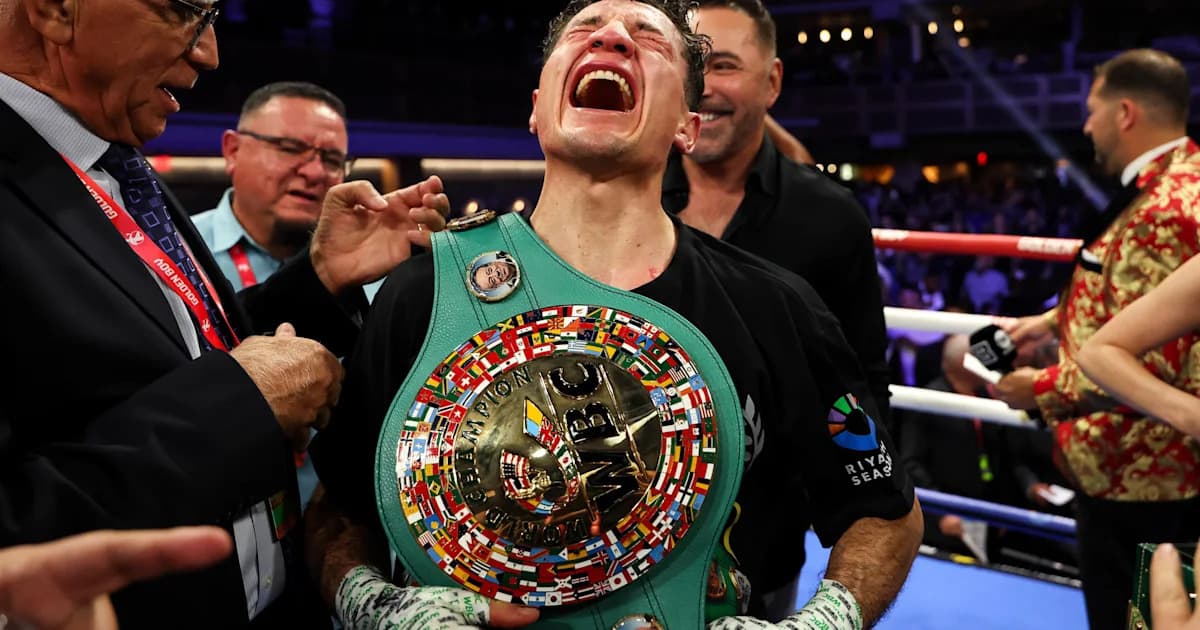
WBC Orders Lightweight Title Unification: William Zepeda vs Jadier Herrera

BCCI Pension List: Monthly Payments to Retired Indian Cricketers in 2025

Why Fury vs Joshua Is Set for Cardiff, and Dua Lipa’s Unexpected Role