
England's Defensive Concerns After Croatia Clash
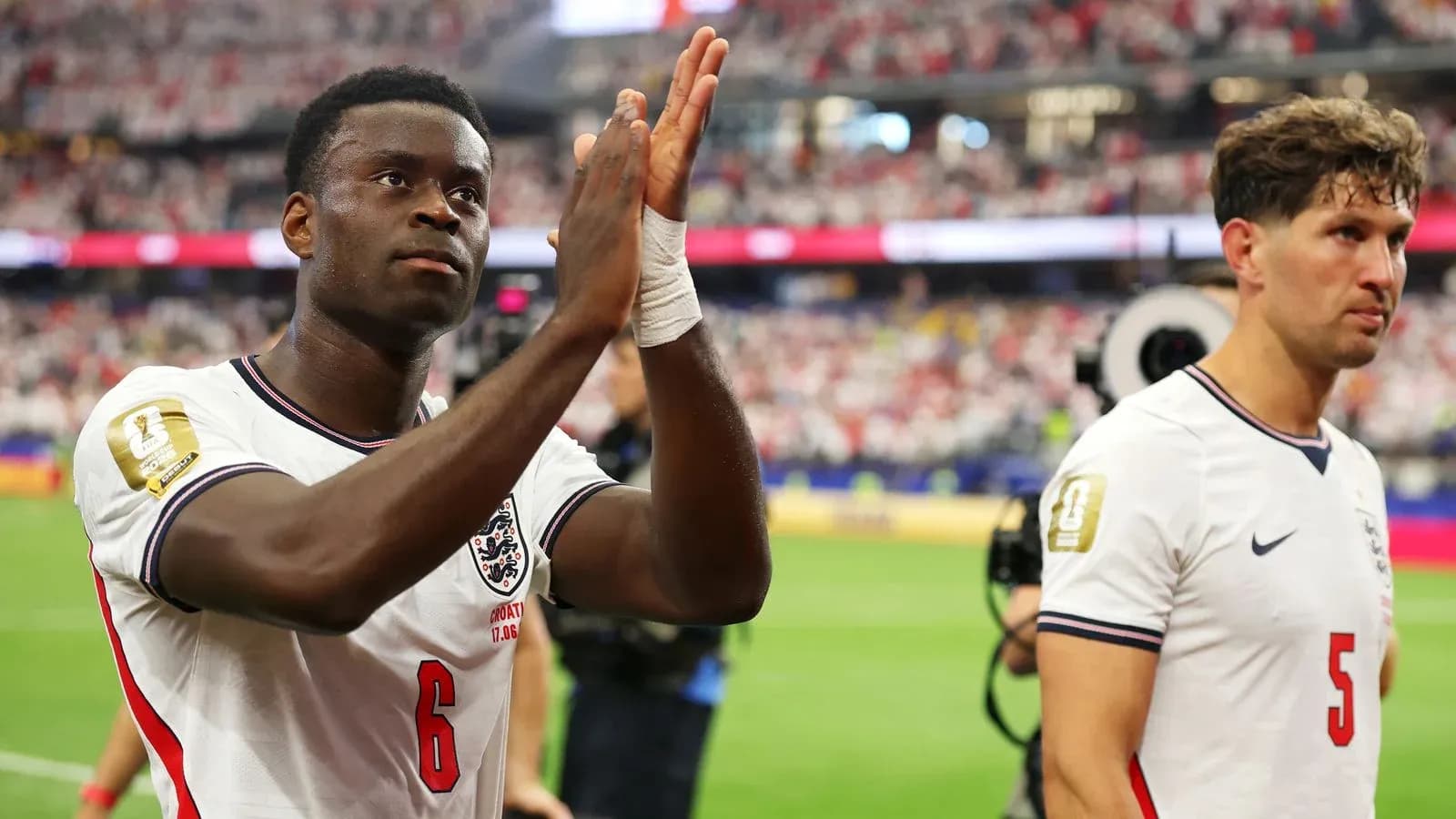
England’s front line lit up Dallas. The back line told a very different story.
Thomas Tuchel’s side ripped through Croatia in a thrilling second half, but the questions that trailed out of the AT&T Stadium tunnel were not about Harry Kane or the wide forwards. They circled around the heart of England’s defence, and a partnership that already feels fragile.
A centre-back call under the spotlight
Ezri Konsa and John Stones were the surprise pairing on the teamsheet, the decision pushing Marc Guehi to the bench and raising eyebrows before a ball had been kicked. Ninety minutes later, the doubts had numbers – and images – attached to them.
Croatia’s first goal came after Stones went to ground too early, sold by movement he usually reads in his sleep. The second followed Konsa misjudging a simple chipped pass, opening the door for a side that had been clinging on.
Gary Neville didn’t sugar-coat it on ITV at half-time. “Is Konsa and Stones a partnership that can win us the World Cup?” he asked, before underlining the pressure now on the midfield screen. “[Declan] Rice and [Elliot] Anderson are going to have to be outstanding and protect our defence rather more than they have in that first half.”
The issues weren’t just in the box. England’s build-up from deep looked nervous. Croatia pressed high and hard, and both Stones and Konsa coughed up possession in areas where Tuchel demands precision.
By the end, the passing accuracy figures looked tidy. The rest of the defensive data did not.
Stones managed one tackle in 87 minutes – and missed it. One clearance. He won four of seven duels. Konsa’s numbers were starker: three of eight duels won, one of five in the air, no tackles, no interceptions. For a World Cup opener, for a side with ambitions of lifting the trophy, it was flimsy.
Jamie Carragher summed up the mood on Sky Sports News the following morning. “We probably lack something defensively to go all the way,” he said, dousing some of the optimism that had surged with that “full gas” attacking display after the break.
The Guehi question
The obvious solution sits on the bench. And he has just come off the best six months of his career.
Marc Guehi’s return to the XI for the next Group L game against Ghana would instantly change the dynamic. His Premier League numbers for Manchester City last season show a defender who relishes the combat as much as the passing angles.
Since arriving from Crystal Palace in January, the 25-year-old has climbed a level. He stepped into City’s back line as if he had been there for years, collected a second successive FA Cup winners’ medal in May and quietly became one of the division’s most complete centre-backs.
From his Premier League debut for City, Guehi ranked among the top performers for possession won in the defensive third (10th), interceptions (4th), forward passes (6th) and passes completed (5th). He defended aggressively, but he also fed the midfield with the kind of progressive passing Tuchel craves.
The knock-on effect was brutal for Stones. He simply couldn’t get back into Pep Guardiola’s side ahead of Guehi. Stones will leave City this summer at the end of his contract, and has been adamant he was fit and available during the run-in. Guardiola still chose Guehi. That reality now hangs over Tuchel’s selection. If City’s manager trusts Guehi over Stones, should England’s?
Stones’ recent club record hardly strengthens his case. He played just five times for City in 2026, starting only five Premier League games in the past year. City lost four of those.
Tuchel, though, values more than form. He pushed to take Stones to this World Cup, valuing his experience, leadership, defensive instincts and quality on the ball. The question is whether Tuchel erred not in picking Stones, but in where he put him.
The left-side problem
To accommodate Konsa on his preferred right side, Stones started on the left of the centre-back pairing against Croatia. Tuchel had tested that setup against Costa Rica in the final warm-up game. The warning signs were there.
At club level, Stones has lived on the right. Across the past three seasons he has played just 371 minutes at left centre-back for City, compared with 1,151 minutes on the right. These are not marginal differences. They are habits built over years.
Guehi, by contrast, has grown up on that left side, despite being right-footed. At Palace he operated on the left of a back three. At City he has shown he can switch sides when required, but his comfort zone is clear.
Like Stones, he can play either role. Unlike Stones, he has logged the bulk of his minutes where England now have a problem. “When you have been playing on one side for a long time and you switch to the other side it can throw you off a little bit,” Guehi told Sky Sports in December. He was talking from experience.
Reuniting Guehi with Stones, with the City man restored to his natural right side, feels the cleanest way to restore balance. It was the combination Tuchel chose for England’s first warm-up game against New Zealand and, for many, the expected pairing for this tournament.
But that tidy solution leaves one big casualty.
Konsa, James and the three-man temptation
What happens to Konsa?
Under Tuchel, only Jordan Pickford and Harry Kane have played more minutes for England. Konsa has been a constant. Guehi has actually started more games for England alongside Konsa than alongside Stones. To drop the Aston Villa defender after a single World Cup outing – one England still won – would be ruthless.
Tuchel has another route. He can keep all three.
Konsa has already shown he can operate at right-back in this system, doing so with Stones and Guehi in the middle against Wales in October. His profile suits what Tuchel wants from that role: physical, defensively secure, able to tuck in and form a back three in possession. That preference has already pushed out more attacking options such as Trent Alexander-Arnold.
The cost of that switch would be Reece James.
James impressed late on against Croatia, stepping into midfield and helping England control the tempo. He appears to be Tuchel’s first-choice right-back, with five starts in that position under this manager – more than anyone else.
But his body complicates the argument. James’ injury record is long and recent. Before starting against Costa Rica and Croatia, he had not started back-to-back games for Chelsea since March. There is a case for protecting him early in the tournament, especially with the schedule tightening and the heat unrelenting.
Does Tuchel bank on James again against Ghana, with qualification and top spot in Group L still on the line? Or does he roll the dice, slide Konsa out wide, and reconfigure his central defence now rather than wait for the final group game against a weaker Panama side?
Tuchel’s tightrope
This World Cup is already forcing Tuchel onto a narrow tactical tightrope. England’s attack looks capable of tearing through anyone. The Croatia game proved that. But the same 90 minutes exposed a defensive structure that feels one injury, one positional tweak, one misjudged selection away from creaking.
He has three centre-backs he trusts. One is in form and in rhythm at the highest club level. One is a long-term favourite whose club minutes have dried up. One has become a cornerstone of his England tenure and offers the versatility to shift wide.
Tuchel cannot play all his cards at once in every game. But he must find a combination that settles the back line without blunting the front.
Ghana will test that search. The decisions he makes now will not just shape the next group fixture. They will decide whether England’s defence can carry the weight of an attack built to win the World Cup.
Related News

Anthony Joshua Names Murat Gassiev as Next Opponent if He Defeats Tyson Fury

UFC 332: Start Time and Fight Highlights for Natalia Silva vs. Wang Cong
Court McGee Opens Up About Choosing UFC 332 as His Final MMA Fight
WBC Orders Lightweight Title Unification: William Zepeda vs Jadier Herrera
BCCI Pension List: Monthly Payments to Retired Indian Cricketers in 2025
Why Fury vs Joshua Is Set for Cardiff, and Dua Lipa’s Unexpected Role