
England's Thrilling 4-2 Victory Over Croatia: Defensive Concerns Persist
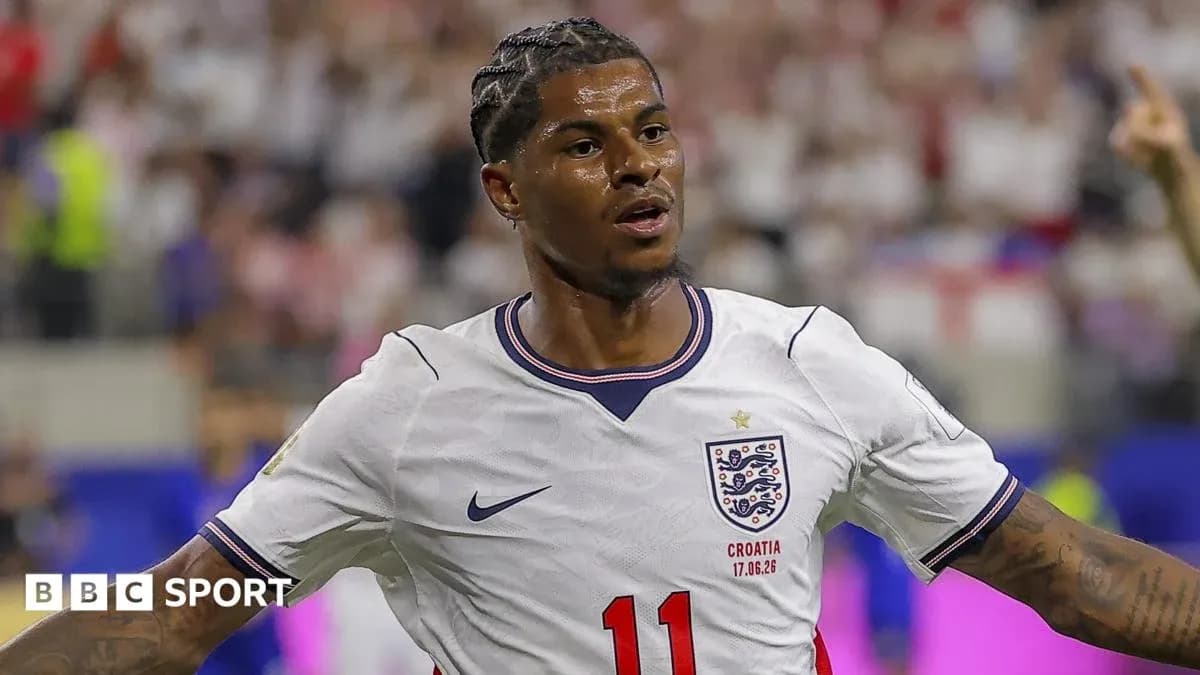
England 4-2 Croatia. On the scoreboard, emphatic. On the pitch, far less straightforward.
Thomas Tuchel’s side opened their World Cup campaign with a wild, entertaining win that showcased the depth and energy of his attack – and exposed the soft underbelly of a defence still searching for rhythm and authority.
Rooney’s warning shot
Wayne Rooney has seen enough tournament football to know a red flag when it’s waving in front of him, and his focus went straight to Croatia’s first goal.
“We could do so much better with the first goal,” he said, dissecting the move with the cold eye of a striker who’s spent a career punishing such lapses.
Jude Bellingham, usually the one forcing mistakes, was this time the one caught. “Jude is a bit flat-footed and the defender comes in and wins the ball,” Rooney noted. From there, the problems multiplied. John Stones, back at the heart of the defence, went to ground when he didn’t need to.
“I think John Stones can stay on his feet. There’s no real danger and Pickford is in a good position, but he doesn’t stay on his feet. He gambles and when he dives in and gambles it means Nico O’Reilly has to go across.”
The move unfolded with brutal simplicity: a neat set, a sharp cut-back, a clean finish. Croatia didn’t need a second invitation.
Could Jordan Pickford have done more? Rooney didn’t let the goalkeeper off easily. “Could Jordan Pickford do a bit better? I don’t know. He gets a full hand on it. I know it’s quick. It’s a good goal from a Croatia point of view but there’s things England can do better to prevent it.
“I’m always critical of goalkeepers. I think if Jordan is getting a hand on it like he does then he’ll be disappointed.”
England scored four. Yet the conversation among their former greats quickly turned to the two they let in.
“Played into Croatia’s hands”
Micah Richards, never shy in his assessments, saw a pattern in both Croatian goals – and he didn’t like it.
“If you look at the goals Croatia scored, both could have been avoided,” he said. For him, the issue wasn’t just individual errors, but the way England allowed Croatia’s strengths to surface.
“What England did was played into their hands and allowed them to get their technical players on the ball and do what they wanted to do.”
This, from a game England largely controlled in terms of running power and intensity.
“In terms of energy England were all over Croatia,” Richards pointed out. The problem came in where that energy started from. “If you get ten or fifteen yards further forward, you don’t even get into those situations.”
That small tactical detail – the starting position of the press, the bravery to squeeze higher – is where Richards believes England must sharpen up. Because the one thing Tuchel does have is options.
“Having the flexibility of the energy off the bench is going to be pivotal going forward.” It already was on the night.
Stones, Konsa and a looming decision
At the heart of it all sits Tuchel’s biggest early call: John Stones and Ezri Konsa as his central pairing.
On paper, it makes sense. On the grass, it looked anything but settled in that first half.
Stones, short of minutes at Manchester City last season, saw plenty of the ball here. He stepped out, he tried to build, he tried to take responsibility. That is what Tuchel wants from his centre-backs. It also brought risk, especially when possession turned over and England’s structure snapped out of shape.
Alongside him, Konsa – a regular under Tuchel – showed glimpses of his usual calm. There were measured passes, composed touches, moments where he looked every inch the modern international defender. Yet even he appeared short of rhythm in tandem with Stones, the partnership more improvised than instinctive.
The result was a back line that never fully convinced, even as England surged at the other end.
So the question hangs over the next game against Ghana: does Tuchel stick or twist? Does he back Stones and Konsa to grow into the tournament, or does he turn to Marc Guéhi to steady things? One match in, that decision already feels significant.
Gordon’s grounded debut
Amid the chaos, one story carried the glow of a childhood dream realised.
Anthony Gordon walked into his first World Cup game and walked out with a win, but his reaction said plenty about the culture Tuchel is trying to build.
“It has been a crazy couple of weeks and that just topped it off. First World Cup game, something I have dreamed about as a kid,” he told BBC Radio 5 Live. Then he quickly shifted the spotlight.
“Special, but it is not about me. Self-centredness is a disease and I don’t want to be a part of that.
“It is about the team. Rashy came on and made an impact, Bukayo and Morgan Rogers. It is a collective.”
His reading of the match echoed what everyone inside the stadium felt. “A difficult first half – their goal came from nowhere and stunned us a little bit. We came out really strong in the second half and got what we wanted. They were really good and that can’t be underestimated when you look at the game.”
The honesty stood out. England had been rocked. Then they responded.
Rashford changes the game – and his market
One of the game’s decisive shifts came from the bench.
Marcus Rashford, thrown on to tilt the contest, did exactly that. He scored, he stretched Croatia, he injected urgency into England’s attacking play. For a player with a clouded club future, it was the sort of World Cup cameo that agents replay on loop.
“Scoring a goal and making a pretty positive impact when he came on as substitute for England last night won’t have done Marcus Rashford any harm,” noted BBC Sport’s Simon Stone.
Off the pitch, his situation is complex. On 1 July, Rashford will revert to being a Manchester United player after Barcelona declined to trigger a £26m clause to buy the 28-year-old. United’s stance is clear: they want £40m, and they are not interested in another loan to Barcelona, which is what the La Liga club are pushing for.
His £325,000-a-week contract, with two years left, narrows the field of potential buyers. “Clearly, United can’t force Rashford to go anywhere he doesn’t want to – and his salary rules out all but a few clubs anyway,” Stone reported.
For now, the plan is simple. United expect him back after his mandatory three-week post-World Cup break, just in time for a training camp in the Republic of Ireland. Between now and then, every minute he plays in this tournament becomes part of the negotiation.
“There is a lot of time yet for Rashford’s club future to be resolved, but impacts like last night have to be viewed as a positive.”
For Rashford, for England, for Tuchel’s evolving blueprint, this 4-2 was a statement wrapped inside a warning. The attack looks dangerous. The bench looks deep. The mentality looks sharp.
The defence? Ghana will tell us how brave Tuchel is prepared to be.
Related News
Anthony Joshua Names Murat Gassiev as Next Opponent if He Defeats Tyson Fury
UFC 332: Start Time and Fight Highlights for Natalia Silva vs. Wang Cong
Court McGee Opens Up About Choosing UFC 332 as His Final MMA Fight
WBC Orders Lightweight Title Unification: William Zepeda vs Jadier Herrera
BCCI Pension List: Monthly Payments to Retired Indian Cricketers in 2025
Why Fury vs Joshua Is Set for Cardiff, and Dua Lipa’s Unexpected Role