
Iran to Lodge Fifa Complaint Over World Cup Travel Restrictions
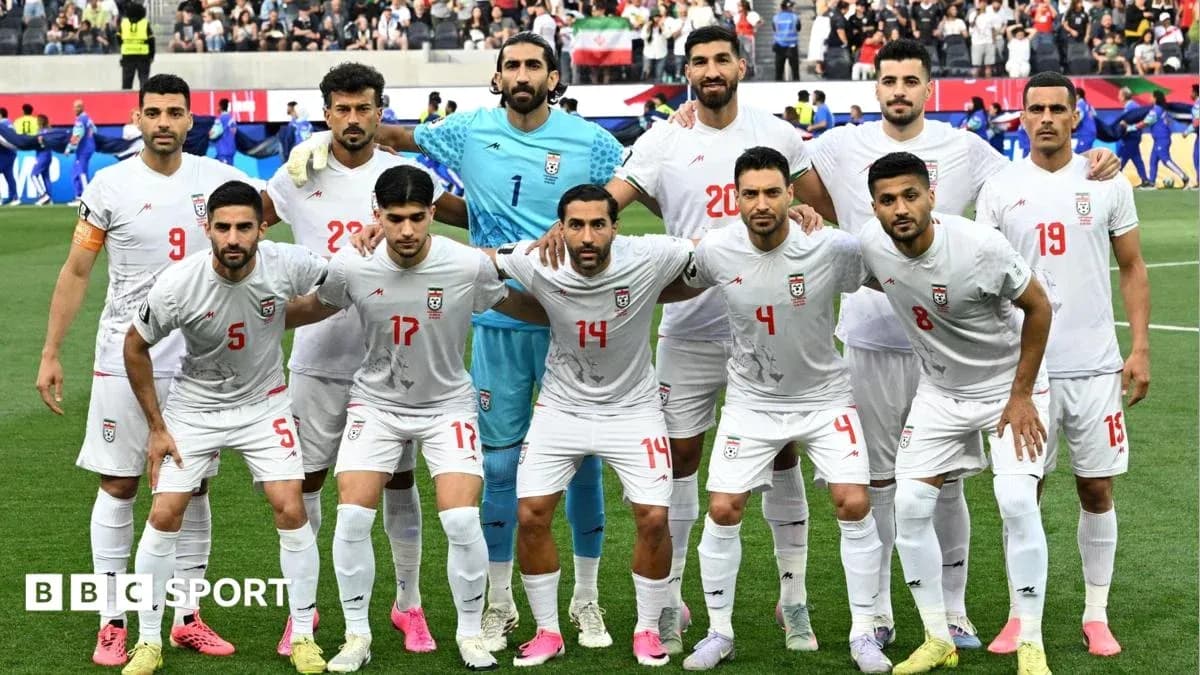
Iran’s World Cup campaign is being fought on two fronts: on the pitch, and at the border.
The Football Federation of Iran (FFIRI) has confirmed it will lodge an official complaint with Fifa over strict US travel restrictions that allow the national team to enter the country only the day before a match and oblige them to leave on the same day the game is played.
For a team with two group fixtures still to be played on American soil, it is a logistical straitjacket.
“Most oppressed” team – and now a formal complaint
The row burst into the open after Iran’s 2-2 draw with New Zealand in Los Angeles, their opening match of the 2026 World Cup. Head coach Amir Ghalenoei, frustrated by the conditions surrounding his squad, described Iran as the “most oppressed” team at the tournament.
Behind those words lies a hard set of rules. Under the terms of their US visas, Iran’s players and staff can only fly into the country one day before a game and must depart again on the night of the match. No extended stay. No extra days to acclimatise, train properly, or recover.
In a sharply worded statement, the FFIRI said the travel limits are “inconsistent with the principle of providing equal conditions for all participating teams and may negatively affect teams’ preparation processes”. The federation added it “will formally express its dissatisfaction and lodge an official complaint with Fifa through the appropriate channels”.
Visas denied, tickets revoked, base camp moved
Iran’s presence at this World Cup has been shadowed by geopolitics from the outset. The war in the Middle East and related security concerns have turned even routine tournament planning into a diplomatic puzzle.
Several “integral” members of Iran’s backroom staff were denied entry visas for the United States. On top of that, the FFIRI says its ticket allocation for matches was revoked on the eve of the tournament. The federation has publicly urged Fifa to “uphold the principles of neutrality, fairness, and established regulations”.
The complications forced a major strategic shift. Iran abandoned their original base in Arizona and relocated to Tijuana in Mexico, a move designed to keep the team close enough to US venues while navigating the political and security constraints.
Yet both of their remaining group games – against Belgium in Los Angeles on 21 June (20:00 BST) and Egypt in Seattle on 27 June (04:00 BST) – are in the US. Every match now comes with an extra layer of travel tension.
Iran’s request rejected – twice
From a football standpoint, Iran’s argument is simple. The team says it “needed to arrive in each host city two days before every match and return to its base camp the day after the game in order to achieve optimal technical and physical preparation”.
That request was turned down for the New Zealand fixture.
The FFIRI says the pattern has already repeated itself ahead of the second group match against Belgium. With kick-off set for 12:00 local time in Los Angeles, Iran asked to travel to the city two days in advance, giving players time to adapt, complete a final training session and finalise match preparations.
“Despite the technical reasons presented by the federation, the request was once again denied,” the statement read.
US response: “They agreed to these terms”
American officials insist nothing has changed from what was agreed in advance.
“The Iranian national football team agreed to these terms,” a Department of Homeland Security spokesperson told the BBC when asked about Ghalenoei’s comments.
Andrew Giuliani, executive director of the White House Fifa Task Force, outlined the policy in an interview with CBS News.
“The team will be allowed to come in, match day minus one, so the day before the match,” Giuliani said. “They’ll be asked to leave the day that the match wraps up, so the evening of the match. And they’ll be able to do that again in Los Angeles.”
The stance comes even as the presidents of the US and Iran have signed an initial peace deal aimed at ending the war in the Middle East, underlining how sensitive and tightly controlled the security framework around Iran’s matches remains.
Infantino steps into a tense dressing room
Fifa is already in the thick of it. After the New Zealand match in Los Angeles, Fifa president Gianni Infantino visited Iran’s dressing room, a highly visible intervention at a moment when tensions were rising.
The world governing body now faces a formal complaint from a federation that feels boxed in by conditions it argues are fundamentally unequal.
Iran still have two games to save their tournament. But with every flight in and out of the US governed by a stopwatch and a visa stamp, the question now stretches beyond tactics and team selection: how do you compete on level terms when even your time in the host country is rationed?
Related News

Anthony Joshua Names Murat Gassiev as Next Opponent if He Defeats Tyson Fury

UFC 332: Start Time and Fight Highlights for Natalia Silva vs. Wang Cong
Court McGee Opens Up About Choosing UFC 332 as His Final MMA Fight

WBC Orders Lightweight Title Unification: William Zepeda vs Jadier Herrera

BCCI Pension List: Monthly Payments to Retired Indian Cricketers in 2025

Why Fury vs Joshua Is Set for Cardiff, and Dua Lipa’s Unexpected Role