
Parma vs AS Roma: Serie A Clash for Survival and Ambition
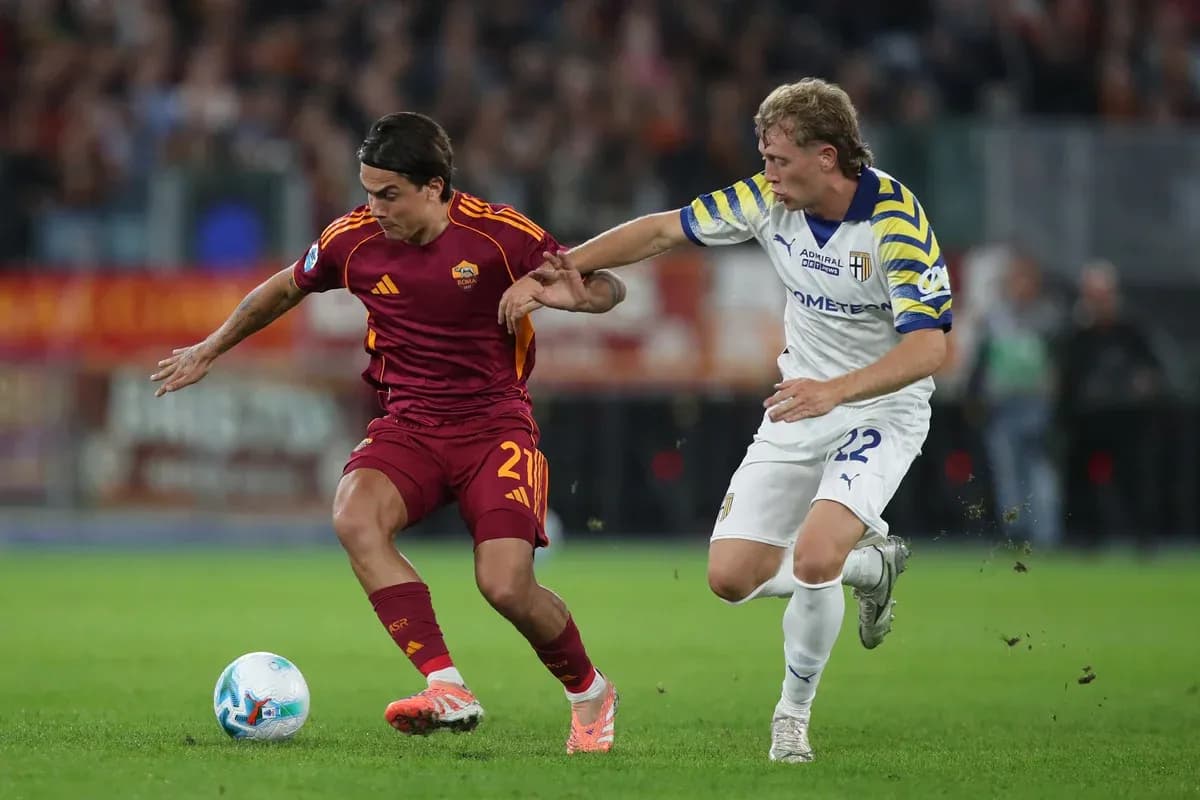
Stadio Ennio Tardini hosts a classic Serie A contrast on 10 May 2026: survival consolidation against European ambition. Parma, 12th with 42 points, are looking to lock in a calm finish, while 5th‑placed AS Roma arrive with 64 points and a clear target of securing Europa League football in the league phase.
With only three rounds left (Regular Season – 36), the stakes are asymmetrical. Parma are closer to mid‑table safety than danger but still short of total comfort; Roma, by contrast, are in a tight battle for continental spots and cannot afford many slips, especially away from home where their record is more volatile.
Form and momentum
In the league, Parma’s table line (10 wins, 12 draws, 13 defeats, goal difference -17) tells a story of stubborn resistance more than attacking flair. They have taken 42 points from 35 games despite scoring only 25 goals – just 0.7 per game across all phases. Their recent form line, “LWWDD”, hints at a mild upturn: only one defeat in five, with the ability to grind out results.
At the Stadio Ennio Tardini, though, the numbers are fragile. Parma have won 4, drawn 6 and lost 7 of their 17 home matches, scoring just 13 and conceding 22. They have failed to score in 7 of those 17 home outings, underlining how fine the margins are when they face high‑level opposition.
Roma arrive with a much more assertive profile. In the league they have 20 wins, 4 draws and 11 defeats from 35 games, scoring 52 and conceding 29 (goal difference +23). Their recent form “WWDWL” indicates three wins in the last four and suggests they are finishing the season strongly.
However, Roma’s away pattern is nuanced: 8 wins, 1 draw and 8 defeats from 17 away matches, with 21 goals scored and 19 conceded. They are capable of big away results – their best away win is 1-3 – but they can also be exposed, as shown by a heaviest away defeat of 5-2. Consistency on the road remains their main question mark.
Tactical trends and playing styles
Parma’s season‑long statistics point to a pragmatic, often reactive side. They have used a back three in most matches: the 3-5-2 formation is their primary system (16 uses), supported by variants such as 3-4-2-1 (4 times), 3-1-4-2 (3) and 3-4-1-2 (1). More expansive back‑four structures like 4-3-3 and 4-4-2 appear, but less frequently.
With only 25 goals scored and a “biggest win” of just 2-1 at home and 1-2 away, Parma rarely blow teams away. Their strength lies in organisation and defensive phases: 12 clean sheets across all phases (4 at home, 8 away) is impressive for a mid‑table side. But they have also failed to score in 15 of 35 games, so when they concede first, they often struggle to turn games around.
Roma, by contrast, are built around a three‑at‑the‑back attacking framework, overwhelmingly favouring 3-4-2-1 (27 matches). This shape allows them to push wing‑backs high, flood the half‑spaces with attacking midfielders and support a central striker. They also have used 3-4-1-2 (4 times) and 3-5-2 (3), indicating a stable tactical identity with minor tweaks rather than major changes.
Their attacking output – 52 goals at 1.5 per game – is underpinned by a solid defence (29 conceded, 0.8 per game). Clean sheets (16 in total, 10 at home and 6 away) show a team that can control matches once in front. Roma have failed to score in only 7 league fixtures, which contrasts sharply with Parma’s 15.
Discipline and intensity could also shape the match rhythm. Parma pick up a spread of yellow cards throughout games, with spikes between 46-60 and 76-90 minutes; their red cards cluster around the 31-45 and 61-75 ranges, suggesting occasional lapses under pressure. Roma’s yellows are heavily concentrated in the second half (46-90), reflecting an aggressive approach in the decisive phases, with two reds coming between 46-75 minutes.
Key players and attacking threats
For Roma, Donyell Malen is the headline figure. The Dutch attacker has 11 goals and 2 assists in just 15 Serie A appearances, with a strong rating of 7.32. He averages nearly a goal every 111 minutes, with 40 shots (24 on target), and is also a credible penalty taker, having scored 2 penalties without a miss. His blend of direct running (34 dribble attempts, 13 successful), movement in behind and finishing makes him Roma’s primary reference point in the final third.
Malen’s presence is especially significant given the injury doubts elsewhere in Roma’s attack. A. Dovbyk (groin injury) and E. Ferguson (ankle injury) are both listed as questionable, as are L. Pellegrini (thigh injury) and B. Zaragoza (knee injury). If any of these creative or finishing options are absent or below full fitness, Roma’s attacking variety could narrow, further elevating Malen’s importance.
Parma’s main outlet is Mateo Pellegrino. The Argentine forward has scored 8 of Parma’s 25 league goals – nearly a third of their total – and added 1 assist in 34 appearances. He works hard for the team: 495 duels with 213 won, 43 dribbles attempted (23 successful) and significant defensive contributions (15 tackles, 5 blocks, 3 interceptions). He has also scored 1 penalty without a miss.
Pellegrino’s physical presence (height 193 cm) and willingness to battle make him ideal for Parma’s direct transitions out of a back three. Against Roma’s back line, he will be crucial for holding the ball, winning fouls (63 drawn) and providing a focal point for counters.
Parma’s penalty record is clean this season (2 scored from 2), as is Roma’s (4 from 4), so any spot‑kick awarded is likely to be a high‑percentage chance for either side.
Team news and absences
Parma will be without M. Frigan, ruled out with a knee injury. That limits their attacking rotation options and places even more onus on Pellegrino to lead the line. B. Cremaschi (knee injury) and M. Mena (injury) are both questionable; their availability could influence Parma’s options in midfield or wide areas, particularly late in the game.
Roma’s list of questionable players is longer: A. Dovbyk, E. Ferguson, L. Pellegrini and B. Zaragoza are all doubts. If several of them miss out, Roma’s bench depth and ability to change the game from the sidelines could be reduced, though their core tactical structure should remain intact.
Head‑to‑head: recent history
The last five competitive meetings between these clubs in Serie A show Roma slightly ahead:
- 29 October 2025, Stadio Olimpico (Rome): AS Roma 2-1 Parma – Roma win.
- 16 February 2025, Stadio Ennio Tardini (Parma): Parma 0-1 AS Roma – Roma win.
- 22 December 2024, Stadio Olimpico (Roma): AS Roma 5-0 Parma – Roma win.
- 14 March 2021, Stadio Ennio Tardini (Parma): Parma 2-0 AS Roma – Parma win.
- 22 November 2020, Stadio Olimpico (Roma): AS Roma 3-0 Parma – Roma win.
Across these five Serie A fixtures, Roma have 4 wins, Parma have 1 win, and there have been 0 draws. Home advantage has not always been decisive: Parma’s sole victory came at the Tardini in 2021, but Roma have twice won away in Parma in the more recent 2025 and 2021 visits.
Tactical battle on the day
Given Parma’s low scoring rate and Roma’s structured 3-4-2-1, the game is likely to revolve around whether the hosts can disrupt Roma’s build‑up and exploit transitions. Parma’s back three will aim to stay compact, protect central zones and rely on Pellegrino’s hold‑up play and set‑pieces to create chances.
Roma, with their superior attacking numbers and Malen’s form, will look to pin Parma back, using wing‑backs high and attacking midfielders between the lines. If they score first, their record of clean sheets and defensive control suggests they are well equipped to manage the game, though Parma’s resilience and capacity to draw matches means they cannot be discounted.
The verdict
Data points to Roma as favourites. They are higher in the table (5th vs 12th), score more than twice as many goals per game as Parma (1.5 vs 0.7) and have a positive recent head‑to‑head record (4 wins from the last 5). Even away from home, their 8 wins in 17 away fixtures show they can travel effectively.
Parma’s hope lies in defensive organisation, home pride at the Tardini and a big performance from Mateo Pellegrino. If they can keep the game tight and drag Roma into a physical, stop‑start contest, a draw is within reach.
On balance, though, Roma’s superior firepower, the form of Donyell Malen and their clear European motivation suggest they are more likely to edge a controlled, low‑to‑medium scoring encounter.
Related News

David Alaba Poised for Surprising Move to Udinese in Serie A
Milan Dominates Lecce: Tactical Analysis of a 3-0 Victory

Juventus Defeats Atalanta 2-0: Tactical Insights and Key Matchups
Frosinone's Tactical Mastery Shines in 2–0 Victory Over Como
Fiorentina and Napoli Share Points in Serie A Clash
AS Roma vs Inter: Tactical Insights from Serie A Clash