
Behind the Scenes of World Cup Portraits
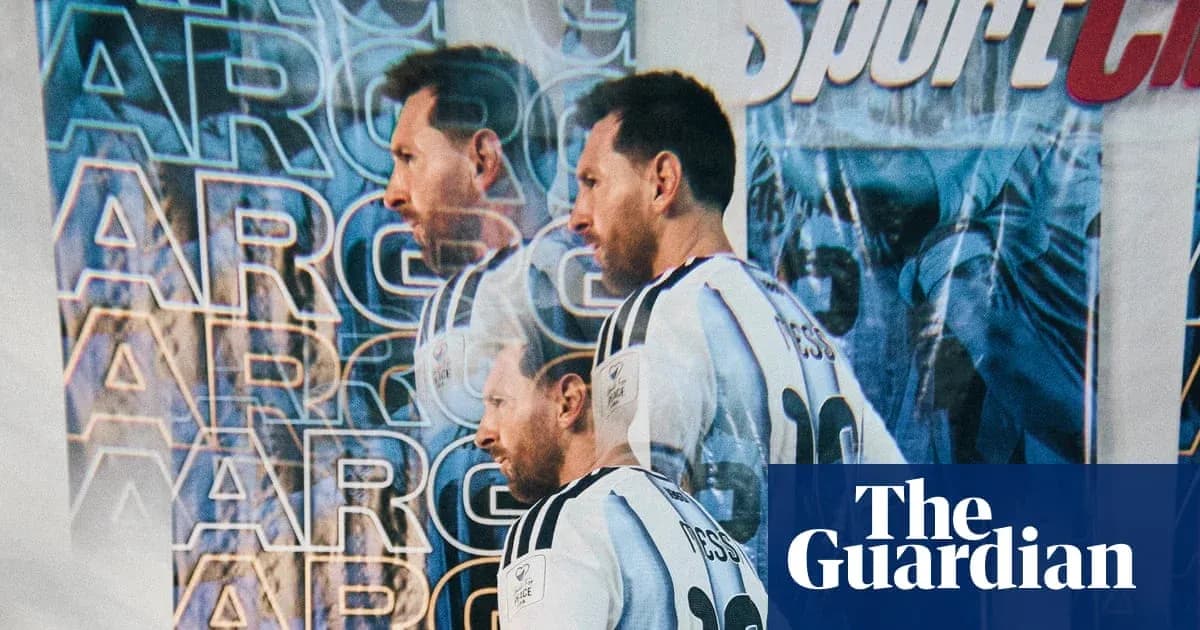
Lionel Messi does not dance for the camera. He stands bolt upright, eyes fixed, shoulders set, as if facing a free-kick wall rather than a photographer. A few booths away, Marc Cucurella lets his hair loose, flicks it, almost shimmies. Diego Moreira hides his eyes behind a forearm and flashes a chilling tattoo. Harry Kane drops on to one knee, caught between casual and uncomfortable.
Welcome to the World Cup’s quietest ritual: the official portrait production line.
There are 1,248 players and 48 managers at this tournament and not one of them gets a pass. No matter how shy, how superstitious, how uninterested in the circus, each is marched in front of a lens, handed a few minutes, and told – in effect – to show the world who they are.
A factory of faces
Getty Images, working on behalf of Fifa, has spent recent weeks turning training bases into makeshift studios. The results look simple enough: bold colours, sharp details, the occasional surreal blur. Behind them sits a tightly drilled operation.
Each team gets two photographers. Two sets, too. One plain, one more distinctive. While a player is being posed and prodded in one corner, the next is already being lined up on the opposite backdrop. In they come, out they go. Stars, squad players, managers. Repeat.
The lighting is stripped back to basics: a big studio strobe with a softbox punching light into the subject, rim lights at the back to carve out shoulders and jawlines. Nothing flashy on paper. On screen, it sings.
This time the backdrops are more muted than at the 2022 World Cup, less poster paint, more restraint. The drama comes from the glass in front of the camera. Special lens filters spin the light into unexpected streaks, smears and kaleidoscopic fragments – the reason Messi appears to float in a prism rather than stand in a studio.
These are not just mugshots. They are crafted, fast.
Minutes with superstars
Tom Jenkins, The Guardian’s veteran sports photographer, knows the drill as well as anyone. Photographing famous footballers is rarely relaxed. Turn it into a conveyor belt and the pressure tightens.
“With these kinds of shoots, you only get a few minutes with each player and you have to bash out various pictures and think incredibly quickly,” he says.
There is no time to fumble with a light stand or agonise over angles. You arrive with a plan. One safe, school-photo frame – the sort that used to define player portraits – and then something else. Something with a bit of life.
“You want some shots that are dead plain like a school photo – that’s how player portraits always used to be done – but these days you also want pictures that are more emotive and fun,” Jenkins says. “A lot of players will have their own poses and goal celebrations already but you’ve also got to have a list in mind.”
The power dynamic flips. In stadiums, these players are untouchable. In the studio, the photographer calls the shots.
“The interesting thing is that you’re in control of these superstars and every aspect of the shoot. There’s a lot of pressure that comes with that. You have to make sure you’ve set things up and tested everything before they arrive, so that when the shoot starts you can just focus on them.”
Messi gets a name card like everyone else. Every player does. The world’s most recognisable footballer is labelled as if he were a youth-team trialist, a small practical nod to the chaos of editing thousands of images at speed.
Once the shutter falls silent, many of the players drift over to the monitor. They are not just subjects; they are curators of their own brand.
Footballers as brands
“Most football players are very aware of their own image these days and they know how powerful it can be, especially through Instagram,” Jenkins explains.
This generation has grown up in front of cameras – not just on matchdays, but in campaigns for fashion houses and cosmetics giants. Eberechi Eze has posed for Burberry. Declan Rice has fronted L’Oréal. The leap from advert to World Cup portrait is not large. Some even relish it.
“They’ve done this kind of thing before for big brands – Eberechi Eze did Burberry and Declan Rice did L’Oreal – so actually they’re much more comfortable with being in front of the camera and some of them really enjoy it.”
Comfort does not always translate to acclaim. Once England’s portraits hit the internet, the players discovered that the court of public opinion remains merciless.
Rice was mocked for visible sunburn. Anthony Gordon was compared, relentlessly, to Princess Diana. Dean Henderson’s sharp side-eye unsettled more than a few viewers. For all the careful lighting and clever filters, the jokes came fast.
Yet when the images land, especially the more daring shots of Jude Bellingham and his England teammates, the craft is obvious. The filters bend and smear the frame, colours bleed, edges fracture, but the faces stay sharp. It is all done in camera, not in post-production. The technology is simple; the timing and instinct are not.
Sometimes the player brings the spark. Sometimes the photographer has to manufacture it.
Bielsa, perfectly awkward
The most striking portrait of this World Cup does not belong to a player at all. It is Uruguay’s manager, Marcelo Bielsa, who has stolen the show.
Shot by Michael Regan at Uruguay’s base in Cancún, Mexico, the image looks wrong at first glance. Bielsa does not meet the lens. He does not square his shoulders or offer even the faintest smile. Instead, he stares down at his feet, body turned away, as if the whole exercise irritates him.
It does. “I’m not a model,” he later protested.
That refusal to play along gives the picture its power. In an assembly line built on cooperation, Bielsa’s resistance becomes the story. The frame is simple but loaded: the stubborn tilt of his head, the slouch, the downward gaze. It is the football obsessive who would rather be watching clips than posing for posters.
Jenkins is clear about why it works.
“Ultimately I think the best portrait is one that displays the individual’s personality, and that’s why the Bielsa picture is so brilliant. It’s perfectly him.”
Across this World Cup, the portraits will flash briefly across screens – on TV graphics, on social feeds, in team announcements – then disappear into the background noise of a tournament. Yet in those few seconds, they do something powerful: they freeze footballers and managers who live at 100 miles an hour and ask them, just once, to stand still and show us who they are.
Related News
Anthony Joshua Names Murat Gassiev as Next Opponent if He Defeats Tyson Fury
UFC 332: Start Time and Fight Highlights for Natalia Silva vs. Wang Cong
Court McGee Opens Up About Choosing UFC 332 as His Final MMA Fight
WBC Orders Lightweight Title Unification: William Zepeda vs Jadier Herrera
BCCI Pension List: Monthly Payments to Retired Indian Cricketers in 2025
Why Fury vs Joshua Is Set for Cardiff, and Dua Lipa’s Unexpected Role