
AC Milan's Tactical Struggles in 2-3 Defeat to Atalanta
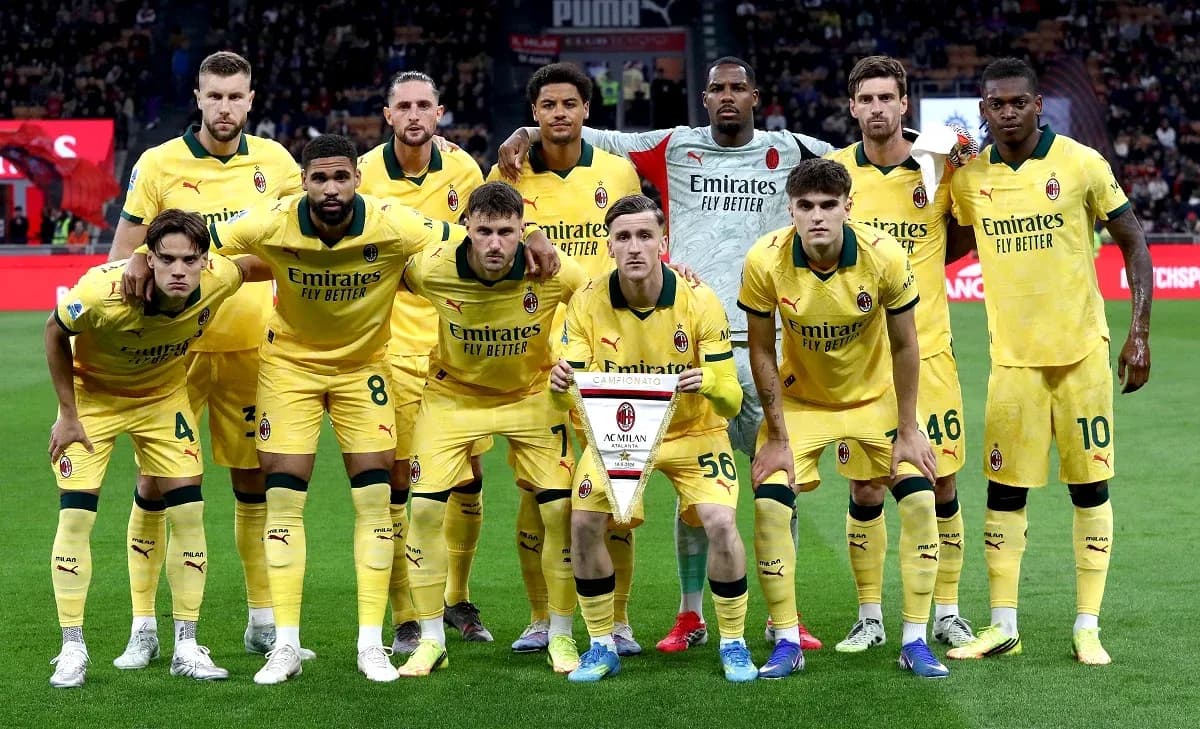
AC Milan’s 3-2 home defeat to Atalanta at Stadio Giuseppe Meazza was a study in contrasting game states: Atalanta clinically dismantled Milan’s 3-5-2 in transition to lead 3-0 by 51', then survived a late tactical and emotional surge as Milan’s structural tweaks and bench depth dragged the game back to 2-3. In a Round 36 Serie A match with European implications, the visitors maximised early verticality and defensive resilience, while Milan’s dominance of territory and possession came too late to overturn the damage.
I. Executive Summary (Tactical)
Milan’s 3-5-2 under Massimiliano Allegri sought control: three centre-backs, a five-man midfield with Adrien Rabiot and S. Ricci central, and R. Leao/S. Gimenez as the front pair. Atalanta, in Raffaele Palladino’s 3-4-2-1, prioritised directness through Ederson, C. De Ketelaere and G. Raspadori behind N. Krstovic. The first half was defined by Atalanta’s ruthless exploitation of Milan’s wing and half-space vulnerabilities, racing to a 2-0 lead and then adding a third early in the second half. Allegri’s triple attacking change on 58' (introducing C. Nkunku, N. Fullkrug, Y. Fofana and later P. Estupinan) transformed Milan into a high-pressing, front-loaded side that created sustained pressure, but Atalanta’s low block and M. Carnesecchi’s shot-stopping preserved the away win.
II. Scoring Sequence & Disciplinary Log
Scoring sequence (chronological, home score first):
- 7' AC Milan 0-1 Atalanta Ederson struck early for Atalanta, capitalising on Milan’s loose central compactness. From open play, Atalanta’s midfield line found space between Milan’s three centre-backs and double pivot, with Ederson arriving from midfield to finish, punishing Milan’s slow defensive shifting.
- 29' AC Milan 0-2 Atalanta D. Zappacosta doubled the lead, assisted by N. Krstovic. Atalanta again attacked the right channel, with Krstovic’s movement dragging Milan’s back line out of shape. Zappacosta’s advanced wing-back positioning exploited the space behind Milan’s wide midfielder, turning a transitional moment into a high-value chance.
- 51' AC Milan 0-3 Atalanta G. Raspadori, assisted by Ederson, made it 3-0. This goal epitomised Atalanta’s vertical threat: Ederson broke lines from midfield, then fed Raspadori between Milan’s centre-backs. The finish underlined how Milan’s back three struggled with Atalanta’s fluid front three rotations.
- 88' AC Milan 1-3 Atalanta S. Pavlovic pulled one back, assisted by S. Ricci. With Milan flooding the final third, Pavlovic stepped aggressively from the back line into the box, benefiting from second-phase pressure and Ricci’s service. It reflected Milan’s late decision to commit centre-backs forward to overload Atalanta’s box.
- 90' AC Milan 2-3 Atalanta C. Nkunku converted a penalty to set up a tense finale. The spot-kick crowned Milan’s territorial siege in the closing minutes, with Nkunku—introduced at half-time—providing the composed finish that Milan’s earlier phases had lacked.
Disciplinary log (chronological, mandatory format):
- 34' Rafael Leão (AC Milan) — Foul
- 70' Isak Hien (Atalanta) — Argument
- 89' Adrien Rabiot (AC Milan) — Argument
- 89' Pervis Estupiñán (AC Milan) — Foul
- 90' Alexis Saelemaekers (AC Milan) — Argument
- 90+6' Raoul Bellanova (Atalanta) — Foul
- 90+5' Nikola Krstović (Atalanta) — Time wasting
Card totals: AC Milan: 4, Atalanta: 3, Total: 7.
The pattern is clear: Milan’s frustration manifested in late “Argument” bookings for Rabiot and Saelemaekers, while Atalanta’s cards were split between emotional flashpoints (Hien’s “Argument”) and classic game-management behaviours (Krstović “Time wasting”, Bellanova “Foul” in stoppage).
III. Tactical Breakdown & Personnel
Milan’s initial 3-5-2 suffered from a structural disconnect between the back three and the midfield line. With D. Bartesaghi and A. Saelemaekers wide, the distances to the three centre-backs—S. Pavlovic, M. Gabbia, K. De Winter—were too large in transition. Atalanta repeatedly found Ederson and C. De Ketelaere in the half-spaces behind Milan’s wing-backs, forcing S. Ricci and R. Loftus-Cheek to defend on the turn rather than facing play.
Atalanta’s 3-4-2-1 was built to exploit this. G. Scalvini, I. Hien and S. Kolasinac formed a narrow, aggressive back three, with Zappacosta and N. Zalewski pushing very high to pin Milan’s wide midfielders. Ederson and M. De Roon balanced each other: De Roon screened central zones, while Ederson surged forward to connect with Raspadori and De Ketelaere. Krstovic’s role as a vertical reference point was crucial; his movement created the assist lane for Zappacosta’s goal and occupied both outer centre-backs.
The turning point came with Allegri’s half-time and 58' substitutions. At 46', C. Nkunku (IN) came on for R. Loftus-Cheek (OUT), immediately adding vertical running and dribbling between the lines. At 58', Z. Athekame (IN) came on for K. De Winter (OUT), N. Fullkrug (IN) came on for S. Gimenez (OUT), and Y. Fofana (IN) came on for R. Leao (OUT). These changes effectively morphed Milan into a more aggressive, almost 4-2-4/3-3-4 hybrid in possession, with Fullkrug as a penalty-box reference, Nkunku attacking inside channels, and Fofana/Ricci driving the tempo from midfield.
Later, at 80', P. Estupinan (IN) came on for D. Bartesaghi (OUT), giving Milan a true attack-minded left-sided outlet. Estupinan’s forward thrusts helped trap Atalanta deep, though his late “Foul” booking underscored the risk-reward nature of his role in counter-pressing.
Palladino’s response was conservative but coherent. O. Kossounou (IN) replaced G. Scalvini (OUT) at 48', adding fresh legs and aerial security to the back line. R. Bellanova (IN) for D. Zappacosta (OUT) at 55' maintained width but with more defensive focus. A further reshuffle at 63' saw H. Ahanor (IN) for an unspecified outgoing player and M. Pasalic (IN) for C. De Ketelaere (OUT), shifting Atalanta towards a deeper 5-4-1/5-3-2 block with Pasalic adding work rate and box protection. This low block invited pressure but, combined with disciplined time management—epitomised by Krstović’s “Time wasting” yellow—was just enough to see them through.
Goalkeeper reality was decisive. M. Maignan faced 5 shots on goal and made 2 saves; conceding 3 times against Atalanta’s 1.08 xG suggests that while he was not egregiously at fault, Milan’s defensive structure allowed high-quality looks that outstripped his ability to compensate. At the other end, M. Carnesecchi produced 8 saves from 9 Milan shots on target. With Milan generating 1.94 xG, Carnesecchi’s performance—supported by Atalanta’s compact block—was a key tactical asset, turning Milan’s late siege into a merely cosmetic scoreline improvement rather than a full comeback.
IV. The Statistical Verdict
The raw numbers reinforce the tactical story. Milan finished with 57% possession to Atalanta’s 43%, attempting 541 passes, 478 accurate (88%), against Atalanta’s 411 passes, 330 accurate (80%). This passing profile reflects Milan’s control of the ball, particularly after 60', but also their initial sterility in turning circulation into decisive penetration. Atalanta’s 9 total shots (5 on goal) versus Milan’s 20 (9 on goal) underline how the visitors prioritised shot quality and transition moments over volume.
Expected goals sharpen the contrast: Milan’s 1.94 xG to Atalanta’s 1.08 suggests that, over 90 minutes, Milan fashioned the better chances, especially late on. Yet the final score of AC Milan 2-3 Atalanta, combined with Carnesecchi’s 8 saves and Atalanta’s 1.1 goals prevented, indicates that Atalanta’s defensive execution and goalkeeping outperformed the underlying shot quality. Milan’s 8 fouls to Atalanta’s 17, alongside the card totals (AC Milan 4, Atalanta 3), show Milan trying to sustain tempo while Atalanta increasingly disrupted rhythm to protect their lead.
In season-context terms, Milan’s Overall Form on the night—dominant in possession and chance creation but fragile in early defensive phases—contrasted with Atalanta’s superior Defensive Index: fewer shots conceded, a goalkeeper outperforming xG, and a back line that, despite pressure, absorbed crosses and central incursions well enough to convert an efficient attacking display into three away points.
Related News

David Alaba Poised for Surprising Move to Udinese in Serie A
Milan Dominates Lecce: Tactical Analysis of a 3-0 Victory

Juventus Defeats Atalanta 2-0: Tactical Insights and Key Matchups
Frosinone's Tactical Mastery Shines in 2–0 Victory Over Como
Fiorentina and Napoli Share Points in Serie A Clash
AS Roma vs Inter: Tactical Insights from Serie A Clash