
AS Roma Triumphs 2-0 in Derby della Capitale Against Lazio
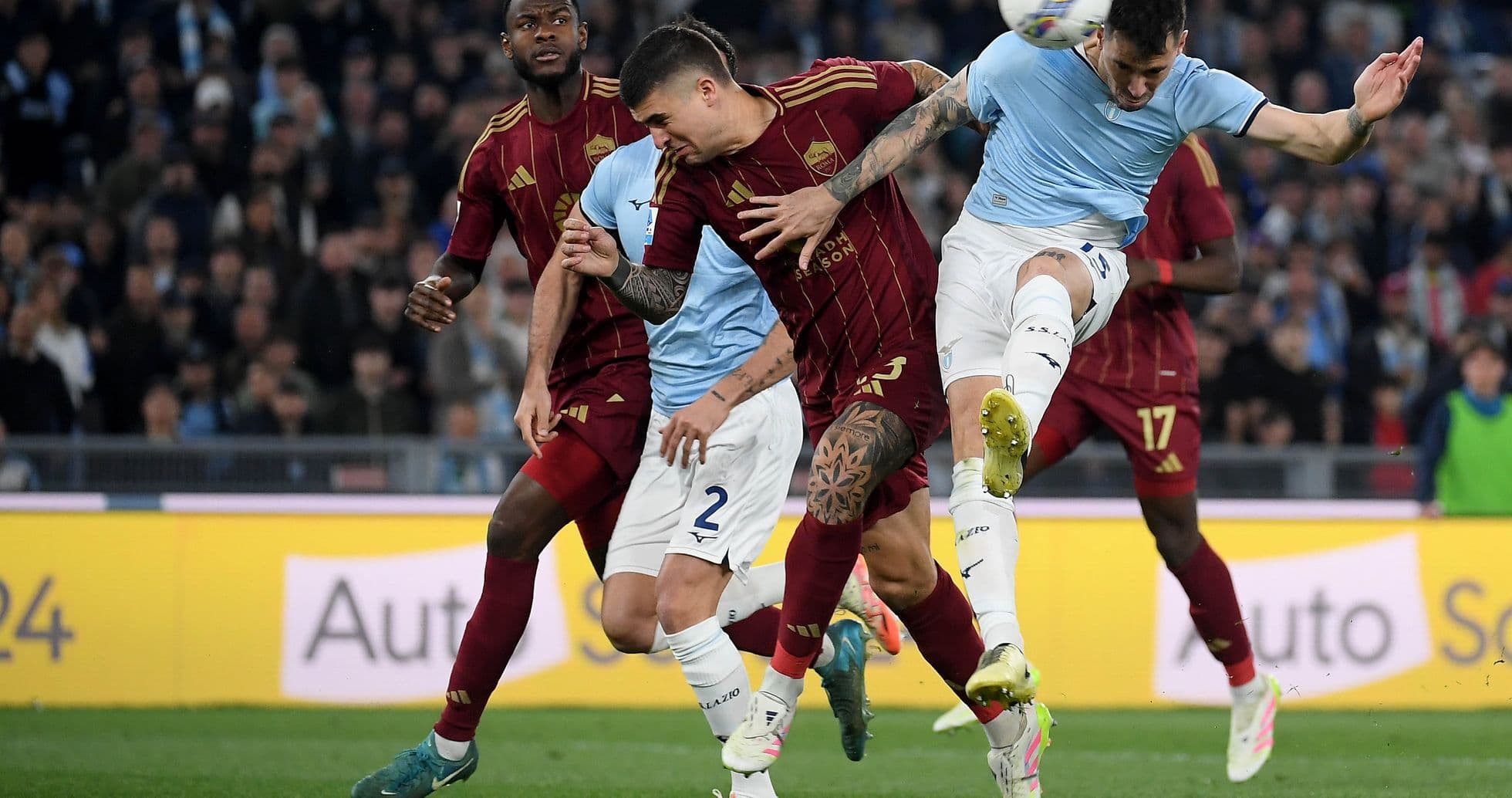
Under the bright mid-morning light of Stadio Olimpico, the Derby della Capitale closed its 2025–26 chapter with a statement. Following this result, AS Roma’s 2-0 victory over Lazio in Round 37 of Serie A was more than a local triumph; it was a tactical confirmation of why Roma sit 4th on 70 points, with a commanding overall goal difference of +26 (57 scored, 31 conceded), while Lazio remain 9th on 51 points, balanced on a knife-edge overall goal difference of 0 (39 for, 39 against).
I. The Big Picture – Structures and Seasonal DNA
Roma lined up in a familiar 3-4-2-1 under Piero Gasperini Gian, a shape that has been their backbone all season, used in 29 league matches. It is a system built on a high defensive line and aggressive wing-backs, and the numbers back its effectiveness: heading into this game, Roma had won 22 of 37 league matches overall, with a formidable home record of 13 wins from 19 and just 10 goals conceded at home. Their home attack averaged 1.7 goals per game; their home defence, a miserly 0.5.
Across the divide, Maurizio Sarri kept faith with Lazio’s 4-3-3, the identity of their campaign with 35 uses. Yet Lazio’s season has been one of uneven edges: 13 wins, 12 draws, 12 defeats overall, scoring 39 and conceding 39. On their travels, they averaged only 0.7 goals for and 0.8 against, a cautious, often low-margin profile that contrasted starkly with Roma’s assertive home persona.
Roma’s XI reflected continuity and control: M. Svilar behind a back three of G. Mancini, E. Ndicka and M. Hermoso; Z. Celik and Wesley Franca as the wide engines; B. Cristante and N. El Aynaoui anchoring the centre; P. Dybala and N. Pisilli supporting lone striker D. Malen. Lazio’s 4-3-3 had A. Furlanetto in goal, a back four of A. Marusic, M. Gila, O. Provstgaard and N. Tavares, with T. Basic, N. Rovella and K. Taylor in midfield, and a fluid front three of M. Cancellieri, B. Dia and T. Noslin.
II. Tactical Voids – Absences and Discipline
The derby was shaped by who was missing as much as who played. Roma were without E. Ferguson and B. Zaragoza, both ruled out by injury. In pure depth terms, Gasperini Gian managed, but their absence subtly narrowed Roma’s attacking rotation options from the bench.
Lazio’s voids were more structural. I. Provedel’s shoulder injury forced Furlanetto into goal, altering the build-up rhythm from the back. At centre-back, A. Romagnoli’s suspension for a red card removed Lazio’s most composed organiser and a defender who had previously blocked 19 shots this season. Add the injuries to E. Motta and M. Zaccagni, and Sarri entered the derby without key pillars in goal, defence and wide attack.
Disciplinary trends framed the risk profile. Roma, heading into this game, showed a pronounced late-game yellow card surge: 23.88% of their yellows arrived between 76-90', with another 22.39% between 61-75'. Lazio’s pattern was even more volatile, with 26.32% of yellows in the 76-90' window and a staggering 55.56% of their reds in that same period. This statistical history hinted that if the derby reached the final quarter in the balance, chaos and cards could follow. Instead, Roma’s control of territory and tempo dulled that volatility.
III. Key Matchups – Hunter vs Shield, Engine Room Battles
The headline duel was always going to be D. Malen versus Lazio’s makeshift shield. Malen arrived as one of Serie A’s most efficient attackers: 13 league goals in total from 17 appearances, with 3 penalties scored from 3 and no misses, 46 shots with 29 on target, and a 7.31 average rating. His movement against a central pairing missing Romagnoli was the game’s pressure point.
Lazio leaned on M. Gila, one of their standout defenders this season. Across the campaign he had won 134 of 199 duels, blocked 17 shots and maintained 90% passing accuracy. Without Romagnoli’s presence, Gila had to both marshal the line and step into build-up, a dual burden that Roma’s pressing unit – Malen, Dybala, Pisilli – exploited by curving runs to cut off his passing lanes to Rovella.
In midfield, the “engine room” contest tilted the derby. Roma’s double pivot of Cristante and El Aynaoui sat beneath Wesley Franca and Z. Celik, forming a compact box that strangled Lazio’s central progression. Wesley’s season numbers underline his role as a disruptive creator: 53 tackles, 5 blocked shots, 23 interceptions, 317 duels contested with 149 won, and 57 fouls drawn. His aggression, combined with Celik’s 62 tackles and 26 key passes, turned Roma’s right flank into a two-way weapon: defensively suffocating, offensively direct.
Lazio’s midfield trio of Basic, Rovella and Taylor tried to circulate quickly, but without Guendouzi – whose season had brought 735 passes at 87% accuracy and 15 key passes – Sarri lacked a true tempo-setter. The result was predictable: Roma compressed the centre, forcing Lazio’s front three to receive wide and deep, far from dangerous zones.
Behind them, Roma’s defensive axis embodied controlled aggression. Mancini, with 51 tackles, 14 blocked shots and 47 interceptions this season, stepped out to break lines and set the tone. Hermoso, similarly combative with 36 tackles and 6 blocked shots, ensured that when Roma’s wing-backs flew forward, the back three could still defend big spaces. Lazio’s front line rarely found clean 1v1s; when they did, the duels were contested on Roma’s terms.
IV. Statistical Prognosis – Why 2-0 Felt Inevitable
Heading into this game, the broader numbers already leaned Roma’s way. Overall, they averaged 1.5 goals for and 0.8 against per match, with 17 clean sheets in total. At home, 11 clean sheets in 19 fixtures and just 10 goals conceded built the profile of a side that strangles visitors. Lazio, by contrast, had failed to score in 11 away matches and managed only 14 away goals all season, while conceding 15.
Overlay those trends on the tactical landscape and the 2-0 scoreline reads less like a surprise and more like a statistical fulfilment. Roma’s structure was stable, their key attackers – especially Malen – were aligned with Lazio’s weakest zone (a patched-up central defence and a backup goalkeeper), and their disciplinary record, while spiky late on, was managed through territorial control.
Lazio’s away xG profile this season would logically sit in the modest bracket given their 0.7 away goals per game and 11 away blanks; paired against Roma’s defensive solidity and 17 total clean sheets, the likelihood of Lazio breaking through was always slim. Roma’s attacking volume, driven by wing-back surges and the creativity of Dybala and Pisilli beneath Malen, suggested a multi-chance afternoon, even if the exact xG figures are not provided.
Following this result, Roma’s campaign narrative tightens: a Champions League-bound side, built on a 3-4-2-1 that maximises Malen’s penalty-box instincts and Wesley’s two-way ferocity, and underpinned by one of Serie A’s most reliable home defences. Lazio, meanwhile, are left to confront a familiar story – structurally sound on paper, but too often blunted away from home, especially when key figures like Provedel, Romagnoli and Zaccagni are missing.
In the end, the derby was decided where the numbers said it would be: Roma’s hunter found enough space, their shield held firm, and Lazio’s thin attacking margins on their travels were ruthlessly exposed.
Related News

David Alaba Poised for Surprising Move to Udinese in Serie A
Milan Dominates Lecce: Tactical Analysis of a 3-0 Victory
Juventus Defeats Atalanta 2-0: Tactical Insights and Key Matchups
Frosinone's Tactical Mastery Shines in 2–0 Victory Over Como
Fiorentina and Napoli Share Points in Serie A Clash
AS Roma vs Inter: Tactical Insights from Serie A Clash