
Cagliari vs Torino: Tactical Analysis of a 2–1 Serie A Clash
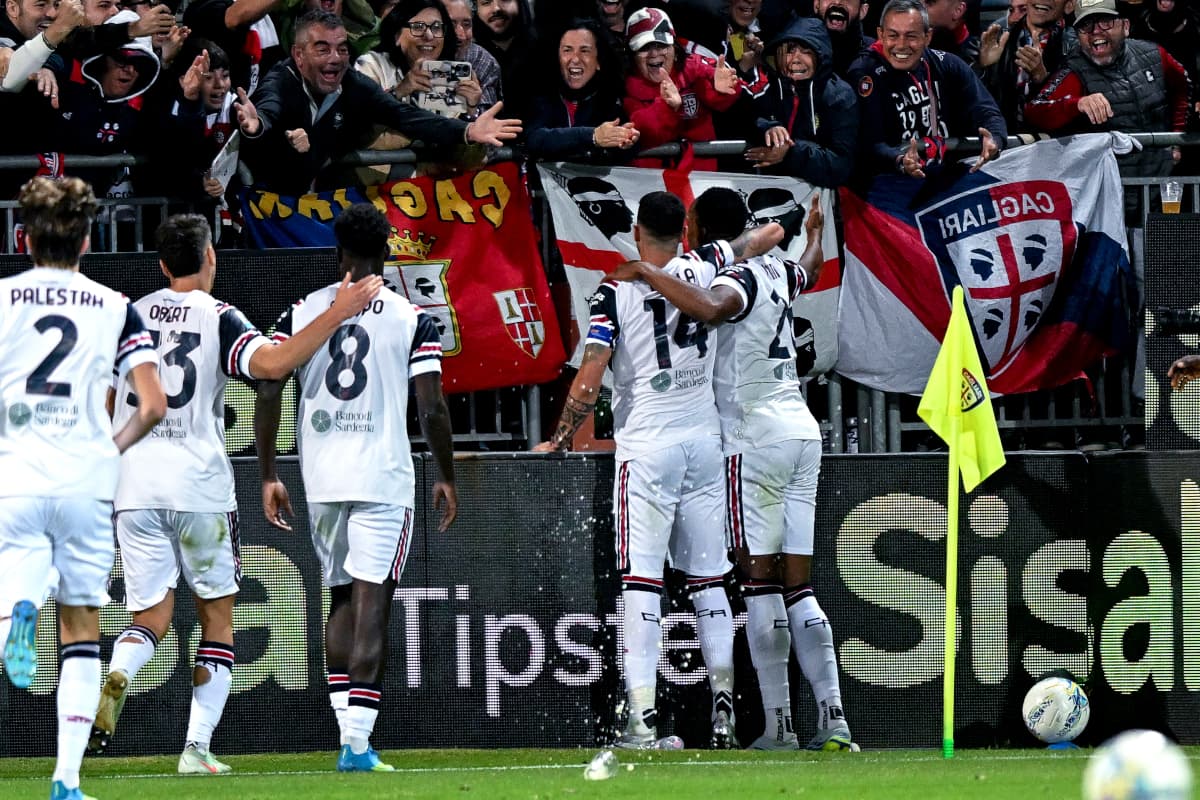
Under the Sardinian lights of Unipol Domus, Cagliari’s 2–1 win over Torino felt like more than just three points in Round 37 of Serie A. Following this result, a side clinging to 16th place on 40 points and a goal difference of -14 showed the full, flawed but compelling identity that has defined their season, while 12th‑placed Torino (44 points, goal difference -19) once again walked the tightrope between structure and fragility.
I. The Big Picture – Systems, Stakes, and Seasonal DNA
Both coaches leaned into their season-long tactical signatures but twisted them to fit the occasion. Fabio Pisacane set Cagliari up in a 4‑3‑2‑1, a notable departure from the 3‑5‑2 that has been his most-used structure (17 league matches). The back four of G. Zappa, Y. Mina, A. Dossena and A. Obert underpinned a compact, risk‑aware shape, protecting a team that overall has conceded 52 goals in 37 matches, an average of 1.2 at home and 1.6 on their travels.
Ahead of them, a three‑man midfield of M. Adopo, G. Gaetano and A. Deiola provided ballast and vertical running, while M. Palestra and S. Esposito floated behind lone forward P. Mendy. It was a narrow, almost Christmas‑tree structure designed to funnel Torino into central traffic and then break with purpose.
Torino, by contrast, doubled down on their back‑three identity with a 3‑4‑2‑1. Leonardo Colucci trusted a trio of L. Marianucci, S. Coco and E. Ebosse to hold the line, screened by a four‑man band of M. Pedersen, E. Ilkhan, M. Prati and R. Obrador. Ahead of them, the creative burden fell on N. Vlasic and G. Simeone, working off D. Zapata as the reference point.
It was a bold choice for a side whose defensive record has been brittle: 61 goals conceded in total, 1.5 at home and 1.8 away, with a particularly harsh away profile of 34 goals shipped in 19 matches. The structure promised aggression, but the risk was obvious against a Cagliari team that, at home, averages 1.2 goals for and 1.2 against – not prolific, but capable of punishing looseness.
II. Tactical Voids – Absences and Discipline
This match was shaped as much by who was missing as by who played. Cagliari were stripped of attacking and creative layers: M. Felici, R. Idrissi, J. Liteta, L. Mazzitelli and L. Pavoletti were all ruled out through injury, while J. Pedro sat suspended for yellow cards. For a side that has already failed to score in 14 league matches overall, those absences forced Pisacane to lean heavily on Esposito’s dual role as creator and secondary scorer.
Torino’s own absentees tilted the balance of their attack. Z. Aboukhlal and F. Anjorin, both out with muscle and hip injuries respectively, removed vertical thrust and dribbling threat from wide and half‑spaces, while G. Gineitis’ suspension and A. Ismajli’s muscle injury chipped away at depth and defensive rotation.
Disciplinary trends framed the emotional tone. Cagliari’s yellow‑card profile is heavily back‑loaded: 27.85% of their yellows come between 76–90 minutes, with a late‑game red‑card spike as well (all their reds in the league arriving in that same 76–90 window). Torino, meanwhile, accumulate cards steadily, with a late rise – 20.00% of their yellows between 76–90 and a further 21.43% in 91–105. This fixture, tight and nervy, was always likely to tip into a card‑streaked finale, and the 2–1 scoreline at half‑time freezing into the same result by full‑time underlines how much the second half became a battle of control and composure rather than open‑ended risk.
III. Key Matchups – Hunter vs Shield, Engine Room
The headline duel belonged to Torino’s top scorer G. Simeone against Cagliari’s reshaped back line. Simeone arrived in this fixture with 11 league goals from 31 appearances, backed by 58 total shots and 28 on target. His game is built on relentless movement and duels – 283 contested, 110 won – and he thrives when he can pull defenders into uncomfortable zones.
Pisacane’s answer was structural and personal. A. Obert, one of Serie A’s leading yellow‑card collectors with 9 yellows and 1 yellow‑red across 34 appearances, started on the left of the back four. His profile is that of an aggressive front‑foot defender: 65 tackles, 18 blocked shots and 40 interceptions, with 230 duels contested and 123 won. Beside him, the physical presence of Y. Mina and A. Dossena created a three‑man shield whenever Zappa tucked in.
The plan was clear: compress the central channel, accept that Obert would play on the disciplinary edge, and trust that controlled aggression would blunt Simeone’s timing. Over 90 minutes, it worked. Torino, a side that overall scores 1.1 goals per game (0.9 away), were held to just the single first‑half strike, unable to turn Simeone’s volume of movement into the kind of chaos that usually unlocks their best away performances.
In midfield, the “Engine Room” contest was defined by S. Esposito against Torino’s central trio of Ilkhan, Prati and Obrador. Esposito has been Cagliari’s creative compass all season: 954 passes with 67 key passes, 7 goals and 5 assists, and a league rating of 6.98. He also brings bite – 52 tackles, 4 blocked shots, 16 interceptions, 298 duels (141 won) and 6 yellow cards.
Torino’s central unit, while industrious, struggled to fully cage him. With Cagliari’s seasonal attacking numbers modest – 38 goals overall, 22 at home, averaging 1.0 per game in total – the difference between sterility and incision often lies in Esposito’s ability to receive between the lines and turn. His influence in the 4‑3‑2‑1, operating just off Mendy, helped create the pockets that produced Cagliari’s two first‑half goals and allowed them to manage territory once they led.
IV. Statistical Prognosis – What This Result Tells Us
Following this result, the statistical story of both teams tightens rather than transforms. Cagliari remain a low‑margin side: 10 wins, 10 draws, 17 losses from 37 matches, with 8 clean sheets and a tendency to grind rather than overwhelm. Their home profile – 7 wins, 4 draws, 8 losses, 22 scored and 23 conceded – reinforces the idea of a team that lives on the knife‑edge of one‑goal games.
Torino’s defeat is a continuation of a season defined by volatility. Their 12 wins, 8 draws and 17 losses are underpinned by a negative goal difference of -19 (42 scored, 61 conceded), and their away record – 4 wins, 5 draws, 10 defeats, 17 scored and 34 conceded – paints them as a side whose defensive xG against on their travels is likely too high for sustained mid‑table comfort.
Overlaying the structures on the numbers, this match felt like a logical outcome: Cagliari’s more conservative, four‑man back line against a Torino attack that depends heavily on Simeone’s efficiency, and a midfield where Esposito’s creativity tipped the balance. In an xG lens, you would expect Cagliari’s home edge and Torino’s porous away defence to nudge probability toward a narrow home win – exactly the 2–1 that unfolded, decided early and then defended with grit, cards, and a back line that finally looked like a shield rather than a siren.
Related News

David Alaba Poised for Surprising Move to Udinese in Serie A
Milan Dominates Lecce: Tactical Analysis of a 3-0 Victory

Juventus Defeats Atalanta 2-0: Tactical Insights and Key Matchups
Frosinone's Tactical Mastery Shines in 2–0 Victory Over Como

Fiorentina and Napoli Share Points in Serie A Clash
AS Roma vs Inter: Tactical Insights from Serie A Clash